
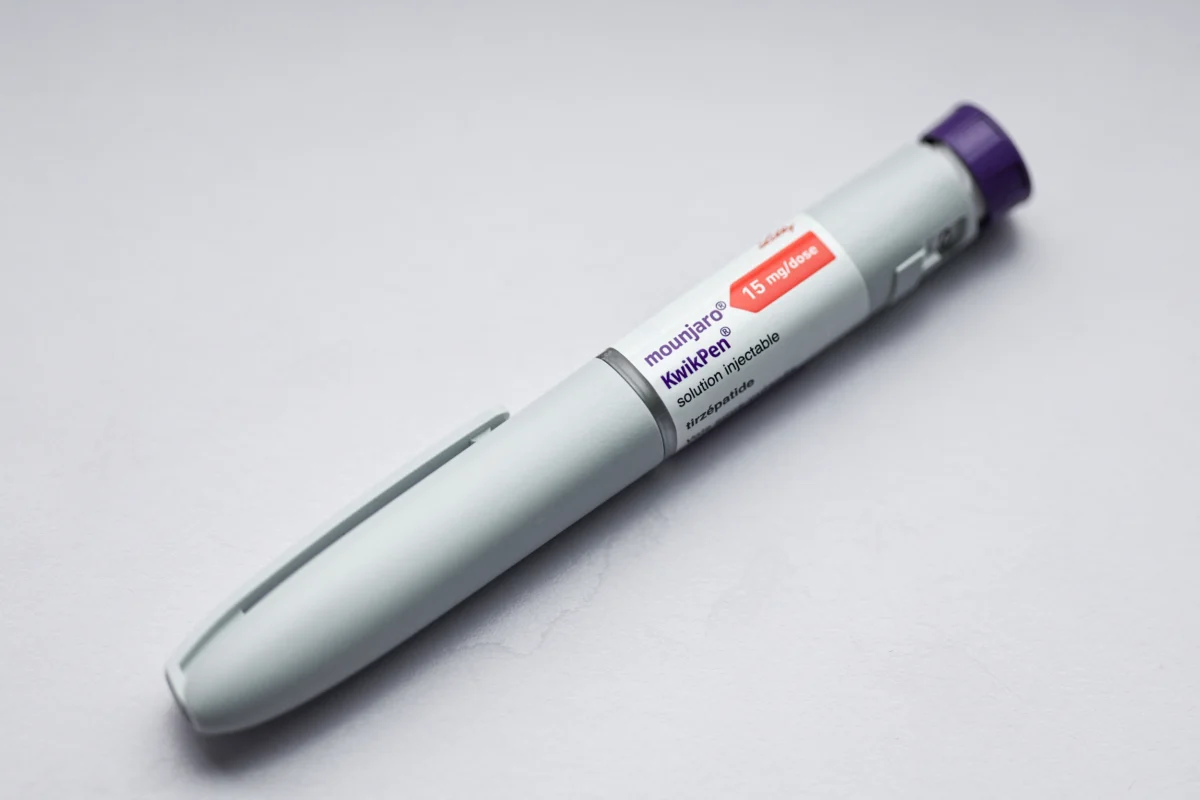
"Mounjaro, already a leading medication for type 2 diabetes, now carries FDA approval to reduce the risk of major adverse cardiovascular events, marking a significant expansion of its therapeutic role beyond glycemic control."
The U.S. Food and Drug Administration (FDA) has granted a new indication for Mounjaro (tirzepatide), a groundbreaking medication developed by Eli Lilly and Company. This approval allows Mounjaro to be prescribed specifically to lower the risk of major adverse cardiovascular events, including cardiovascular death, non-fatal heart attack, and non-fatal stroke, in adults with type 2 diabetes who are identified as being at high risk for such events. This expanded approval, announced by Eli Lilly on Friday morning, positions Mounjaro as a dual-action therapy, addressing both blood sugar management and cardiovascular protection.
Mounjaro, known chemically as tirzepatide, was previously approved as an adjunct to diet and exercise to improve glycemic control in adults and children aged 10 and older diagnosed with type 2 diabetes. Eli Lilly has highlighted its significant market presence, describing it as the most prescribed branded type 2 diabetes medication for adults in the United States. The addition of a cardiovascular indication to its label means that this weekly injectable medication now offers a dual benefit to a substantial number of American patients. For individuals already taking Mounjaro, this new approval requires no immediate action; however, it is expected to significantly influence physician prescribing decisions and insurer coverage policies, enhancing the drug’s value proposition.
The foundation for this pivotal approval rests on the results of the SURPASS-CVOT (Cardiovascular Outcomes Trial), a clinical study distinguished by its unique comparative design. Unlike many cardiovascular outcomes trials that pit an investigational drug against a placebo, SURPASS-CVOT was designed as a head-to-head comparison between Mounjaro and Trulicity (dulaglutide), another established medication from Eli Lilly that already possesses an approved cardiovascular indication. This trial represents the first instance of an incretin-based medicine being directly compared against another incretin medicine in a cardiovascular outcomes setting.
The SURPASS-CVOT trial enrolled a substantial cohort of 13,299 participants across 640 sites in 30 countries. Participants were randomized on a one-to-one basis to receive either Mounjaro at a maximum dose of 15 milligrams or Trulicity at its maximum dose of 1.5 milligrams, both administered via subcutaneous injection once weekly. The participant pool comprised adults with type 2 diabetes and established atherosclerotic cardiovascular disease, reflecting a population at high risk for cardiac events. The average age of participants was 64 years, with 29 percent being women. The study maintained a median follow-up period of 210.1 weeks, approximately four years, with the overall trial duration extending to roughly five years.
Kenneth Custer, Executive Vice President and President of Lilly Cardiometabolic Health, emphasized the rigorous nature of the trial’s design. He stated that the company intentionally set a higher benchmark by choosing to test Mounjaro against a GLP-1 receptor agonist (GLP-1 RA), a class of drugs already recognized for its proven cardiovascular benefits. This comparative approach aimed to demonstrate Mounjaro’s cardiovascular efficacy in a challenging yet relevant clinical context.
The SURPASS-CVOT trial successfully met its primary objective, a crucial detail that warrants precise understanding. Over the median follow-up period of four years, the composite endpoint of cardiovascular death, non-fatal heart attack, or non-fatal stroke occurred in 12.2 percent of participants treated with tirzepatide (Mounjaro) and 13.1 percent of those treated with dulaglutide (Trulicity). This observed difference achieved the statistical threshold for non-inferiority, meaning that Mounjaro was demonstrated to be no worse than Trulicity in preventing these major cardiovascular events. However, it did not reach the threshold for superiority, indicating that Mounjaro was not statistically proven to be better than Trulicity in this specific primary outcome. The estimated hazard ratio was 0.92, with a 95.3 percent confidence interval ranging from 0.83 to 1.01. Eli Lilly explicitly acknowledged that superiority over dulaglutide was not established.
In simpler terms, the trial demonstrated that Mounjaro provides a cardiovascular benefit comparable to a drug that already has established heart protection. While not superior, this finding is significant. Given that Trulicity’s cardiovascular benefit was previously confirmed against a placebo in an earlier trial, matching its performance suggests that Mounjaro possesses a genuine cardiovascular benefit, rather than simply being non-deleterious. Stephen Nicholls, the lead investigator of the trial, commented to TCTMD that this finding "validates the cardiovascular benefit of tirzepatide" and expands treatment options for patients.
While the primary endpoint focused on non-inferiority, certain secondary endpoints numerically favored tirzepatide. These included an expanded composite endpoint that incorporated coronary revascularization procedures and a numerically lower rate of all-cause mortality, which appeared to be driven by non-cardiovascular causes. However, due to the trial’s design, which was optimized to test non-inferiority on a single primary endpoint, these secondary findings should be interpreted as supportive evidence rather than definitive established benefits in their own right.
It is noteworthy that tirzepatide induced more pronounced metabolic changes compared to dulaglutide. Participants receiving Mounjaro experienced greater weight loss, averaging 11.6 percent from baseline compared to 4.5 percent in the dulaglutide group. Furthermore, Mounjaro led to larger reductions in glycated hemoglobin (HbA1c) levels, with a mean decrease of 1.66 percentage points versus 0.88 percentage points for dulaglutide. Despite these significant differences in metabolic control and weight reduction, these enhanced effects did not translate into a statistically significant difference in the primary cardiovascular event rates.
A critical distinction that impacts patient access and financial considerations is the difference between Mounjaro and Zepbound, despite both containing the same active molecule, tirzepatide. The FDA approves drugs based on specific indications. Mounjaro is now approved for type 2 diabetes and cardiovascular risk reduction. Zepbound, conversely, is the same molecule approved for chronic weight management and obstructive sleep apnea. This approval does not add a weight-loss indication to Mounjaro’s label, nor does it alter the approved uses of Zepbound. Therefore, patients hoping that this cardiovascular approval will facilitate coverage for weight loss with Mounjaro are unlikely to see a change.
The impact of this new indication is most likely to be felt by patients with type 2 diabetes who also have existing cardiovascular disease. Insurers frequently base coverage decisions on approved indications. For patients who encounter coverage denials, options may include requesting prior authorization from their insurer, pursuing appeals, or exploring manufacturer savings programs. It is important to note that prior authorization approval is distinct from a guaranteed paid claim. The potential reach of this approval is substantial, as research cited by Lilly estimates that as many as one in three adults in the U.S. with type 2 diabetes may have undiagnosed cardiovascular disease. While the trial participants all had established atherosclerotic disease, the newly approved indication applies to a broader group identified as being at high risk for cardiovascular events.
The safety profile of Mounjaro remains consistent with its previous approvals, and the prescribing information serves as the authoritative guide. Mounjaro carries a boxed warning regarding the risk of thyroid C-cell tumors, including thyroid cancer. Consequently, it is contraindicated in individuals with a personal or family history of medullary thyroid carcinoma or those diagnosed with Multiple Endocrine Neoplasia syndrome type 2. The most frequently reported side effects are gastrointestinal in nature, typically mild to moderate, and often occur during dose escalation. In the SURPASS-CVOT trial, adverse events led to treatment discontinuation in 13.2 percent of tirzepatide participants compared to 10.1 percent on dulaglutide, a difference largely attributed to gastrointestinal effects.
Other serious reported risks associated with Mounjaro include pancreatitis, hypoglycemia (low blood sugar), particularly when used in combination with insulin or sulfonylureas, gallbladder problems, dehydration that can lead to kidney issues, vision disturbances, and an increased risk of aspiration (food entering the lungs) during anesthesia. Patients scheduled for surgical procedures or sedation should inform their entire care team about their Mounjaro use.
One drug interaction that warrants specific attention is its potential to reduce the efficacy of oral contraceptive pills. Eli Lilly advises patients using oral contraceptives to consider an alternative method of contraception for four weeks after initiating Mounjaro and for four weeks following each dose increase.
It is crucial for patients not to initiate, discontinue, or alter their diabetes medication regimen based solely on a label update. The data from the SURPASS-CVOT trial have already been incorporated into Mounjaro’s product information in the European Union, and regulatory submissions are under review in various other international markets.
Key Questions Answered
What exactly did the FDA approve?
The FDA has approved Mounjaro for the expanded indication to lower the risk of major adverse cardiovascular events, specifically cardiovascular death, non-fatal heart attack, or non-fatal stroke, in adults with type 2 diabetes who are at high risk for these events.
Does this mean Mounjaro outperformed the drug it was tested against?
No. The trial demonstrated that Mounjaro met the standard for non-inferiority when compared to Trulicity, meaning it was not worse than Trulicity in preventing cardiovascular events. However, it did not achieve statistical superiority, meaning it was not proven to be significantly better than Trulicity in this primary outcome. The observed rates were 12.2 percent for Mounjaro versus 13.1 percent for Trulicity over approximately four years, a difference that was not statistically significant.
Should I ask my doctor to switch me to Mounjaro?
Deciding whether to switch to Mounjaro is a personal decision to be made in consultation with your healthcare provider. The results of the SURPASS-CVOT trial support Mounjaro as a valuable treatment option for individuals with type 2 diabetes and established or high risk for cardiovascular disease, but they do not definitively prove it is superior to all other available alternatives.
Does this approval extend to weight loss indications?
No. Mounjaro’s approved uses remain type 2 diabetes and, now, cardiovascular risk reduction. The same molecule, tirzepatide, is marketed as Zepbound for chronic weight management and obstructive sleep apnea, and that label remains unchanged by this Mounjaro approval.
Who was included in the clinical study?
The SURPASS-CVOT trial participants were adults with type 2 diabetes and established atherosclerotic cardiovascular disease. The newly approved indication, however, covers a broader population: adults with type 2 diabetes who are considered at high risk for cardiovascular events.
What are the primary safety concerns associated with Mounjaro?
Mounjaro carries a boxed warning concerning the risk of thyroid tumors, including thyroid cancer. Common side effects, particularly during dose escalation, include gastrointestinal issues. Other reported risks include pancreatitis, gallbladder problems, hypoglycemia when combined with certain diabetes medications, dehydration leading to kidney problems, vision changes, and an increased risk of aspiration during anesthesia.
Are there any significant drug interactions I should be aware of?
A notable drug interaction is the potential for Mounjaro to reduce the effectiveness of oral contraceptives. Eli Lilly recommends using an alternative contraceptive method for a period of four weeks after starting Mounjaro and for four weeks following each dose increase to ensure adequate contraception.
