
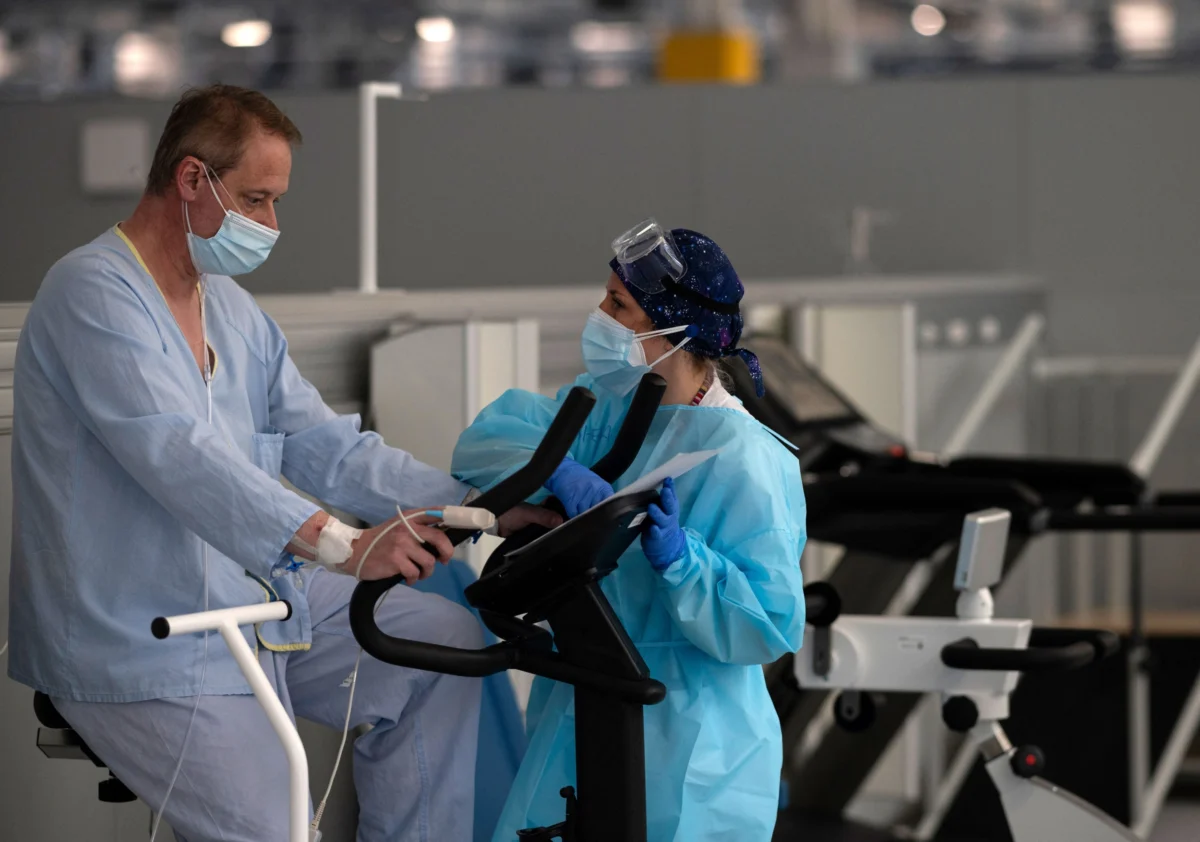
"Every day spent in a hospital bed erodes muscle, and for heart transplant candidates, this loss can disqualify them from the very surgery they are waiting for. An innovative inpatient prehabilitation program is demonstrating its potential to reverse this detrimental cycle, transforming frail patients into viable transplant candidates."
The critical journey for a heart transplant candidate often begins with admission to the hospital, a necessary step while awaiting a life-saving donor organ. However, this prolonged period of immobility presents a paradox: the hospital stay, intended to preserve life, can inadvertently lead to a decline in physical condition that jeopardizes the transplant itself. Muscle atrophy, a direct consequence of bed rest, can elevate a patient’s frailty score beyond acceptable limits, rendering them ineligible for the procedure. This challenging scenario has spurred the development of innovative solutions, such as an inpatient prehabilitation program piloted at Banner University Medical Center Phoenix, designed to counteract the debilitating effects of hospital confinement and restore crucial physical resilience.
This pioneering initiative, spearheaded by Radha Gopalan, a heart transplant cardiologist at Banner University Medical Center Phoenix, addresses a critical gap in care. Recognizing that many transplant candidates never return home before their surgery and thus lack access to traditional outpatient cardiac rehabilitation or prehabilitation, Gopalan established a dedicated gym on a telemetry floor. The program, which began testing in 2023, aims to interrupt the debilitating cycle of muscle loss and frailty that plagues hospitalized patients awaiting heart transplants. Early findings, presented in April at the International Society for Heart and Lung Transplantation meeting in Toronto, suggest a promising impact on transplant eligibility. Gopalan noted, "Some of the patients didn’t even get to transplant. They developed other complications, and they never qualified." This underscores the urgency of interventions that can maintain or improve a patient’s physical status during their hospital stay.
The physiological basis for this problem is starkly illustrated by a ratio derived from studies on athletes: for every day of bed rest, approximately three days are required to regain lost muscle strength. For a patient confined to bed for ten days, this translates to roughly thirty days of dedicated effort to return to their baseline strength. This calculation presents a grim arithmetic for individuals admitted to the hospital with advanced heart failure, arrhythmias, or coronary artery disease, all conditions that often necessitate transplant consideration. The longer the wait for a donor organ, the weaker the candidate becomes. Crucially, this weakness is not merely an inconvenience; it is a disqualifying factor. Transplant teams rely on frailty scores as a key metric because frail patients face a significantly higher risk of postoperative complications, including infections, prolonged recovery times, and even mortality.
While established programs like cardiac rehabilitation focus on recovery post-event (heart attack or surgery) and outpatient cardiac prehabilitation supports home-based preparation, Gopalan identified a distinct need. The patient population most vulnerable is those who are admitted and remain hospitalized throughout their transplant waiting period. These individuals are often too ill to manage an at-home exercise regimen and are excluded from the benefits of traditional outpatient programs. The inpatient gym at Banner University Medical Center Phoenix directly addresses this unmet need, providing a structured, supervised environment for exercise and conditioning within the hospital itself.
The equipment within the specialized gym is intentionally modest, prioritizing safety and accessibility. It includes a recumbent bicycle designed to engage both arms and legs simultaneously, a standard sit-down bicycle, and an arm bicycle. Notably, a treadmill was deliberately excluded from the facility. This decision was driven by a commitment to patient safety, specifically to mitigate the risk of falls among a population already compromised by illness. The focus is on low-impact, controlled movements that build strength and endurance without posing undue risk.
The early results from this innovative program are encouraging. Over two years, a significant majority of pretransplant patients who participated demonstrated improved physical capacity and met transplant listing criteria. In the first year of testing, 56 percent of patients improved their eligibility, a figure that rose to 62 percent in the second year. Importantly, Gopalan clarified that every patient entering the program initially did not qualify from a frailty perspective. Therefore, these percentages represent the proportion of previously disqualified patients who became eligible for transplant following their participation. This highlights the program’s direct impact on expanding the pool of viable candidates.
Furthermore, the program has shown a measurable reduction in frailty scores. On average, participants’ frailty scores improved from approximately 2.5 out of a possible 5 to around 1.5. In the context of heart transplantation selection, a score of 2 or lower is considered favorable, while a score of 3 typically signifies a threshold at which rehabilitation becomes a mandatory component of the candidacy process. The improvements in metabolic equivalent scores, a standardized measure of exercise capacity, further corroborate the program’s effectiveness in enhancing patients’ physical fitness. Critically, the program has proven to be safe. Over the course of its implementation, there have been no reported deaths, complications, or falls among participants.
However, it is essential to contextualize these findings within the framework of scientific evidence. The presented data represents a single-center program evaluation, not a randomized controlled trial. The absence of a control group – a cohort of similar patients who did not receive prehabilitation – means that the observed improvements cannot be definitively separated from the potential for natural stabilization of some patients on medical therapy during their admission. Gopalan indicated that the results thus far encompass data from 45 patients.
The findings were presented at a scientific meeting, which, while valuable for disseminating information, does not undergo the rigorous peer-review process of a published academic journal. This distinction is important for assessing the robustness of the evidence. Nevertheless, related research lends support to the general direction of these findings. A pilot program conducted in Spain, published in the European Journal of Preventive Cardiology, found multimodal prehabilitation to be feasible and safe in a small group of heart transplant candidates. Although the authors acknowledged the limitations of their tiny sample size and the lack of a control group, their results align with the notion that prehabilitation can be beneficial. Furthermore, institutions like UPMC have implemented formalized prehabilitation programs for transplant candidates, extending their services to lung and heart transplant recipients since 2020 and 2023, respectively, indicating a growing recognition of its value.
This specific program at Banner University Medical Center Phoenix does not yet definitively establish whether inpatient prehabilitation improves long-term survival rates post-transplant, whether the eligibility gains are sustained over time, or whether the model can be replicated in hospitals lacking dedicated exercise physiologists. A comprehensive review of prehabilitation in transplant candidates, published in Current Transplantation Reports, highlighted the scarcity of robust literature, noting that the existing research is largely dominated by small pilot studies.
The financial aspect of implementing such a program is a significant consideration. Gopalan’s initiative was funded through philanthropic contributions secured via the hospital foundation. The agreement with the hospital involved the foundation providing the necessary funding in exchange for the allocation of space on a telemetry floor. The Banner Health Foundation has publicly acknowledged the inpatient center’s support through philanthropic gifts, with clinical exercise physiologists actively working with patients both before and after surgery. This reliance on philanthropy is crucial because inpatient prehabilitation is not a reimbursed service in the same way as outpatient cardiac rehabilitation. Hospitals cannot simply bill for these services, creating a financial barrier to widespread adoption. Gopalan noted that pursuing National Institutes of Health funding would necessitate the collection of more extensive data.
For families navigating the complex process of a loved one awaiting a heart transplant, the practical implications are tangible. It is advisable to inquire with the transplant team about the availability of any structured mobility or conditioning programs during the admission and to ascertain the patient’s current frailty score. Transplant coordinators are typically well-equipped to provide this information. Critically, patients should not attempt independent exercise programs while hospitalized for advanced heart failure. The supervision provided by trained professionals is paramount to ensuring the safety and efficacy of these interventions.
The future expansion of this inpatient prehabilitation model hinges on the generation of further data. A multicenter study incorporating a comparison group would be essential to definitively demonstrate that inpatient prehabilitation influences transplant rates rather than simply reflecting the natural course of patients who would have improved regardless. The research team will also need to pursue publication of their results in peer-reviewed journals and expand their sample size before the program can be considered for federal research funding. Until such advancements occur, similar initiatives are likely to remain dependent on philanthropic support and individual hospital decisions, potentially leading to disparities in access based on institutional resources rather than patient need.
Despite these systemic challenges, a crucial and portable finding emerges from this work: time spent in a hospital bed is not a neutral factor for a transplant candidate. The physical decline it causes is measurable, trackable, and, as this program demonstrates, at least partially reversible through targeted, supervised intervention. This understanding offers a vital perspective for healthcare providers and families alike, emphasizing the importance of proactive physical conditioning even within the confines of a hospital stay.
