
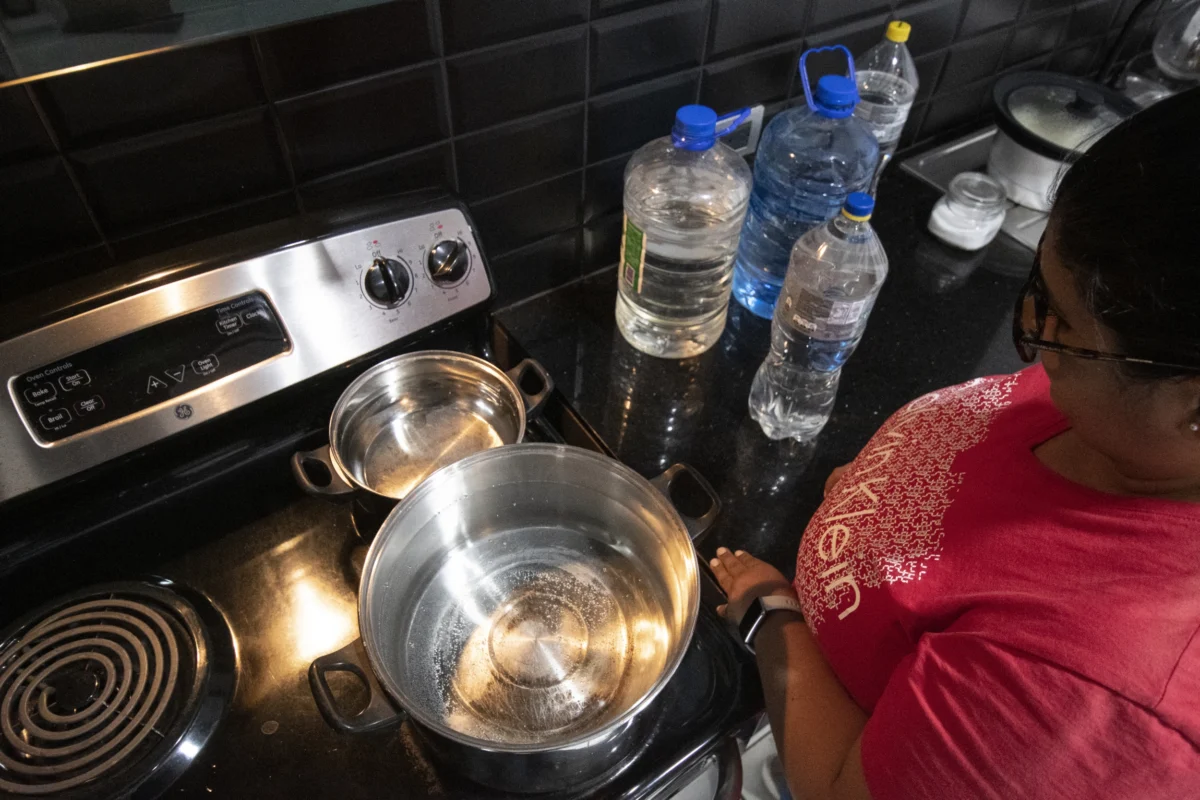
"A single town well’s contamination with E. coli has triggered a widespread boil water advisory across Jackson, Wyoming, impacting every home and business, disrupting daily life, and prompting urgent public health and operational adjustments."
The town of Jackson, Wyoming, is currently grappling with a critical public health situation as a boil water order has been issued for all residences and businesses connected to its water system. The advisory was mandated by the Environmental Protection Agency (EPA) on the evening of Thursday, September 24th, following the detection of E. coli in untreated water sourced from a town well. This precautionary measure remains in effect until further notice, underscoring the seriousness of the contamination and the commitment to ensuring public safety. The presence of E. coli, a bacterium often associated with fecal contamination, necessitates rigorous testing and immediate action to prevent potential health risks to the community.
The immediate repercussions of the boil water order have been far-reaching. Teton County School District, citing the significant impact on student transportation, families with children attending multiple schools, and essential food services, made the decision to close all its schools on Friday. The district’s kitchens, which prepare meals for schools both within and outside of Jackson, were directly affected. As of the latest reports, the district has announced plans to reopen schools on Monday, September 28th, contingent on the advisory still being in place. However, stringent measures will be implemented, including the deactivation of drinking fountains, the provision of bagged lunches, and the availability of hand sanitizer. This proactive approach aims to mitigate risks while ensuring educational continuity.
The scope of the advisory extends beyond the immediate town limits, encompassing key community landmarks and surrounding neighborhoods. Jackson Hole High School, Jackson Hole Classical Academy, and residential areas such as Saddle Butte and 3 Creek Ranch are all included, highlighting the interconnectedness of the town’s water infrastructure. This broad reach underscores the potential for widespread impact and the need for comprehensive communication and compliance from all affected parties. Fortunately, as of the initial reports, no illnesses directly linked to the contaminated water have been confirmed, a testament to the swift response and the community’s adherence to safety protocols.
The economic and social fabric of Jackson has been demonstrably affected by the E. coli detection. Residents scrambled to secure safe drinking water on Thursday evening, leading to temporary stock-outs of bottled water at local grocery stores like Jackson Albertsons. The store responded by rerouting additional deliveries overnight and suspending operations that rely on town water, including bakery and deli production, as well as shutting down drinking fountains and ice machines. This surge in demand for bottled water illustrates the immediate concern and the reliance of the community on a safe and reliable water supply.
The impact has also been felt keenly within the local business community, particularly in the hospitality sector. Some coffee shops, such as Cowboy Coffee Co., were forced to close their doors on Friday. Others, however, adapted their operations to comply with the advisory. Snake River Roasting, for instance, resorted to boiling water for their drip coffee service. Businesses not connected to the town’s water system, such as Dornans in Moose and Hungry Jack’s in Wilson, stepped up to offer free water to the public, demonstrating a strong sense of community solidarity. Element Plumbing also provided a valuable public service by opening a UV disinfection water station, offering an alternative for water treatment.
St. John’s Health, a critical community resource, has remained fully operational throughout the advisory, ensuring continuity of care for residents. Food businesses connected to the town water supply have been provided with specific guidelines to follow if they choose to remain open, emphasizing the careful management required to maintain public trust and safety. Dr. Travis Riddell, Teton County Health Department Director, emphasized the significant implications for the hospitality industry, noting, "This is a really big deal for hospitality, like restaurants and hotels." This statement underscores the economic vulnerability of businesses reliant on a consistent and safe water supply. For families, the disruption is deeply personal, requiring constant vigilance for every use of tap water, from drinking and cooking to the basic act of brushing teeth.
The root cause of the current situation has been identified as E. coli contamination originating from a single town well. Susan Scarlata, Town of Jackson External Affairs Director, confirmed the presence of E. coli in untreated water. Public Works Director Johnny Ziem informed the Jackson Hole Daily that the affected well had been shut off for two weeks prior to the discovery, suggesting that the contamination may have occurred during maintenance or a period of inactivity. Importantly, Ziem also stated that tests conducted on all other town wells came back negative, indicating that the problem is localized to this specific source. Despite the well being shut off, it was confirmed that water from this source was still present in the town’s storage tanks, necessitating the broader advisory.
Dr. Riddell elaborated on the significance of E. coli detection, explaining that it serves as an "indicator" of potential fecal contamination. While E. coli itself is the detected bacterium, it often signifies the presence of other, potentially more harmful pathogens. He suggested that the most probable scenario is a minor contamination event, possibly introduced during maintenance activities, rather than a large-scale contamination incident. While the exact cause remains unconfirmed, officials are prioritizing public safety. Regarding the public health risk, Dr. Riddell conveyed a measured assessment, stating, "Based on what I know about the contamination scenario, it ought to be pretty low. But certainly more than zero." This nuanced perspective acknowledges the inherent risks while also providing reassurance based on the available information. The Teton County Health Department is actively monitoring the Wyoming Department of Health’s reportable disease registry for any unusual spikes in illnesses, although it is acknowledged that this registry does not capture every minor gastrointestinal disturbance.
The direct oversight of public water systems in Wyoming by the EPA Region 8 is a critical factor in the current response. Wyoming is unique in that it has not assumed enforcement of federal drinking water regulations, leaving this responsibility to the federal agency. Consequently, EPA Region 8 mandates that Wyoming water systems issue a boil water advisory whenever an E. coli violation is identified. This regulatory framework ensures a consistent and stringent approach to safeguarding public health across the state.
Under EPA protocol, the town’s disinfection system will remain offline during the testing phase. This measure is in place because the EPA requires that raw, untreated water be tested to accurately assess the contamination source and its extent. The incubation and processing of water samples typically take between 18 to 24 hours. To lift the advisory, the town must achieve two consecutive days of clean test results, followed by an official announcement from the authorities.
The earliest projected return to normal water service was Sunday evening. However, the EPA has recommended maintaining the advisory for a precautionary period of seven days, even if initial tests prove negative. This extended recommendation highlights the agency’s commitment to a conservative approach to public health protection. The Teton County Health Department has extended its operating hours to include Saturday, specifically to expedite the processing of water samples, demonstrating a concerted effort to resolve the situation as quickly and safely as possible.
In the interim, the town is providing clear instructions to residents on how to safely treat their water. Customers are advised to use bottled water or to bring tap water to a rolling boil for at least three minutes. Due to Jackson’s high altitude, an extended boiling time is recommended to ensure complete sterilization. After boiling, the water should be allowed to cool before use. These precautions apply to all water used for drinking, brushing teeth, cooking, and washing dishes.
Residents who may have inadvertently consumed tap water before the advisory was issued are urged to monitor for symptoms such as vomiting, diarrhea, and stomach cramps. Any severe discomfort, difficulty in staying hydrated, fever, or bloody diarrhea should be promptly reported to medical professionals.
The town has also issued a request for residents to refrain from calling 911 with questions about the advisory, directing such inquiries to the Environmental Health Office. This measure aims to preserve emergency lines for critical situations. The town will be providing regular updates on its website, JacksonWy.gov. Until the order is formally lifted by the authorities, all tap water within the service area should be treated as unsafe for consumption without proper boiling. The community’s cooperation and adherence to these guidelines are paramount in navigating this public health challenge and ensuring the well-being of all residents.
