
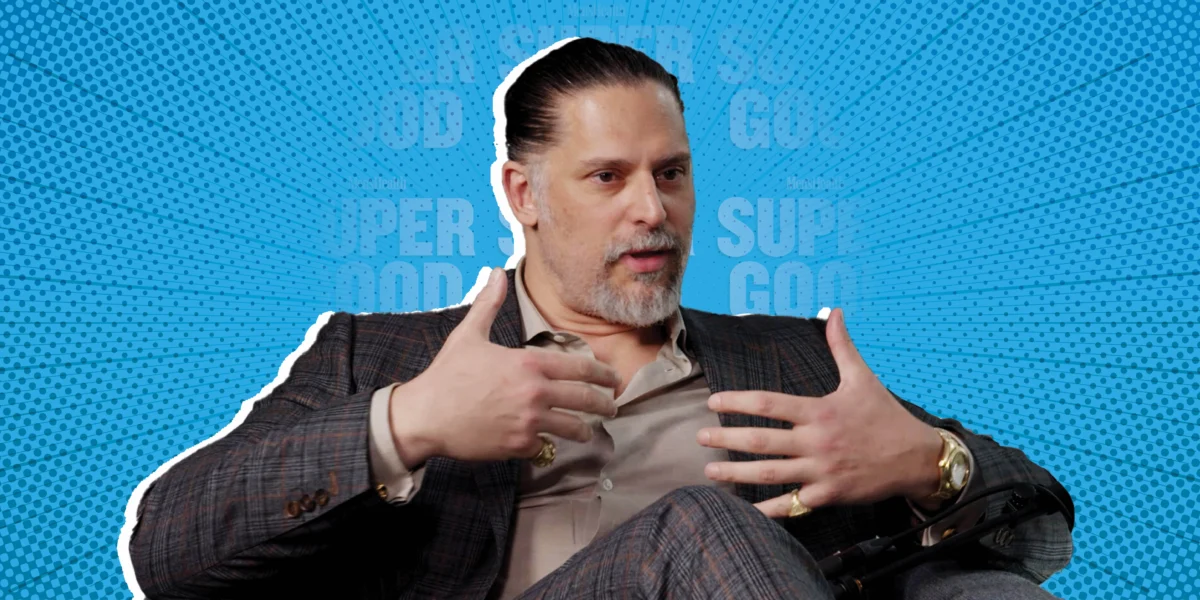
"For a decade, I lived a closeted existence with a life-threatening illness, pretending to be someone else every time I stepped into the public eye." — Joe Manganiello’s revelation highlights the profound psychological and physical burden of maintaining a high-performance public image while battling a debilitating chronic condition in private.
In a candid conversation on the debut episode of the new Men’s Health podcast Super Good, actor Joe Manganiello has finally pulled back the curtain on a ten-year struggle with a mysterious and dangerous autoimmune disease. Known globally for his roles as Flash Thompson in Spider-Man, the werewolf Alcide Herveaux in True Blood, and the physically imposing Big Dick Richie in Magic Mike, Manganiello has long been the archetype of masculine vitality and peak physical fitness. However, his new memoir, Bloodlines, and his recent interview with editorial director Rich Dorment reveal that this image of invincibility was a carefully constructed mask. Behind the scenes, Manganiello was navigating a medical "nightmare" that not only threatened his career but frequently put his life at risk, forcing him to reconcile his public persona with a fragile and painful private reality.
The Duality of Public Strength and Private Fragility
For much of the last decade, Joe Manganiello’s name has been synonymous with the "gold standard" of Hollywood fitness. His 2013 book, Evolution, was a guide to the intense training and discipline required to achieve a superhero physique. Yet, it is now clear that while the world was looking to him for fitness inspiration, he was struggling with a body that was essentially attacking itself. Autoimmune diseases, which occur when the immune system mistakenly targets the body’s own healthy tissues, are notoriously difficult to diagnose and manage. For an actor whose livelihood depends on physical consistency and high-energy performance, such a diagnosis is not just a health crisis; it is an existential threat.
Manganiello describes his experience as a "closeted existence." This choice of words is telling, suggesting that the shame and fear associated with being "sick" in an industry that demands perfection were as heavy as the physical symptoms themselves. He speaks of the exhaustion of "pretending to be somebody else" whenever he left his house. In social settings, he relied on small talk to deflect from the reality of his condition, creating a barrier between himself and the world. This level of performative wellness is common among those with chronic illnesses, particularly men, who may feel that admitting to a physical vulnerability undermines their professional or personal identity.
The Deathstroke Complications and the DC Turning Point
The intersection of Manganiello’s health crisis and his professional ambitions reached a breaking point during his involvement with the DC Extended Universe. After a brief but impactful cameo as the assassin Deathstroke in the post-credits scene of Justice League, Manganiello was slated to be the primary antagonist in Ben Affleck’s standalone Batman film. The preparation for such a role is legendary in its intensity, requiring months of tactical training, heavy lifting, and strict dietary protocols.
Manganiello reveals that he was preparing for this role—perhaps the most significant of his career—while simultaneously managing the complications and "issues" related to his autoimmune disease. The physical toll of preparing for an elite action role while the body is in a state of internal rebellion is almost unfathomable. However, the project eventually fell apart when Affleck stepped down as director and the script was overhauled, eventually becoming the Matt Reeves version of The Batman starring Robert Pattinson.
For Manganiello, the cancellation of the project was more than just a professional disappointment; it was a moment of violent clarity. He describes the news as "the brakes getting slammed," causing everything in his life to "fly into the windshield." In the sudden stillness that followed the loss of the role, he was forced to stop running and finally look in the mirror. What he saw were the literal and metaphorical scars of a decade-long battle. This "nightmare" scenario became the catalyst for his current era of transparency.
The Psychological Impact of Chronic Illness
One of the most poignant aspects of Manganiello’s story is the longing for authenticity. He speaks of a deep-seated desire for the "story to be out there" so that he no longer has to maintain the facade of the untouchable action star. This sentiment resonates with millions of people living with "invisible" illnesses—conditions that do not always manifest in obvious physical ways but cause immense internal suffering.
The psychological burden of chronic illness is often exacerbated by the "masking" Manganiello describes. When an individual spends their energy appearing healthy, they have little left for actual recovery or emotional processing. By coming forward, Manganiello is not just sharing a medical history; he is reclaiming his identity. He is moving away from being a "character" in his own life and toward being a whole person whose struggles are as much a part of him as his successes.
"Bloodlines" and the Path to Advocacy
Manganiello’s new memoir, Bloodlines, serves as a formal documentation of this journey. While the book touches on his Hollywood career, its core appears to be an exploration of resilience and the hidden battles that define us. The title itself suggests a focus on biology, heritage, and the internal systems that both sustain and betray us.
In the debut episode of Super Good, Manganiello’s participation signals a shift in the cultural conversation around men’s health. Historically, health coverage for men has focused almost exclusively on external results: muscle mass, sexual performance, and career dominance. The Super Good podcast, hosted by Rich Dorment (who oversees both Men’s Health and Women’s Health), aims to pivot toward a more holistic view of wellness. By focusing on "routines, rituals, and real-life strategies," the show provides a platform for high-profile figures to discuss the "much more" that goes into feeling one’s best—including the management of chronic conditions and mental health.
The Broader Implications for Men’s Health
Manganiello’s revelation is a landmark moment for men’s health advocacy. There is a persistent "tough it out" culture that discourages men from seeking help or speaking openly about physical vulnerabilities. When a man who looks like Joe Manganiello—the literal embodiment of the "Alpha" male in modern media—admits that he was terrified and "in a nightmare" due to illness, it creates a permission structure for other men to do the same.
Autoimmune diseases, such as lupus, rheumatoid arthritis, or Crohn’s disease, are often associated more frequently with women in public discourse, but they affect millions of men who may feel isolated by their symptoms. Manganiello’s story highlights the necessity of medical transparency and the importance of listening to one’s body, even when the world expects it to perform at an elite level.
Conclusion: A New Chapter of Authenticity
At 49 years old, Joe Manganiello is entering a new phase of his life and career, one defined by the truth rather than the "pretending" of the previous decade. The "story is out there" now, and with the release of Bloodlines and his appearance on Super Good, he has transitioned from being a silent sufferer to an influential voice in the chronic illness community.
His journey serves as a reminder that the images we see on screen are often the result of immense, unseen labor and, sometimes, immense, unseen pain. By sharing the reality of his "scars" and the complications of his health, Manganiello has replaced the myth of the invincible hero with something far more valuable: the reality of a resilient human being. His story is a testament to the fact that true strength is not the absence of illness, but the courage to face it openly and the determination to keep building a life in spite of it.
