
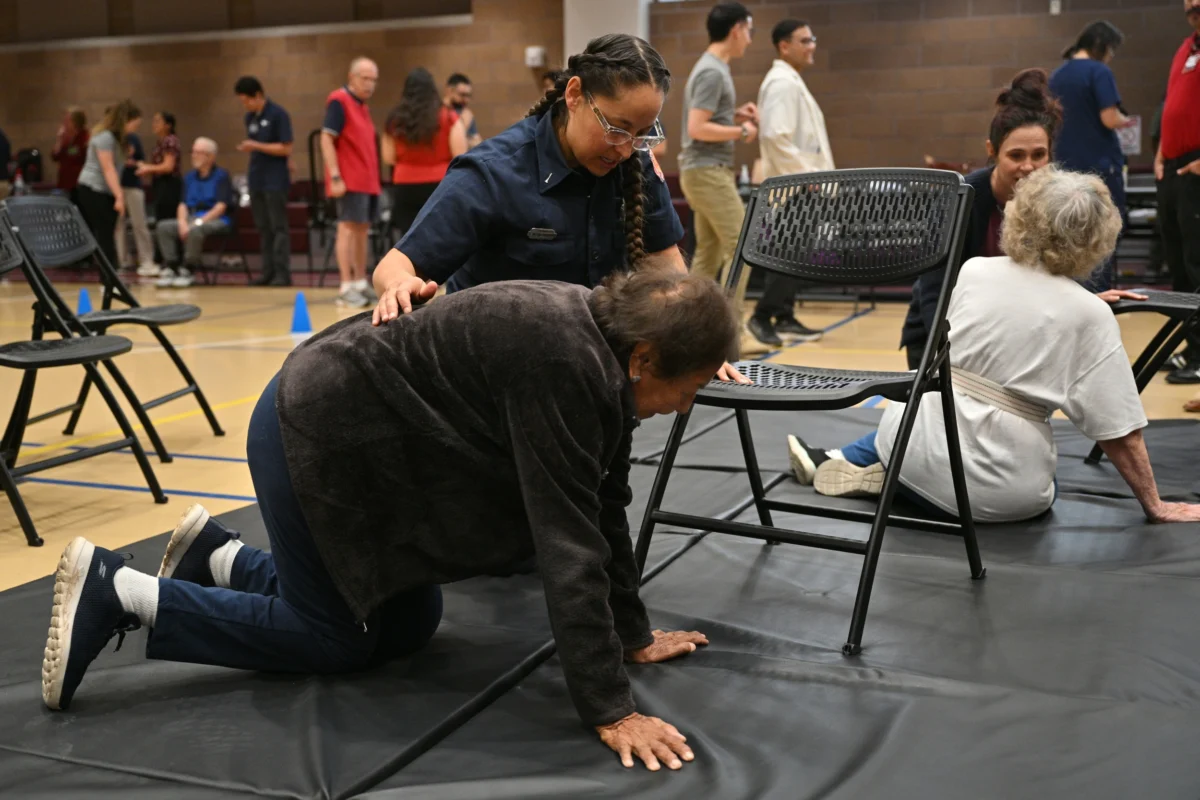
"Integrating a brief, equipment-free strength and balance program into primary care significantly reduced medically recorded falls in at-risk older adults by 9%, offering a practical and accessible intervention to enhance senior safety and independence."
A recent clinical trial, published in JAMA Network Open, has demonstrated the tangible benefits of making simple home-based strength and balance exercises readily available to older adults identified as being at risk of falling. The eSTEPS trial found that when primary care clinics were equipped with tools to easily prescribe these short, accessible programs, the rate of medically recorded falls among their at-risk patients saw a modest but significant decrease. This finding holds crucial implications for families and healthcare providers seeking effective strategies to mitigate the risks associated with falls, a leading threat to the independence and well-being of seniors. The study underscores the power of preventative measures that are not only evidence-based but also practical and easily integrated into existing healthcare workflows.
The eSTEPS trial, a robust study involving 11,945 adults aged 65 and older across 22 primary care practices within a single health system, aimed to assess the impact of an integrated approach to fall prevention. Participants were screened for fall risk using a brief, three-question assessment. Those identified as high-risk in the "intervention" clinics were presented with a non-interruptive alert in their electronic health records, prompting clinicians to consider prescribing a tailored home exercise program. This system was designed to be seamless, offering an order set for these exercises as a readily available option, alongside the existing referral pathway for physical therapy.
The exercises themselves were derived from the well-established Otago Exercise Programme, a scientifically validated set of leg-strengthening and balance-enhancing movements. However, the eSTEPS program simplified these exercises, making them even more accessible. They were designed to be completed in approximately 10 minutes, requiring no special equipment, and were offered at four distinct difficulty levels, with beginner and seated options readily available as defaults. To support patient adherence and understanding, participants received a variety of resources, including printed handouts, summaries of their clinic visits, messages through patient portals, and access to an informative website and a dedicated mobile application featuring instructional videos.
The trial, which ran from June 2023 to May 2025, provided participants with 12 to 23 months of follow-up data. The average age of the participants was 77, with approximately two-thirds being women. The study’s registration on ClinicalTrials.gov (NCT04993781) ensures transparency and facilitates future research. The overarching conclusion drawn by the researchers was that falls and fall-related injuries experienced by older adults receiving care in primary settings could be modestly reduced through such interventions.
Modest Gains, with Important Implications for Senior Health
The impact of the eSTEPS intervention extended beyond just the frequency of falls. Fall-related injuries also saw a reduction, with a rate of 15.7 per 100 patient-years in the intervention group compared to 16.7 in the usual care group. This benefit was particularly pronounced in older participants, those aged 76 and above. While the study noted a slight decrease in hospitalizations in an analysis conducted after the trial’s commencement, there was no significant difference in mortality rates between the two groups.
To contextualize the magnitude of the benefit, researchers estimated that approximately 29 individuals would need to participate in the program for two years to prevent a single fall. This metric highlights that while the intervention is effective, it represents a modest gain, emphasizing the importance of widespread adoption and adherence for a collective impact. Crucially, the safety monitoring of the eSTEPS program found no serious adverse events directly attributable to the prescribed exercises, underscoring its safety profile.
A notable finding regarding clinician engagement was that around 78% of clinicians in the intervention practices utilized the tool to prescribe exercises at least once. Furthermore, the rates of physical therapy referrals remained remarkably similar between the intervention and usual care groups (approximately 56% and 57%, respectively). This suggests that the home exercise program acted as a valuable complementary option rather than a replacement for traditional physical therapy, offering a more layered approach to fall prevention.
However, the study’s findings are accompanied by several important caveats that warrant careful consideration. Only about 22% of patients in the intervention practices actually received an exercise prescription, indicating a gap between the availability of the tool and its uptake. Moreover, the researchers did not actively track patient adherence to the prescribed exercises, meaning the exact impact of completed workouts on fall reduction remains unknown. The measurement of falls was based on medically recorded diagnosis codes, a method that inherently misses falls that are not reported to healthcare professionals.
Further limitations include the fact that the trial was conducted within a single health system, potentially limiting the generalizability of the findings to diverse healthcare settings. The initial demographics of the groups also differed; intervention practices tended to serve a higher proportion of Black patients and those with lower median incomes. When researchers adjusted for these baseline differences, only self-reported falls demonstrated a statistically significant reduction, suggesting that the impact on medically recorded falls might be influenced by reporting practices and access to care.
The research was supported by funding from the National Institute on Aging, a testament to the federal government’s commitment to addressing the public health challenge of falls in older adults. The study’s authors have disclosed potential conflicts of interest, with one reporting equity in health technology companies and several reporting grants from the National Institutes of Health (NIH).
Falls: A Persistent Threat to Senior Independence and Well-being
The public health significance of falls among older adults cannot be overstated. According to the Centers for Disease Control and Prevention (CDC), falls are the leading cause of injury-related death for individuals aged 65 and older, accounting for over 43,000 fatalities in 2024 alone. In the same year, these falls led to an estimated 4.5 million emergency department visits, highlighting the substantial burden on healthcare systems and the profound impact on individuals and their families.
Beyond the immediate risk of death or serious injury, a single fall can trigger a cascade of negative consequences. Fractures, traumatic brain injuries, and the resulting loss of confidence can profoundly affect an older adult’s ability to walk, engage in social activities, and maintain their independence. This fear of falling can lead to reduced physical activity, which in turn can weaken muscles, impair balance, and paradoxically increase the risk of future falls. This creates a challenging cycle that diminishes quality of life and can accelerate functional decline.
Numerous factors contribute to an increased risk of falling in older adults. These include muscle weakness, particularly in the legs, diminished balance, the use of certain medications such as sedatives and antihypertensives, vision impairments, foot pain, and environmental hazards within the home, such as loose rugs, inadequate lighting, and poorly placed furniture. Fortunately, many of these risk factors are modifiable. The CDC’s STEADI (Stopping Elderly Accidents, Deaths, and Injuries) initiative provides healthcare providers with valuable tools and resources to effectively screen older patients for fall risk and to develop personalized prevention plans.
Initiating a Safe and Effective Home Exercise Program
For older adults, their families, and caregivers, the eSTEPS trial offers a clear call to action: engage in conversations about fall prevention with healthcare providers. A primary care visit, especially following a fall, a near-fall, or a noticeable increase in unsteadiness, is an opportune time to request a fall risk assessment. Key questions to pose include the suitability of a home-based strength and balance program, the appropriate starting level of exercises, and whether an initial physical therapy evaluation would be beneficial.
Medicare provides coverage for a yearly wellness visit, which serves as an excellent platform to discuss concerns about falls. Furthermore, Medicare covers physical therapy when deemed medically necessary. Beyond clinical settings, many local agencies on aging offer accessible and low-cost community-based programs, such as tai chi and dedicated balance classes, which can complement home-based efforts.
Caregivers play a vital role in supporting the successful implementation of home exercise programs. Establishing a consistent schedule for exercises, remaining present and supportive during standing movements, and ensuring a sturdy chair or counter is within easy reach can significantly enhance safety and adherence. It is imperative to start slowly and to encourage individuals to stop if they experience chest pain, dizziness, or shortness of breath. Those with pre-existing conditions such as heart disease, recent surgery, or severe joint problems should always obtain their clinician’s approval before commencing any new exercise regimen.
Modifications to the home environment are equally critical in preventing falls. Removing trip hazards, installing nightlights in hallways and bathrooms, and adding grab bars in key areas like the shower and near the toilet can make a significant difference. A thorough review of all medications with a pharmacist is also recommended, as some drugs can cause dizziness or drowsiness, increasing fall risk. It is crucial to emphasize that prescribed medications should never be discontinued without direct medical advice. In the event of a fall, particularly if the individual has hit their head, is unable to get up, experiences new confusion, or is taking anticoagulant medication, urgent medical attention is paramount.
Key Questions Answered
- What did the eSTEPS trial find? The trial revealed that primary care practices equipped to prescribe home-based strength and balance programs observed a 9% reduction in medically recorded falls among older adults at risk, compared to practices providing standard care.
- What exercises were used? The intervention utilized simplified, equipment-free exercises adapted from the Otago Exercise Programme. These movements focused on strength and balance, were offered at four difficulty levels including seated options, and required approximately 10 minutes per session.
- How significant was the benefit? The reduction in falls was modest; an estimated 29 patients needed to be enrolled in the program for two years to prevent one fall. Additionally, only about 22% of patients in the intervention practices actually received an exercise prescription.
- Were the exercises safe? Safety monitoring within the trial indicated no serious adverse events linked to the home exercise program.
- How can families advocate for a fall prevention program? Families can request a fall risk assessment during a primary care visit and inquire about the suitability of home exercise programs, physical therapy, or local community balance classes.
- When does a fall necessitate immediate medical attention? Urgent care is required following a fall that results in a head injury, if the individual is unable to rise, if new confusion develops, or after any fall in individuals taking blood-thinning medications.
