
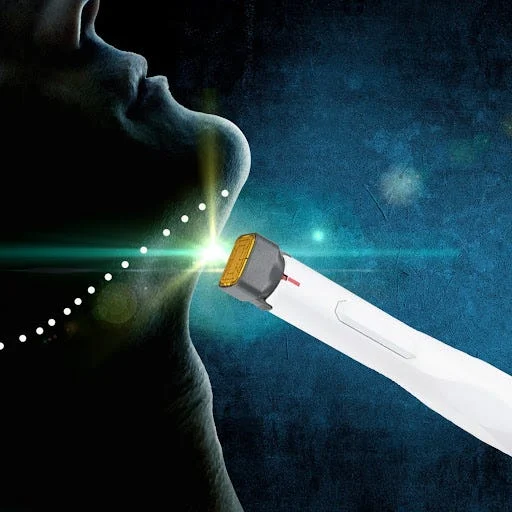
“Modern dermatological innovations are shifting the focus from painful, long-term recovery to immediate structural remodeling, allowing for visible facial sharpening without the traditional trauma of surgical intervention.”
As the aesthetic industry pivots toward "tweakments" that offer minimal downtime, a new wave of Korean-engineered technology is targeting one of the most common signs of aging: the softening of the jawline. By utilizing dual-frequency radiofrequency energy and integrated cooling systems, treatments like XERF are bridging the gap between temporary topical solutions and invasive plastic surgery, providing a biological "reset" for the skin’s structural integrity.
The Biological Erosion of the Jawline
For many men and women reaching their 40s, the mirror reveals a subtle but persistent transformation. The once-sharp perimeter of the face—often associated with the "granite-jawed" archetypes of cinema and comic books—begins to blur. This phenomenon, colloquially referred to as the onset of "Jowlsville," is the result of a complex interplay of biological degradation.
The primary culprit is the diminishing production of collagen and elastin, the scaffolding proteins responsible for skin’s "snap" and firmness. As collagen synthesis slows, the skin loses its ability to resist gravity. Simultaneously, facial fat pads—which provide youthful volume—begin to thin in the mid-face and migrate downward toward the mandible. Even the underlying bone structure undergoes subtle resorption, leaving the lower face with less support. The result is a transition from a crisp, defined edge to a softer, more rounded silhouette.
The Evolution of Non-Invasive Tightening
In the quest to reclaim this lost definition, the dermatological field has seen a proliferation of "controlled injury" technologies. The premise is consistent across the board: by delivering precise amounts of energy to the deeper layers of the dermis and the sub-dermal tissue, doctors can "bully" the body into a healing response. This response triggers neocollagenesis—the production of fresh, high-quality collagen.
Until recently, the market was dominated by three primary modalities:
- Ultherapy: This treatment utilizes High-Intensity Focused Ultrasound (HIFU) to target the foundational layers of the skin, including the SMAS (Superficial Musculoaponeurotic System), which is the same layer adjusted during a surgical facelift. While effective, it is often described as significantly uncomfortable.
- Sofwave: A newer ultrasound technology that uses Synchronous Ultrasound Parallel Beam (SUPERB™) technology to heat the mid-dermis. It is generally considered less painful than Ultherapy but focuses more on fine lines and moderate lifting.
- Morpheus8: A fractional treatment that combines microneedling with radiofrequency (RF). By physically puncturing the skin and delivering energy through the needles, it remodels fat and tightens tissue. However, the recovery often involves several days of redness and potential swelling.
While these treatments have proven successful in "holding the line," they often require a "wait-and-see" period of three to six months before the full results of collagen remodeling become visible.
The XERF Innovation: A Dual-Frequency Approach
The latest entry into the aesthetic arena is XERF (pronounced “zerf”), a technology originating from South Korea—a global epicenter for skincare and cosmetic innovation. Unlike its predecessors, XERF is a specialized radiofrequency treatment designed to provide both immediate gratification and long-term structural improvement.
The technical distinction of XERF lies in its dual-frequency delivery. Most RF devices operate on a single frequency, which limits the depth and uniformity of the heat. XERF, however, utilizes two distinct frequencies to heat tissue at varying depths simultaneously. This "volumetric heating" ensures that the energy reaches both the deep dermis and the superficial layers of the subcutaneous fat.

When these layers are heated to a specific therapeutic temperature, two things happen. First, the existing collagen fibers undergo an immediate physical contraction. This is the "Cinderella effect"—an instant tightening that can be seen the moment the procedure is finished. Second, the heat initiates the long-term inflammatory response required to build new collagen over the subsequent weeks.
The Patient Experience: Comfort Meets Efficacy
One of the most significant barriers to male adoption of aesthetic procedures has been the "pain factor" and the "telltale sign" factor—the fear of looking like a medical patient for days after a treatment. XERF addresses both through a sophisticated cooling mechanism.
During the procedure, a handheld wand is moved across the jawline and cheeks. As the device pulses radiofrequency energy into the skin, it simultaneously delivers bursts of cooling to the epidermis. This protects the surface of the skin from thermal damage and significantly masks the sensation of heat. Patients often describe the feeling not as a series of painful zaps, but as the repeated application of a warm washcloth.
In a clinical setting, such as at Soho Dermatology in New York City under the direction of Dr. David Kim, the results are often demonstrable mid-procedure. When one side of the face is treated, the lift is frequently visible in the mirror immediately: the jawline appears sharper, the nasolabial folds (smile lines) are softened, and the skin looks more "tucked." Because the surface of the skin is protected by the cooling system, the patient can leave the office with only minimal redness, allowing for an immediate return to professional and social obligations.
The Cultural Shift in Male Aesthetics
The rise of treatments like XERF reflects a broader cultural shift in how men approach aging. The "Optimized Man" is no longer content with just hitting the gym; there is an increasing recognition that the "Chris effect"—referring to the hyper-defined jawlines of Hollywood’s leading men like Chris Evans and Chris Hemsworth—is often as much about dermatological maintenance as it is about genetics.
For many men, the motivation is not a desire to look younger, but a desire to look "less tired" or "more fit." In a professional world that often prizes vitality, a softening jawline can be perceived (rightly or wrongly) as a sign of waning energy. Non-invasive procedures provide a way to maintain a competitive "edge" without the stigma or recovery of plastic surgery.
Research and Long-Term Outlook
While XERF is a relatively new arrival in the United States, early research—including animal studies and preliminary human trials in Asia—supports its efficacy in collagen remodeling. The dual-frequency approach appears to offer a more uniform thermal profile than older RF devices, potentially leading to more consistent results across different skin types.
However, dermatologists caution that these treatments are not permanent solutions. The natural aging process continues, and the "new" collagen produced by the body will eventually succumb to the same degradative processes as the old. Maintenance sessions, typically spaced 12 to 18 months apart, are usually recommended to preserve the sharpening effects.
Conclusion: The Psychology of the Jawline
Ultimately, the obsession with the jawline is about more than vanity; it is about the intersection of self-perception and biological reality. While the world may have larger concerns than the "marshmallow-like" softening of a middle-aged face, the ability to address these personal insecurities through painless, high-tech intervention is a hallmark of modern wellness.
XERF represents the next step in this evolution—a tool that allows individuals to "hold the line" against time with clinical precision and zero downtime. As the technology continues to proliferate, the "block of granite" jawline may no longer be the exclusive domain of superheroes and the genetically blessed, but an achievable standard for anyone willing to embrace the next generation of Korean skin science.
