
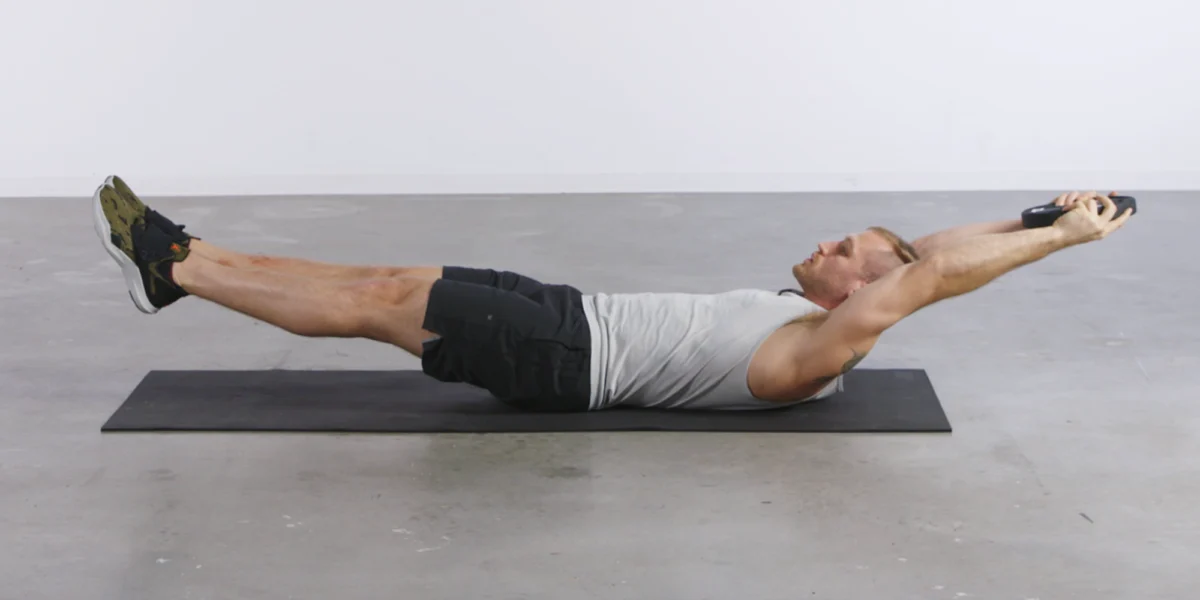
"The hollow hold transcends traditional abdominal training by prioritizing isometric bracing over repetitive flexion, forging a foundation of stability that protects the spine and enhances athletic performance."
While many fitness enthusiasts focus on high-repetition movements like crunches or situps, these often fail to address the core’s primary role: stabilizing the torso and protecting the spine under tension. The hollow hold, a foundational element of gymnastic training, addresses this gap by requiring total-body integration and intense, sustained abdominal engagement. By mastering this static hold, individuals can improve their posture, increase their heavy lifting capacity, and develop the "bulletproof" midsection necessary for both high-level athletics and long-term functional health.
The Limitations of Traditional Abdominal Training
For decades, the situp has been the gold standard for abdominal training in gymnasiums and military barracks alike. However, modern exercise science suggests that an over-reliance on trunk flexion—the act of bringing the chest toward the knees—can be counterproductive. When performed with poor form or in excessive volumes, situps can lead to hip flexor dominance and unnecessary strain on the lumbar spine. More importantly, they only train the core in one plane of motion and one specific function.
The core is not merely a "six-pack" muscle designed for aesthetic appeal; it is a complex system of muscles intended to transfer force between the upper and lower body while maintaining a rigid midsection. This function is known as bracing. Without the ability to brace, an athlete cannot safely perform a heavy squat, a stable overhead press, or a powerful sprint. The hollow hold is perhaps the most effective isometric exercise for teaching this bracing mechanism, forcing the various layers of the abdominal wall to work in perfect synchronicity.
The Anatomy of the Hollow Body Position
To understand why the hollow hold is so effective, one must look at the musculature it recruits. Unlike a crunch, which primarily targets the rectus abdominis (the superficial "six-pack" muscles), the hollow hold demands activation from the deepest layers of the core.

- Transverse Abdominis (TVA): This is the body’s internal weight belt. It wraps around the midsection and is responsible for intra-abdominal pressure. The hollow hold requires the TVA to stay contracted to keep the lower back flat against the floor.
- Rectus Abdominis: While the TVA provides depth, the rectus abdominis provides the necessary tension to keep the ribs "knitted" toward the pelvis.
- Obliques: The internal and external obliques provide lateral stability, ensuring the torso does not rotate or tilt during the hold.
- Hip Flexors and Quads: To keep the legs extended and hovering just above the ground, the iliopsoas and rectus femoris must maintain significant isometric tension.
- Erector Spinae: Though often thought of as "back muscles," these work in tandem with the abdominals to stabilize the spinal column throughout the duration of the exercise.
Mastering the Technique: A Step-by-Step Breakdown
The beauty of the hollow hold lies in its simplicity, yet its difficulty is often underestimated. Ebenezer Samuel, C.S.C.S., fitness director at Men’s Health, emphasizes that the effectiveness of the move is entirely dependent on the integrity of the form.
The Foundation: The Lower Back Press
The most critical component of the hollow hold is the relationship between the lumbar spine and the floor. In a relaxed state, the human spine has a natural inward curve (lordosis). To perform a hollow hold correctly, you must eliminate this gap by performing a posterior pelvic tilt. You are essentially "crushing" the floor with your lower back. If a hand can slide between your back and the floor, the core is not properly engaged, and the tension is likely shifting to the hip flexors or the spine itself.
The Upper Body Lever: Shoulder Blades Up
Many beginners make the mistake of simply lifting their arms. However, the arms are merely an extension of the lever. The real work begins when the shoulder blades (scapulae) are lifted off the ground. This "hollows" out the chest and creates a massive amount of tension in the upper abdominals. You do not need to sit up high; even a few millimeters of clearance between your shoulder blades and the mat is sufficient to trigger the desired stimulus.
The Extremities: Legs and Arms
Once the midsection is locked in, the legs should be extended straight out, hovering roughly two to six inches off the floor. The lower the legs, the harder the move, provided the back remains flat. Simultaneously, the arms should be extended overhead, flanking the ears. This creates the longest possible lever, maximizing the torque the core must resist.
The Neck: Maintaining Neutrality
A common pitfall is the "turtle" neck—tucking the chin aggressively into the chest. While this may feel like it helps you stay up, it often leads to neck strain and actually reduces the demand on the core. By keeping the neck in a neutral alignment and gazing upward or slightly forward, you ensure that the weight of your head acts as additional resistance for the abdominals to manage.
Scaling the Movement for Progress
Not everyone possesses the initial strength to hold a full hollow body position with perfect form. Forcing the full version often leads to an arched back, which defeats the purpose of the exercise.

The Dead Bug Modification: If the full hold is too taxing, shorten the levers. Bend your knees at a 90-degree angle and reach your arms straight up toward the ceiling rather than overhead. This reduces the rotational force on the spine, making it easier to keep the lower back pressed into the ground. As you get stronger, slowly extend one leg at a time, eventually working toward the full version.
Programming for Results
The hollow hold is an isometric exercise, meaning the goal is time under tension rather than repetitions. For most fitness levels, Samuel recommends aiming for three to four rounds. Each round should last between 45 seconds and a full minute.
Because the hollow hold is a low-impact movement that focuses on neurological "firing" and stability, it can be integrated into almost any part of a workout. It serves as an excellent "primer" during a warm-up to wake up the core before heavy lifting, or as a finisher to exhaust the abdominal muscles at the end of a session.
Advanced Variations and Dynamic Challenges
Once the basic hold is mastered, athletes can introduce variables to further challenge their stability and coordination.
- The Weighted Hollow Hold: Holding a small dumbbell or weight plate in the hands significantly increases the lever’s difficulty, demanding more from the upper abs and serratus anterior.
- The Uneven Hollow Hold: By extending one arm overhead and the other out to the side in an "L" shape, you create an asymmetrical load. This forces the core to fight against rotation, engaging the obliques more intensely.
- The Hollow Body Rock: This adds a dynamic element. While maintaining the rigid "banana" shape of the hollow hold, use a tiny amount of momentum to rock forward and backward. The challenge here is to keep the relationship between the ribs and pelvis perfectly static throughout the movement.
- The Gator Roll: This is the pinnacle of hollow body mastery. From the hold position, roll onto your side and then onto your stomach (into a "superman" position) without letting your hands or feet touch the ground. This requires 360-degree core engagement and exceptional spatial awareness.
The Long-Term Impact on Performance and Health
The benefits of the hollow hold extend far beyond a toned stomach. By training the body to maintain a rigid torso, you develop a "transferable" strength that applies to nearly every other movement in the gym. In the world of gymnastics, the hollow body is the "universal" position—it is the secret to a perfect handstand, a powerful pull-up, and a stable dip.
For the average gym-goer, the hollow hold is a potent tool for injury prevention. By strengthening the deep stabilizers of the spine and teaching the pelvis to stay in a neutral or slightly posterior position, it can alleviate the chronic lower back pain often caused by an anterior pelvic tilt and weak abdominals. Ultimately, the hollow hold is not just an exercise; it is a fundamental lesson in how to control and protect the human frame.
