
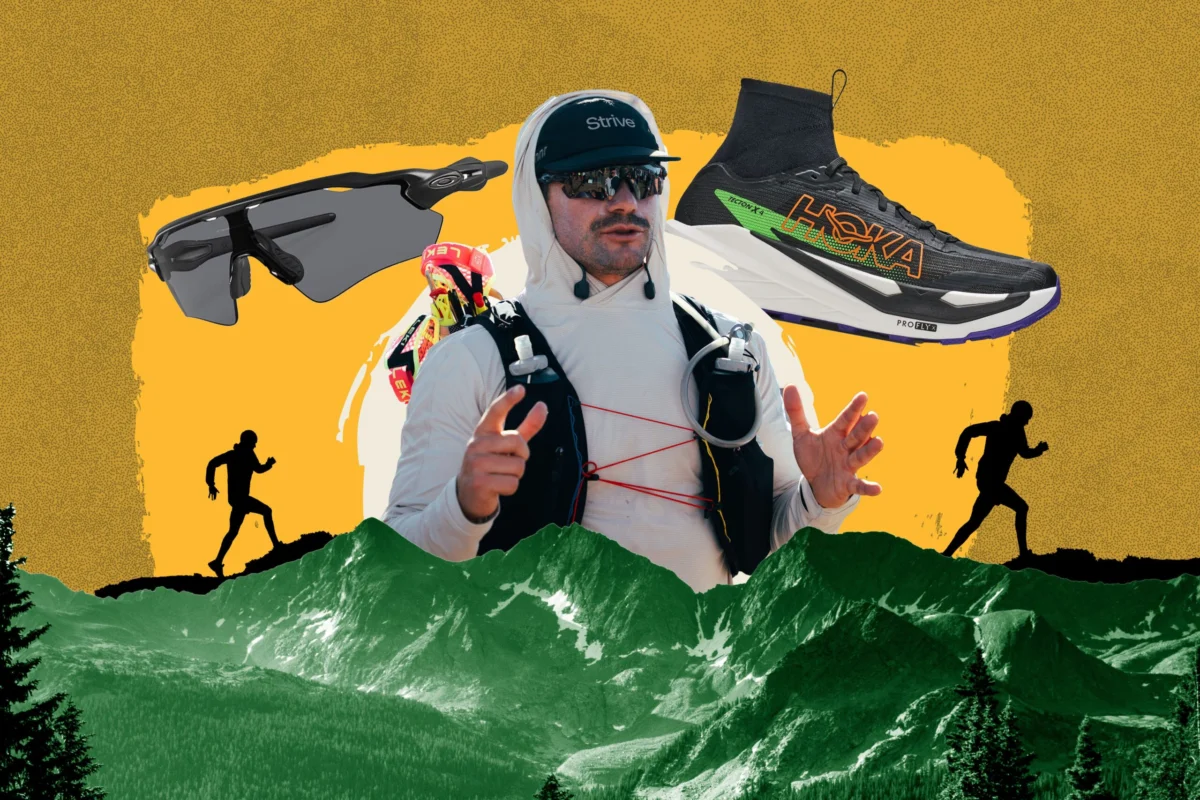
"In the crucible of a 100-mile ultramarathon, the ultimate success of a gear strategy lies not in its complexity, but in its ability to become invisible, allowing the athlete to transcend physical discomfort and focus solely on the next step."

This narrative chronicles entrepreneur and athlete Jack Espy’s journey through the legendary Leadville 100, detailing a meticulous approach to equipment that evolved from a rigid spreadsheet to a series of intuitive, performance-based decisions. By analyzing the intersection of technical apparel and extreme human endurance, this account offers a blueprint for navigating the volatile variables of high-altitude racing, where success is measured as much by mental adaptability as by physical preparation.

The Leadville Trail 100 Run, often referred to as the "Race Across the Sky," is one of the most prestigious and punishing endurance events in the world. Set against the rugged backdrop of the Colorado Rockies, the course starts at 10,200 feet and climbs to a staggering 12,600 feet at the summit of Hope Pass. For Jack Espy, a businessman who only nine months prior could barely complete a five-mile run, lining up at the start line on Saturday, August 22, represented the culmination of a transformative 50-week training regimen. When he crossed the finish line 28 hours and 26 minutes later, he had not only conquered 100 miles of trail and 14,500 feet of vertical gain but had also gained a profound understanding of how gear serves as the silent partner in ultra-endurance success.

The Foundation: Start Line to Mile 26
The opening quarter of the Leadville 100 is deceptively runnable, winding through technical but relatively flat sections that lure runners into a faster pace than they can sustain. Espy’s strategy for this segment was built on efficiency and foot health. He opted for the Hoka Tecton X 4, a shoe that proved to be the "Most Valuable Player" of the race. While many trail runners lean toward maximum cushion for long distances, the Tecton X 4 provides a responsive, carbon-plated ride that excels on the smoother, faster sections of the Leadville course.

Foot management is the primary concern during the first 25 miles. Blisters at mile 20 can become race-ending infections or gait-altering pains by mile 80. Rather than using traditional athletic tape, Espy utilized a high-lubrication strategy combined with SweetFeet V2 Performance Socks. By thoroughly lubricating the toes and midfoot before donning compression-style socks, he created a low-friction environment that could withstand the initial heat and dust of the morning.

For apparel, the focus was on moisture management. He wore Bandit Vento 5” shorts and a Lululemon EasySet Training Sleeveless Shirt, paired with Path Projects Moab Arm Sleeves. Arm sleeves are a versatile tool in high-altitude racing; they provide sun protection during the heat of the day and a layer of warmth during the chilly pre-dawn start, all while being easily adjustable without stopping.

Adapting to the Ascent: Mile 26 to Twin Lakes
As the race progressed toward the 40-mile mark at Twin Lakes, the environmental demands shifted. High-altitude sun exposure is a significant factor in athlete fatigue, as UV intensity increases significantly with elevation. To combat this, Espy swapped his standard running hat for a Ciele Bucket Hat, providing 360-degree protection for the ears and neck. He also transitioned to a Path Projects Wadi LS Tee 2.0 to keep the sun off his skin entirely.

The hydration strategy also evolved. While he began with a 10-liter Salomon ADV Skin vest, he upsized to the 12-liter version at mile 26. This change allowed him to carry Leki Ultratrail FX.One Trekking Poles and an extra shell. In an ultramarathon, the ability to carry more gear often correlates with safety and comfort. The Leki poles, specifically designed for trail running with a lightweight carbon construction and a "trigger shark" glove system, would become essential for the looming ascent of Hope Pass.

The Crux: Twin Lakes to Winfield (Mile 40 to 52)
The section between Twin Lakes and the Winfield turnaround is the heart of the Leadville 100. It requires crossing glacial rivers and navigating the steep, technical terrain of Hope Pass twice. Knowing his feet would inevitably get wet during river crossings, Espy changed into Hoka Speedgoat 7s. The Speedgoat is a staple in the ultra-running community, known for its Vibram Megagrip outsole and deep lugs, which provide the necessary traction for muddy climbs and loose descents.

Crucially, he switched to Creepers Toe Socks. Unlike traditional socks, toe socks wrap each digit individually, preventing skin-on-skin friction—a major cause of "interdigital" blisters when feet are wet and swollen. He also added gaiters to prevent debris from entering his shoes, a small but vital detail when navigating miles of scree and mud.

Nutrition during this phase shifted from purely engineered fuels, like Precision Fuel PF90 Energy Gels and UnTapped Maple Syrup, to whole foods. At the Twin Lakes aid station, Espy integrated sandwiches into his diet. In the later stages of a 100-miler, the stomach often begins to "shut down" due to blood being diverted to the legs; real food can often settle the GI tract better than highly concentrated sugars.

The Turnaround and the Night: Mile 52 to 75
Reaching Winfield at mile 52 is a psychological milestone, but it is immediately followed by the daunting task of reclimbing Hope Pass from the opposite side. As evening approached, the gear strategy shifted toward thermal regulation and visibility. Espy added an Arc’teryx Norvan Windshell Hoody and an Arc’teryx Bird Head Toque Beanie to his kit. The temperature in the Colorado mountains can drop 30 degrees in a matter of minutes once the sun sets, and hypothermia is a constant threat to exhausted runners.

Visibility was handled by the Black Diamond Storm 450 Headlamp. A high-lumen, reliable light source is not just about seeing the trail; it is about preventing the mental fatigue that comes from "tunnel vision" during the overnight hours. To support his joints through the punishing descents, he applied Flytex Knee Compression Sleeves, providing external stability to knees that had already absorbed over 50 miles of impact.

The Intuitive Pivot: Mile 75 to the Finish
One of the most important lessons Espy learned was the value of intuition over planning. His original "spreadsheet" called for him to stay in the Speedgoats for the final 40 miles. However, when he arrived back at Twin Lakes (mile 64), his feet felt remarkably good in the Tecton X 4s he had used earlier. Despite the plan, he switched back to the Tectons. This decision highlights a core truth of ultrarunning: what works in training or on paper may not work at mile 70 of a race.

For the final 25 miles, he maintained a consistent setup. He stayed in the same Bandit Vento shorts he had worn since the start line—a testament to the gear’s anti-chafing properties. As the night deepened, he layered his Arc’teryx windbreaker and beanie, focusing on the "engine" rather than the equipment. By the time the sun rose for the second time, he was able to muster a final sprint to the finish line, completing the journey in 28:26.

Implications for Modern Endurance Training
Jack Espy’s success is as much a triumph of preparation as it is of execution. Working with two-time Leadville winner Duncan Callahan, Espy’s 50-week training block involved 90-mile weeks and four days of strength training. This rigorous foundation allowed him to test every piece of gear under stress before race day.

The primary takeaway from Espy’s Leadville experience is the philosophy of "invisible gear." In the context of a 100-mile race, the best equipment is the gear the athlete stops thinking about. If a runner is thinking about their shoes, it’s usually because their feet hurt. If they are thinking about their pack, it’s likely because it’s chafing. By meticulously selecting gear that disappeared into the background, Espy was able to devote his limited mental energy to the psychological battle of the distance.

Furthermore, his journey underscores the democratization of the ultramarathon. Nine months prior, Espy was a novice; through disciplined training and a sophisticated approach to equipment, he joined the ranks of Leadville finishers. His experience serves as evidence that while the "Race Across the Sky" remains a brutal test of the human spirit, the right combination of modern technology, expert coaching, and intuitive decision-making can make the impossible attainable. When the body reaches its perceived limit, and the mind begs to stop, having the right gear—and the wisdom to know when not to change it—provides the platform for that one final, essential step.
