
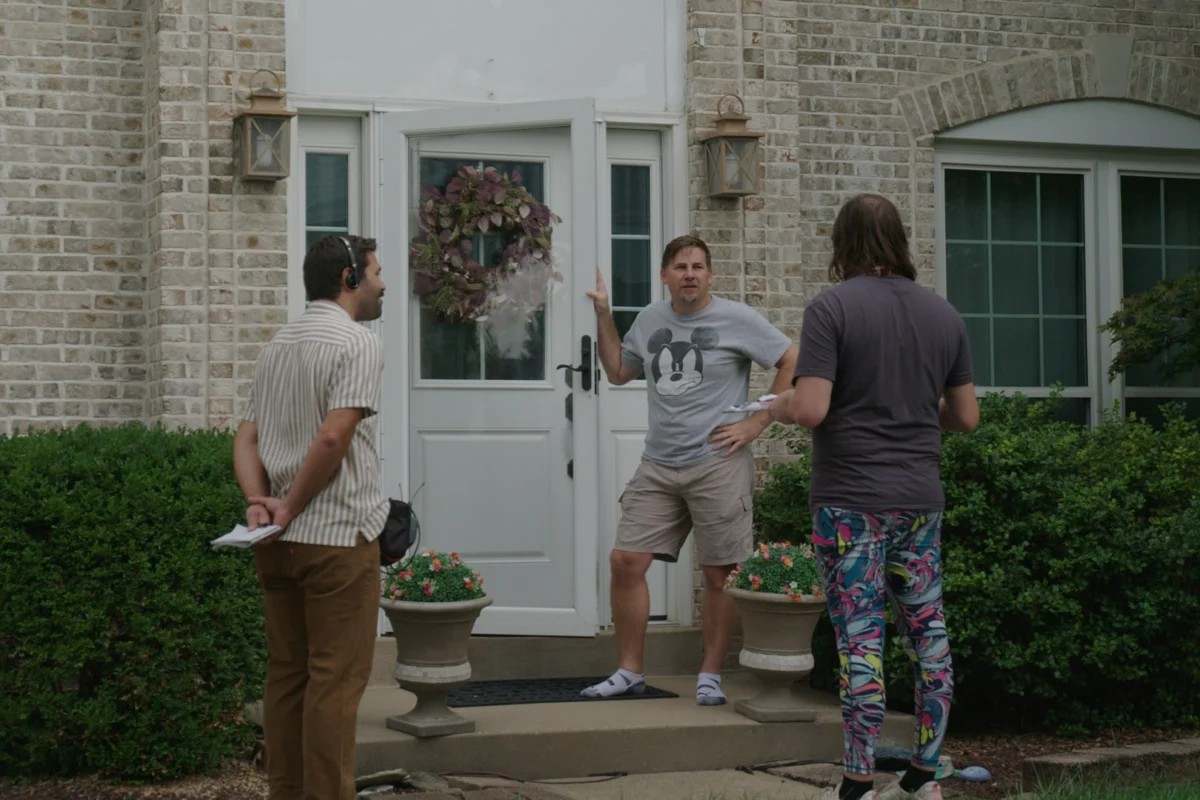
"We’re aiming for transformative conversations, hoping to bridge divides by sharing personal stories and fostering understanding, one doorstep at a time, in the crucial fight to protect transgender healthcare for minors."
In the affluent suburbs of St. Louis, Missouri, a determined group of LGBTQ+ advocates is employing an intensive "deep canvassing" strategy to influence public opinion on a contentious ballot measure that threatens to ban gender-affirming care for minors. Reneé Luckfield, a 29-year-old transgender woman and lead canvasser for PROMO Missouri, embodies the personal commitment driving this effort. Her approach, characterized by a deliberate, non-confrontational knock and a genuine desire to connect, aims to disarm potential resistance and open doors to empathetic dialogue. Despite the personal emotional toll, Luckfield and her team are engaging in a race against time, knocking on tens of thousands of doors across the state’s largest metropolitan areas in a bid to educate and persuade voters before Election Day. Their ambitious goal of 10,000 meaningful conversations is a testament to the power of face-to-face engagement in an increasingly polarized political landscape.
Transgender rights have ascended to a prominent position in this year’s midterm elections, particularly in Missouri, where voters face a proposed constitutional amendment that would prohibit minors from undergoing gender-transition surgeries, hormone therapies, and receiving puberty blockers. This measure is intricately linked with a broader effort to reinstate a near-total ban on abortion within the state. Beyond Missouri, voters in at least four other states are set to decide on similar transgender-related issues, including proposed bans on healthcare for minors in Colorado and restrictions on transgender athletes in youth sports across Arizona, Colorado, Nebraska, and Washington.
PROMO Missouri’s deep canvassing initiative is a critical component of their strategy to defeat the proposed measure. The organization’s target of 100,000 doors across five major metro areas is a formidable undertaking, relying on a combination of full-time canvassers like Luckfield and a dedicated corps of weekend volunteers. The process is designed to be deliberate, with approximately one in ten encounters evolving into a sustained conversation. The ultimate aim is to achieve 10,000 such "transformative" dialogues, a benchmark the group has already surpassed with 6,000 conversations reported by early October. This slow, intentional approach is rooted in the proven effectiveness of deep canvassing, a technique with a track record of shifting perspectives on deeply divisive political topics. Past successes include a 2012 campaign that contributed to overturning a gay marriage ban in Maine and a 2021 effort advocating for police reform in Minnesota, which, though ultimately unsuccessful, ignited important public discourse. Organizers in Missouri are now leveraging this methodology in the hope of preventing the permanent erosion of gender-affirming care for minors.
Missouri’s legislative landscape has already seen significant action regarding transgender healthcare. In 2023, the Republican-dominated legislature enacted a permanent ban on gender-affirming surgeries for minors and imposed a four-year moratorium on new prescriptions for puberty blockers and cross-sex hormones. This places Missouri among 27 states that have introduced restrictions on gender-affirming care for minors within the last five years.
The deep canvass campaign in Missouri commenced in 2024, coinciding with the escalating national focus on transgender healthcare as a central theme in state and federal elections. Former President Donald Trump’s campaign and affiliated groups invested millions in 2024, targeting Democratic presidential nominee Kamala Harris on transgender issues, employing rhetoric that framed Trump as a defender of traditional values against perceived progressive agendas. This political climate intensified in Missouri, where a 2024 amendment to protect abortion access narrowly passed by fewer than 100,000 votes. Opponents of the abortion amendment argued it could potentially lead to the reversal of the state’s ban on gender-affirming care for minors, with campaign materials explicitly warning against "TAX PAID CHILD SEX CHANGE SURGERY."
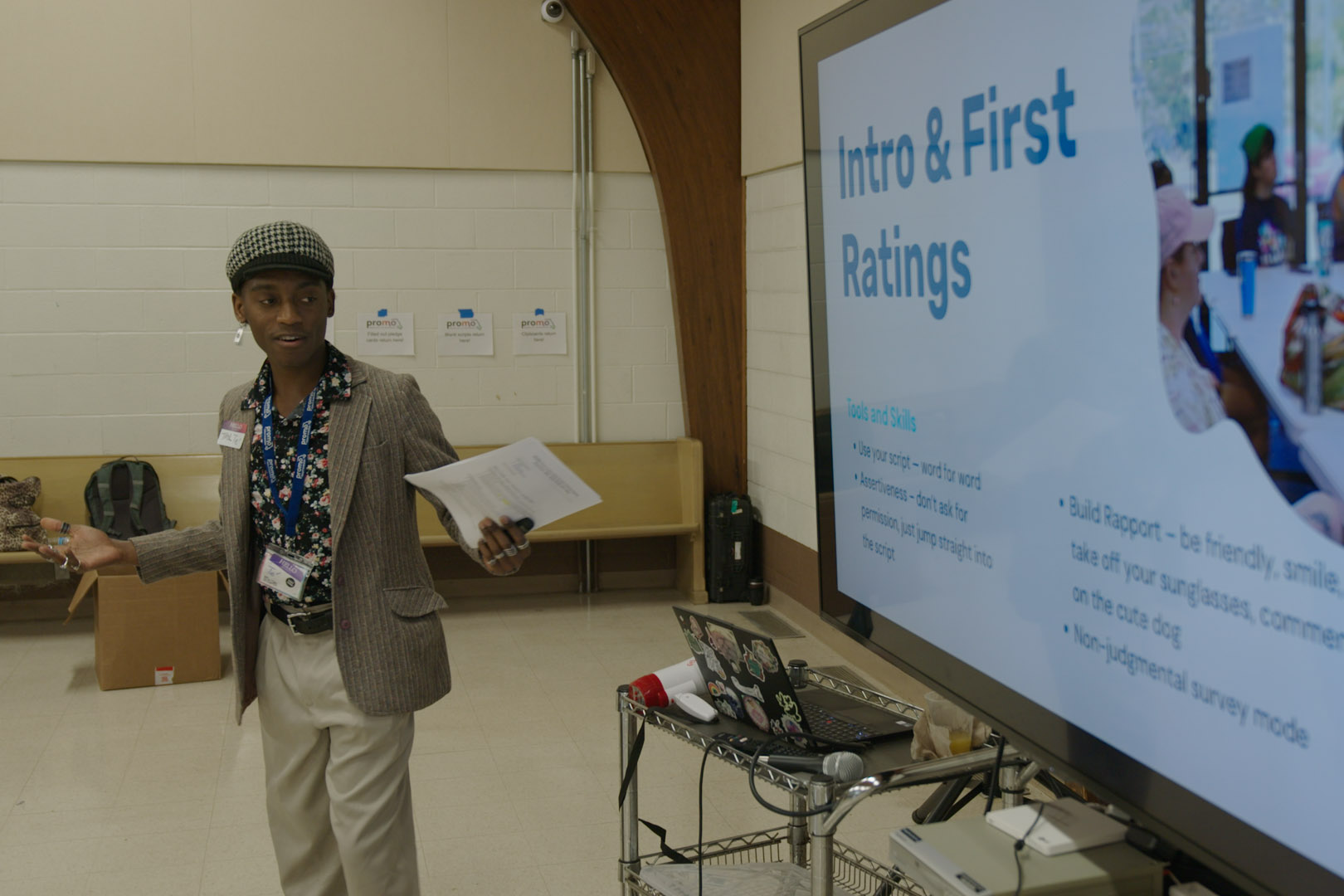
The current ballot measure, which seeks to reinstate Missouri’s abortion ban and codify the prohibition of transgender healthcare for minors, is currently polling neck and neck. A recent poll indicates 43% support, 44% opposition, and 13% undecided, with a margin of error of 4.09%. While this poll does not differentiate between abortion and gender-affirming care, prior polling from February revealed stronger public support for abortion access. The deep canvassers are strategically targeting voters who may oppose abortion bans but are more ambivalent regarding restrictions on transgender healthcare for minors. This focus necessitates avoiding prolonged engagement with individuals who hold deeply entrenched views on either side of the issue, thereby maximizing the potential for persuasion among undecided or moderately opinionated voters.
The deep canvassing methodology involves a structured approach to understanding voter perspectives. Canvassers are trained to ask individuals to rate their stance on a scale of 0 to 10, with 0 representing complete opposition to banning abortion and 10 signifying complete support. They then use the same scale to gauge feelings about banning "gender-transition procedures for trans minors"—language mirroring that found on the ballot. Crucially, after each rating, canvassers inquire about the reasoning behind the chosen number, facilitating an open-ended discussion.
During an overcast Saturday morning in late September, as the oppressive Missouri summer heat finally relented, the familiar sounds of lawnmowers and leaf blowers filled the air in a Creve Coeur neighborhood, some 20 miles west of St. Louis. Reneé Luckfield initiated her door-to-door outreach, encountering a resident who, in canvasser shorthand, registered as a "10/10." This individual expressed strong support for banning abortion, citing her Christian faith, and equally strong support for prohibiting gender-transition procedures for minors, believing that children are too young to make such life-altering decisions, and that parents should not have this authority either. Luckfield responded with empathy, stating, "I hear you. That’s everything I need from you today. Thank you very much for your time." This interaction, while brief, is not uncommon, highlighting the canvassers’ objective of efficiently gathering information and moving on when a strong opinion is clearly established.
Later that morning, Luckfield engaged in a more extended conversation with Carol Parsons, who identified as a "0/0"—opposed to banning both abortion and gender-transition procedures for minors. Luckfield acknowledged Parsons’ support and inquired if she had any questions about the care process for transgender youth. Parsons expressed reservations specifically about surgery, stating, "I do feel that they need to be old enough to realize that that is life-changing." Luckfield validated her concerns, acknowledging, "It is tricky, and it is scary to think of that happening for young kids," while also pointing out that the phrasing "transgender procedures" is likely a deliberate tactic to evoke fear, particularly around surgeries.
Luckfield then provided crucial context, explaining that gender-affirming surgeries for minors are exceptionally rare. Citing a 2019 study of insurance claims involving nearly 23 million children, she noted that surgeries were performed at a rate of 2.1 per 100,000 for those aged 15-17, 0.1 for those aged 13-14, and none for younger children. Prescription treatments, she added, are also uncommon, affecting fewer than 1 in 1,000 adolescents with commercial insurance, according to another study. Luckfield further elaborated that Missouri’s proposed amendment would ban not only surgeries and hormone treatments but also puberty blockers. She emphasized that puberty blockers are reversible and can be prescribed, in conjunction with counseling and social transition, at an appropriate age to allow a child time to mature and make informed decisions about further medical interventions. This explanation resonated with Parsons, who responded, "Well, I definitely agree with that. I think that would be a good solution."
The final door Luckfield knocked on that day belonged to Louis Meyer, who had previously spoken with another deep canvasser and expressed some ambivalence regarding transgender care for minors. This time, Meyer declared himself a "0/0," fully opposing both bans. When asked what prompted the shift in his perspective, Meyer explained, "The original question was about where my morals sit and what I would do, which is a different statement than what I want the government to dictate." This distinction between personal belief and government mandate proved to be a significant factor in his revised stance.
In an hour and a half, Luckfield knocked on 12 doors, engaging in substantive conversations with five individuals. Four of these five opposed both proposed bans. While Luckfield acknowledged that St. Louis County generally leans more liberal than the state as a whole, she believes these numbers also reflect a broader societal trend. She referenced research from the Transgender Law Center, which indicates that while individuals tend to express favorable opinions when asked directly about transgender issues, their perception of their neighbors’ feelings is often less certain. Luckfield summarized this observation with a powerful insight: "People are more accepting than they think the people around them are." This suggests that direct, personal engagement, like that undertaken by deep canvassers, can help overcome perceived social barriers and foster greater understanding and acceptance.
