
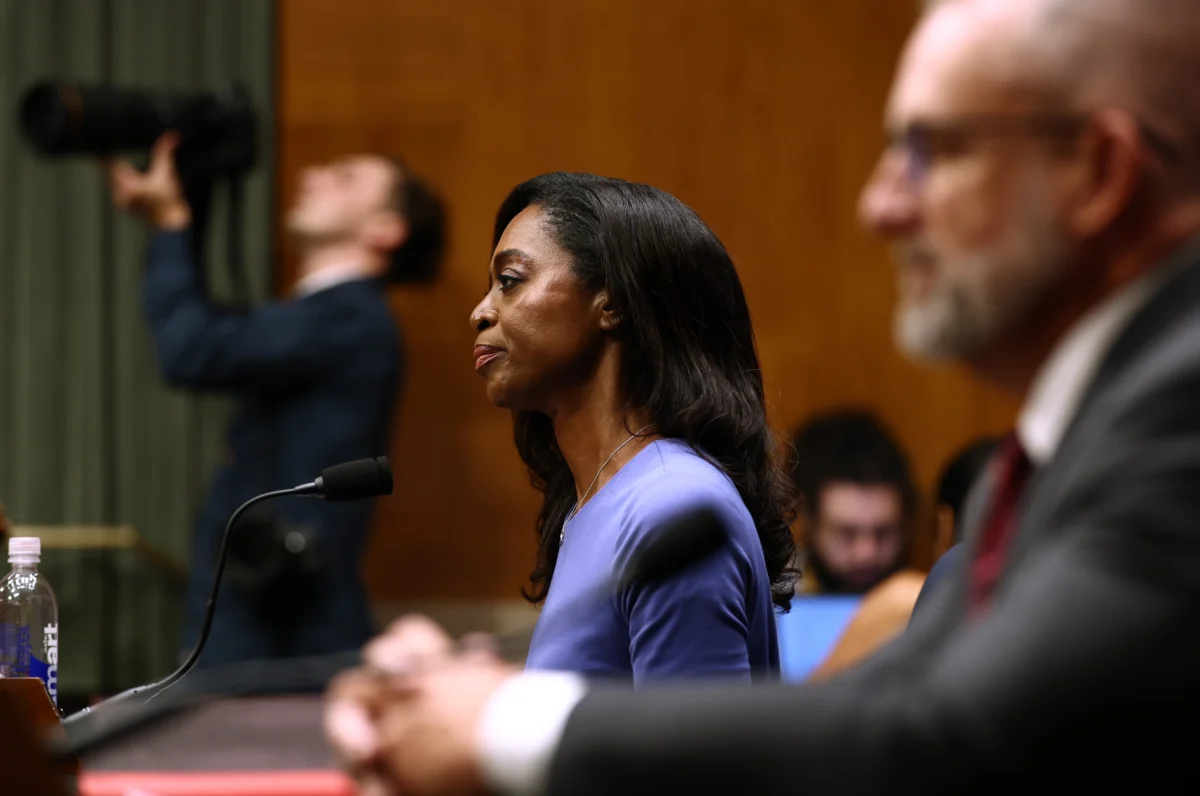
“While I can disagree with my superiors privately, final authority rests with the Secretary. Definitions matter, and rebuilding trust is my central priority as we navigate unprecedented public health challenges.”
In her inaugural media interview since assuming leadership of the Centers for Disease Control and Prevention (CDC), Director Dr. Erica Schwartz has provided a candid glimpse into the agency’s operational dynamics and her strategic vision. Speaking at the Health Connect South forum in Atlanta, Dr. Schwartz articulated a clear delineation of authority, emphasizing that while she engages in private deliberations with Health and Human Services Secretary Robert F. Kennedy Jr., the ultimate decision-making power resides with the Secretary. This clarification holds significant weight, as it defines the locus of federal health guidance that profoundly impacts public policy, from school immunization mandates to insurance coverage and clinical practice. The CDC, while a critical public health institution, operates within the broader Department of Health and Human Services, a structural reality that places the Secretary as the final arbiter in instances of disagreement. This structural insight is particularly pertinent given the divergent public stances taken by Director Schwartz and Secretary Kennedy regarding the current measles outbreak, the most severe in over three decades.
The CDC Director’s remarks underscore a commitment to scientific integrity, transparency, and humility as the cornerstones of her initial 100-day plan. Dr. Schwartz explicitly addressed the challenge of rebuilding public trust in the agency, acknowledging that confidence is at an all-time low. Her approach to managing potential disagreements with Secretary Kennedy draws from her extensive experience in the uniformed services, where a culture of respectful dissent, often referred to as "but sir, but ma’am," is encouraged. She indicated that such private discussions have already occurred with Secretary Kennedy, highlighting a willingness to engage in robust debate behind closed doors. Dr. Schwartz, a physician and attorney with a distinguished background as a former Deputy Surgeon General, was confirmed by the Senate on August 5th, ending a prolonged period of leadership vacancy at the CDC.
The divergence in public messaging between Director Schwartz and Secretary Kennedy on the severity and management of the measles outbreak is a central point of concern. Dr. Schwartz unequivocally characterized measles as "the most contagious disease," detailing its alarming transmissibility, with one infected individual capable of spreading it to 12 to 18 susceptible persons. She also outlined the grave potential complications, including pneumonia and the rare but devastating subacute sclerosing panencephalitis (SSPE), while affirming the safety and efficacy of the Measles, Mumps, and Rubella (MMR) vaccine.
In stark contrast, Secretary Kennedy has publicly downplayed measles as a "mild illness" and has repeatedly expressed skepticism regarding vaccine safety. This disparity in public statements has reportedly influenced the CDC’s handling of data, with Atlanta News First reporting that the agency’s decision to delay the release of certified measles deaths in Pennsylvania followed public comments by Secretary Kennedy questioning the validity of those reports. The underlying epidemiological data, however, presents a clear and concerning picture. As of September 17th, the CDC’s official measles page documented 3,471 confirmed U.S. cases for 2026, significantly surpassing the 2,289 cases recorded for the entirety of 2025. Furthermore, kindergarten MMR vaccination coverage has declined to 92.4%, falling below the threshold generally considered necessary for robust community immunity, often cited as 95%.
Director Schwartz directly addressed the discrepancy in measles death reporting, refuting claims that death counts were manipulated for political reasons. She explained that the agency historically lacked a standardized definition for attributing deaths to measles, drawing a parallel to early disputes in COVID-19 tracking. "If someone got hit by a bus, and they happened to have COVID, often that was called a COVID-related death," she stated, emphasizing that "definitions matter." To rectify this, the CDC has initiated a process to develop a formal definition in collaboration with the Council of State and Territorial Epidemiologists and is awaiting reviews from the National Center for Health Statistics to confirm measles as an underlying cause on death certificates.
The Pennsylvania Department of Health, meanwhile, has confirmed four measles-associated deaths this year and reported 767 cases across 38 counties as of their September 18th update. This stands in contrast to the federal ledger, which still lists zero deaths for 2026. This data disparity has drawn the attention of Congressional oversight, with Democrats on the House Committee on Energy and Commerce formally requesting a staff briefing from the CDC by September 28th, seeking answers regarding these discrepancies.
The implications of these internal and external communication challenges extend directly to American households relying on federal guidance. While state-level school immunization requirements remain unchanged, and the MMR vaccine continues to be widely available through various healthcare providers, pharmacies, and public health programs, the dispute over data reporting can create confusion. The MMR vaccine, administered in two doses, offers approximately 97% lifetime protection against measles.
However, when federal and state health dashboards present divergent information, state health departments often possess the most current data on cases, hospitalizations, and exposure sites. Families residing in outbreak areas are therefore advised to consult their state’s health department dashboards for the most up-to-date information rather than relying solely on the CDC’s weekly national updates.
Beyond the immediate public health concerns, Director Schwartz also highlighted a critical internal challenge: a significant staffing deficit at the CDC. She acknowledged that center leaders are "overwhelmed" by the agency’s inability to adequately staff its essential functions. The agency’s leadership is currently evaluating long-term staffing needs, considering whether pandemic-era staffing levels or a pre-pandemic baseline is more appropriate. This issue is compounded by reports from NBC News in August, indicating that approximately a quarter of the CDC’s workforce departed or was terminated during the previous presidential administration, leaving vital congressionally funded programs for smoking cessation and Alzheimer’s disease prevention critically understaffed.
Several key questions remain open, including the timeline for the establishment of a standardized measles death definition, whether the federal case count will eventually align with state-confirmed deaths, and the outcome of the requested Congressional briefing. MedicalDaily will continue to monitor and report on confirmed developments regarding these critical public health issues.
