
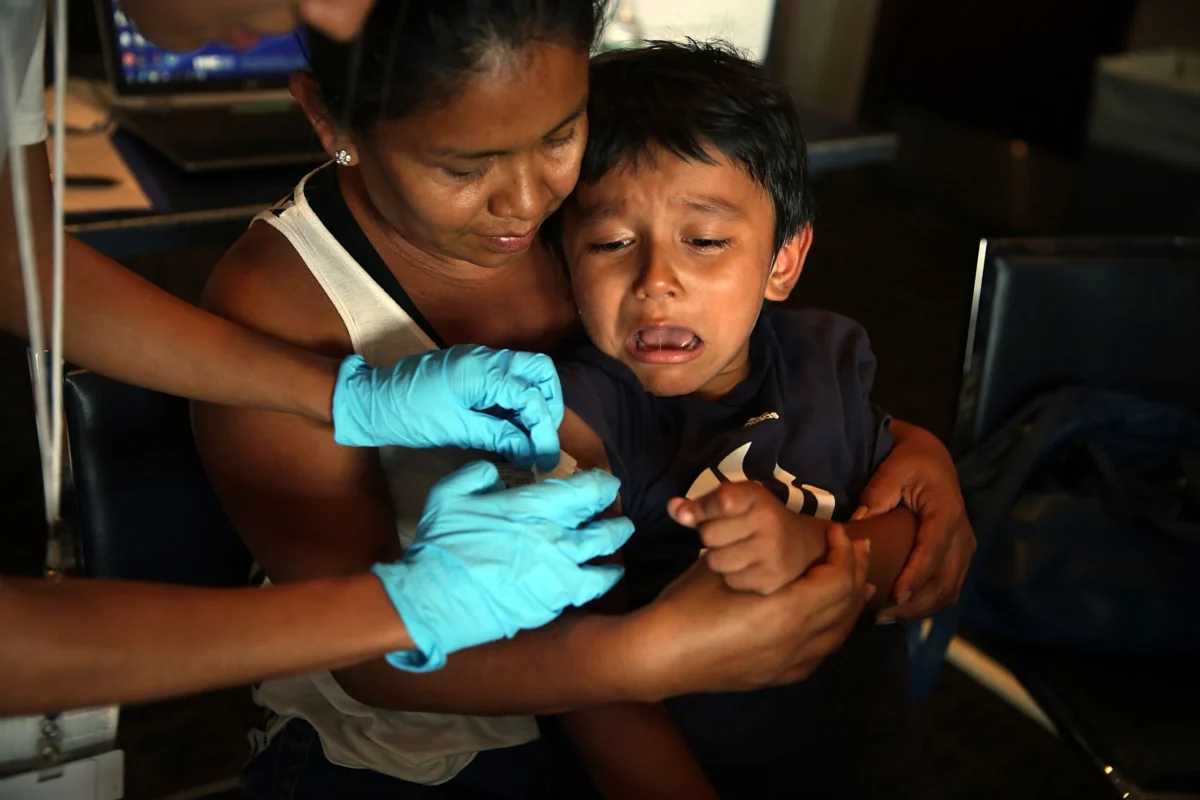
"With measles cases surging to 108 statewide, Governor Hochul has declared a State Disaster Emergency, expanding the reach of vaccination and testing services to combat the outbreak. The move prioritizes access to the MMR vaccine in under-immunized rural communities, aiming to protect vulnerable populations and prevent further spread of this highly contagious disease."
New York State is grappling with a significant resurgence of measles, prompting Governor Kathy Hochul to declare a State Disaster Emergency on Monday, October 5th. The declaration comes as the state’s confirmed measles count for 2026 has climbed to 108. A critical aspect of this outbreak is its concentration outside of New York City, predominantly in rural upstate communities where vaccination rates, particularly for children, are lower. This alarming trend has necessitated swift action to bolster public health responses. The disaster emergency declaration empowers a broader spectrum of healthcare professionals to administer the measles, mumps, and rubella (MMR) vaccine and to order measles testing, thereby aiming to streamline access and accelerate immunization efforts.
The governor’s official announcement of the disaster emergency underscored the urgency of the situation. Since July 15th, a substantial 92 of the reported measles cases have been identified among under-immunized populations in 18 rural counties. For residents in these affected areas, the practical implications of the executive order are profound. By authorizing a wider range of health workers to administer the MMR vaccine, the state is working to reduce wait times and geographical barriers that may have previously prevented timely access to crucial immunizations. This expansion means individuals may no longer need to wait for appointments with pediatricians or navigate distant county clinics, potentially leading to a more immediate and convenient vaccination experience.
The concern surrounding measles extends far beyond those who are currently ill. Measles is an exceptionally contagious viral illness that can easily spread in communal settings such as schools, retail environments, and healthcare waiting rooms. Infants who are too young to receive their routine MMR vaccinations are particularly vulnerable, relying heavily on the immunity of the surrounding community, a concept known as herd immunity, for protection. When vaccination rates decline, this protective shield weakens, leaving the youngest and most susceptible members of society at increased risk.
Executive Order 65 Expands Vaccination and Testing Capabilities
Effective Monday, October 5th, Executive Order 65, which declared the disaster emergency, is slated to remain in effect through November 4th. This order significantly broadens the pool of healthcare providers authorized to administer the MMR vaccine. Under its provisions, certified paramedics, advanced Emergency Medical Services (EMS) providers, registered nurses, midwives operating under physician supervision, and pharmacists are now empowered to administer the vaccine. Pharmacists are specifically authorized to vaccinate children aged 2 and older. Furthermore, registered nurses are now also permitted to order measles testing, facilitating a more comprehensive diagnostic approach.
A notable provision of the executive order is the removal of a separate consent requirement for reporting adult vaccinations to the state immunization registry. This streamlining measure, as reported by FingerLakes1, aims to improve the completeness and accessibility of vaccination data. It is crucial to emphasize that the order does not, under any circumstances, permit vaccination without the explicit consent of the individual or, in the case of minors, the consent of a legally authorized guardian.
Governor Hochul articulated the rationale behind these expanded authorities, stating in the official release, "No one should get seriously ill or die from a vaccine-preventable disease. That is why I have taken steps to increase the number of health professionals who can vaccinate and test." This statement highlights the state’s commitment to leveraging all available resources to safeguard public health.
State Health Commissioner Dr. James McDonald echoed the governor’s sentiments, urging all New Yorkers to proactively review their vaccination records. "The measles, mumps, and rubella vaccine is the best protection," he emphasized, noting its high efficacy in protecting nearly all individuals who receive the recommended doses. He strongly encouraged residents to verify their immunization status and ensure their families are adequately protected against this preventable disease.
According to the state, local health departments have already administered over 1,000 MMR doses in rural areas since mid-July, demonstrating an immediate response to the growing need.
Otsego, Seneca, and Steuben Lead Upstate Case Counts
As of October 3rd, the statewide tally indicated seven confirmed measles cases within New York City and a significantly higher 101 cases located elsewhere in the state. WAMC reported that Otsego County currently has the highest county totals with 20 confirmed cases, followed closely by Seneca County with 17 cases and Steuben County with 14 cases. In the western part of the state, Allegany County has reported six cases, Chautauqua County has three, and Erie County has two.
The emergence of new cases continues to be observed in additional counties. On the same day the disaster emergency was declared, Ontario County announced four new confirmed measles cases, all of which were among unvaccinated residents. Local health officials in Ontario County emphasized that the risk to the general public remains low, particularly for individuals who have been fully vaccinated.
The disparities in vaccination coverage serve as a significant factor in understanding the current outbreak pattern. WAMC reported that in Erie County, approximately 86.2% of children receive at least one dose of the MMR vaccine by the age of two. This figure falls below the generally accepted community immunity threshold of roughly 95%, which is widely considered necessary to effectively prevent the widespread transmission of measles within a population.
This current outbreak is not an isolated incident. MedicalDaily previously reported on a cluster of 10 additional measles cases in Lewis County, which were linked to a September infection. WWNY reported that Lewis County’s 11 cases, all occurring in unvaccinated individuals, remain primarily concentrated in a single town. Since the launch of New York’s weekly measles dashboard, which initially reported 57 cases through September 12th, the statewide total has nearly doubled, underscoring the rapid progression of the outbreak.
Understanding Risk and Recognizing Symptoms
The individuals at the highest risk of contracting measles and experiencing severe complications include unvaccinated children and adults, infants younger than 12 months, pregnant individuals who lack immunity, and anyone with a compromised immune system. Residents living in rural counties with historically lower vaccination coverage rates face a greater likelihood of exposure.
The state Department of Health emphasizes the protective power of the MMR vaccine: one dose offers approximately 93% protection against measles, while two doses increase this protection to about 97%. The standard childhood immunization schedule recommends the first dose of the MMR vaccine between 12 and 15 months of age, with a second dose administered between ages 4 and 6. For infants aged 6 to 11 months, an early dose can be administered, particularly before international travel or in situations where there is a heightened risk of exposure. According to guidance from the Centers for Disease Control and Prevention (CDC), adults born before 1957 are generally considered to have immunity from prior infection. However, individuals vaccinated between 1963 and 1967 are advised to consult with a healthcare provider to determine if an additional dose is necessary.
The onset of measles symptoms typically occurs seven to 21 days following exposure to the virus. Initial symptoms often include a high fever, cough, runny nose, and red, watery eyes. A characteristic rash of flat red spots usually appears three to five days after the initial symptoms emerge, starting at the hairline and gradually spreading downwards across the body. An infected individual can transmit the virus from four days prior to the appearance of the rash up to four days after the rash begins.
Immediate Steps for Households This Week
In light of the escalating outbreak and the declaration of a disaster emergency, households are urged to take immediate steps to assess their measles immunity status. The most crucial first step is to meticulously check vaccination records for every member of the household, including children, adults, and any grandparents or caregivers who regularly interact with young children. For individuals who are uncertain about their vaccination history or status, consulting a primary care provider, a local pharmacist, or the county health department is recommended.
Anyone experiencing measles-like symptoms should take the precaution of calling their healthcare provider’s office, urgent care center, or emergency room before arriving. This advance notification allows healthcare staff to implement appropriate isolation measures, thereby preventing the potential exposure of other patients and staff to the highly contagious virus. Individuals who have been exposed to measles and are not immune may be required to quarantine for a period of 21 days, which could result in missed school days for children and workdays for adults. Signs of severe illness, such as difficulty breathing, confusion, dehydration, or an extremely high fever, warrant immediate medical attention and should be treated as an emergency.
Financial barriers should not prevent eligible children from receiving necessary vaccinations. County health clinics often provide immunizations at no cost, and the federal Vaccines for Children program offers coverage for eligible uninsured children and those enrolled in Medicaid. For uninsured adults seeking vaccination, inquiries can be made with local county health offices regarding the availability of low-cost vaccination options.
Several aspects of the current outbreak remain under active investigation. The state has not yet publicly identified all 18 affected counties, and confirmed case counts may not fully reflect the actual number of infections due to individuals with mild illness who may not seek testing. The New York State Department of Health’s measles dashboard is updated weekly, typically on Tuesdays, with data reflecting cases confirmed through the preceding Saturday. Therefore, updated figures for specific counties are anticipated in the coming days.
The current emergency order, Executive Order 65, is in effect until November 4th, with the possibility of extension by state officials if the outbreak persists. For the time being, the most effective and reliable method of protection against measles remains consistent: verifying that all household members have received the recommended MMR vaccine doses and seeking prompt medical consultation at the earliest sign of fever and rash following a potential exposure.
Key Questions Answered
Why did New York declare a measles disaster emergency?
Governor Kathy Hochul declared the emergency on October 5th after statewide measles cases reached 108 in 2026. The majority of recent cases are occurring in under-immunized rural communities, and the declaration aims to expedite vaccination and testing processes to control the outbreak.
How many measles cases does New York have?
As of October 3rd, the state reported a total of 108 confirmed measles cases for the year. Of these, seven cases were identified in New York City, while 101 cases were reported in other parts of the state. A significant portion, 92 cases, have emerged since July 15th across 18 different counties.
Which counties have the most measles cases?
According to WAMC reports, Otsego County currently leads with 20 confirmed measles cases. Seneca County follows with 17 cases, and Steuben County has reported 14 cases. Additionally, Ontario County confirmed four new cases on October 5th.
Who can administer measles vaccines under the new order?
The emergency order expands vaccination capabilities to certified paramedics, advanced EMS providers, registered nurses, midwives working under physician supervision, and pharmacists. Pharmacists are authorized to vaccinate children aged 2 and older. Registered nurses can also order measles testing. Vaccination still requires the consent of the individual or their legal guardian.
How long will the emergency order last?
Executive Order 65, which declared the disaster emergency, became effective on October 5th and is scheduled to remain in force through November 4th. The state may choose to extend this order if the public health situation warrants it.
What symptoms should families watch for?
Measles typically begins with symptoms such as high fever, cough, runny nose, and red, watery eyes. A characteristic rash then develops, usually starting near the hairline and spreading downwards. It is crucial to contact a clinician before visiting a healthcare facility to avoid exposing others.
Does the MMR vaccine protect against measles?
Yes, the MMR vaccine is highly effective. The state indicates that one dose provides approximately 93% protection, while two doses offer about 97% protection. Adults who are unsure of their vaccination history are encouraged to consult with a healthcare provider or pharmacist to confirm their immunity status.
