
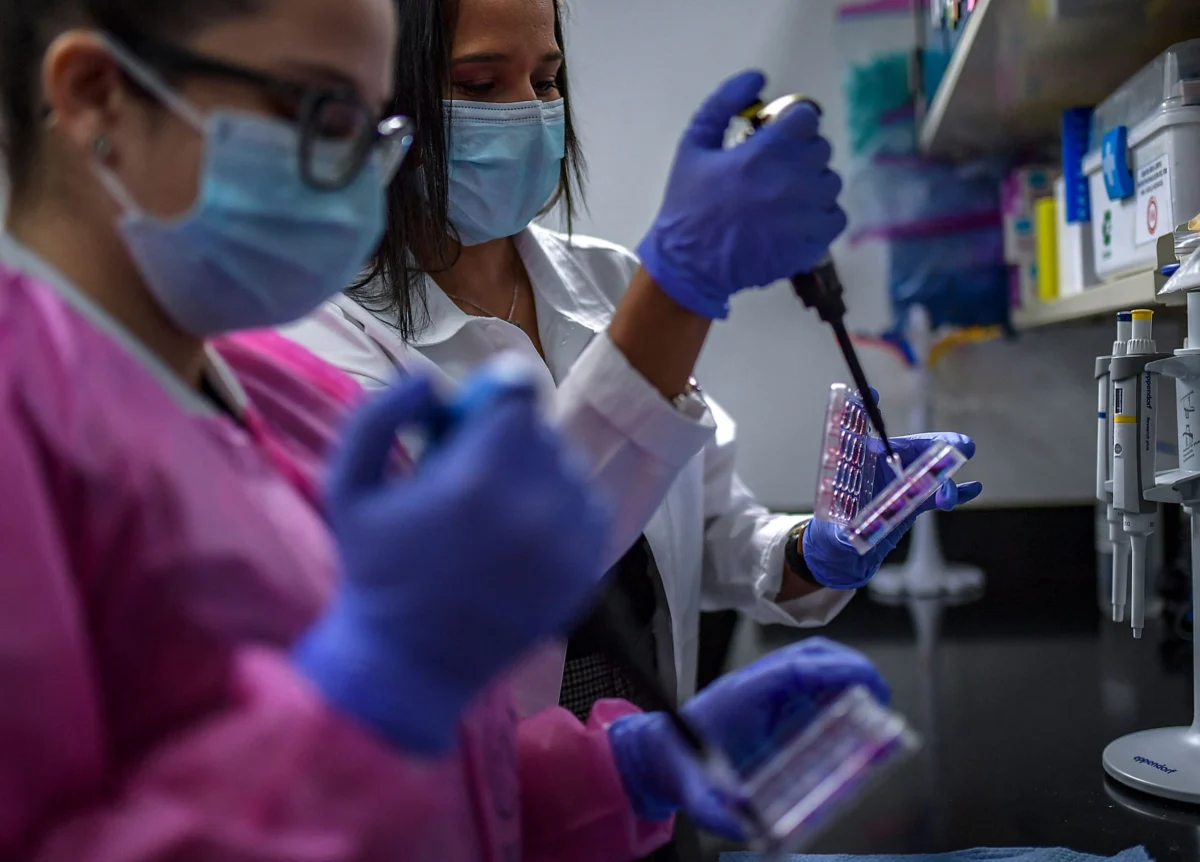
"The National Institutes of Health is broadening its horizons, opening doors for for-profit companies and diverse community organizations to access federal construction grants for shared research facilities, a significant departure from its traditional focus on academic institutions."
This landmark policy shift by the National Institutes of Health (NIH) marks a pivotal moment in how biomedical research infrastructure will be developed and accessed across the United States. Previously exclusive to colleges, universities, and other non-profit entities, the agency’s federal construction grant program for shared research facilities will now welcome applications from a significantly wider array of organizations. This includes for-profit companies, small businesses, state and local governments, tribal governments, and various community organizations. This strategic expansion, detailed in NIH notice NOT-OD-26-089 and effective for application due dates on or after January 25, 2027, aims to decentralize and diversify the landscape of biomedical research capacity, potentially reshaping where and how critical scientific endeavors are conducted. The implications extend far beyond research laboratories, as these federally funded facilities, designed for a minimum of a decade of use, will influence community development, research accessibility, and the very nature of studies that can be performed close to patient populations.
The NIH’s decision to open its research facilities construction grant program, specifically PAR-26-106, to a broader applicant pool represents a fundamental reevaluation of how to best foster innovation and equitable access to cutting-edge research infrastructure. This revised funding announcement signals a move away from an academic-centric model, as echoed by NIH Director Jay Bhattacharya’s statements regarding the “catch-22” of requiring top-tier equipment to attract talent, which inevitably concentrates investments. By inviting for-profit entities, small businesses, and a spectrum of governmental and community organizations, the NIH is signaling an intent to tap into new sources of expertise, resources, and potentially more agile approaches to facility development and utilization.
The newly eligible groups encompass a vast and varied landscape. Beyond the traditional academic powerhouses, the program now explicitly includes state, county, city, township, and special district governments, alongside federally recognized and other tribal governments. This broadens the scope to include regional and local governmental bodies that may possess unique insights into community health needs and opportunities for research translation. Small businesses and other for-profit organizations are now direct contenders for grants that can fund the construction of essential biomedical research infrastructure. Furthermore, eligible federal agencies, U.S. territories, independent school districts, public and Indian housing authorities, Native American tribal organizations, faith-based or community-based organizations, and regional organizations are all invited to participate. This inclusive approach acknowledges the diverse stakeholders invested in public health and scientific advancement.
The core of this initiative lies in supporting two existing NIH construction programs: one dedicated to general biomedical research facilities and another specifically for HIV/AIDS research facilities. Both are managed by the NIH Office of Research Infrastructure Programs (ORIP). While foreign organizations remain ineligible, and a limit of one application per institution is enforced, the expansion in domestic eligibility is substantial. The NIH emphasizes that applicants must complete several federal registrations prior to submission, a process that can reportedly take six weeks or more, underscoring the need for proactive engagement.
This strategic pivot aligns with a broader federal initiative to de-emphasize academia’s traditionally central role in federally funded scientific research. The underlying philosophy appears to be that by diversifying the entities involved in building and operating research facilities, the NIH can achieve a more distributed and responsive research ecosystem. This could translate into greater research capacity in underserved areas and a more direct connection between scientific discovery and community well-being.
The program offers distinct funding tracks with varying award ranges. The Biomedical Research Facilities track supports projects requesting between $2 million and $8 million, while the HIV/AIDS Research Facilities track allows for requests ranging from $2 million to $4 million. The federal opportunity listing indicates a total program funding of approximately $88 million, with an anticipated 14 awards. However, the ultimate number of awards is contingent upon congressional appropriations and the quality and volume of competitive applications received.
A significant component of the Biomedical Research Facilities track involves a set-aside of at least 25% of appropriated funds for "Institutions of Emerging Excellence." These institutions are defined by their demonstrated emerging excellence in a specific research field and their location in areas grappling with significant public health challenges, such as limited healthcare access or underdeveloped research infrastructure. A crucial stipulation across all funded projects is the requirement that the developed facilities must serve a broad research community, rather than being exclusively dedicated to a single laboratory or research group, thereby promoting collaboration and resource sharing.
The grant recipients are bound by stringent usage requirements. The constructed facilities must be dedicated to biomedical research for a minimum of 10 years following occupancy. This commitment necessitates annual certification of use for a period of 20 years. Furthermore, grantees must file a Notice of Federal Interest on the property, a legal mechanism that ensures the federal government’s stake in the facility’s continued use for its intended purpose. All awarded funds, with the exception of architectural and engineering design fees, are held in escrow until the NIH formally approves the design documents. Permissible costs include facility design, construction, and the installation of fixed equipment such as ventilation systems and biosafety cabinets. Contingency fees are capped at 15% prior to bid receipt. Notably, costs for indirect expenses, scientific instruments, and parking lot construction are not permitted, nor are projects primarily focused on billable medical care, general office space, or educational classrooms.
While the revised announcement clearly delineates who is eligible to apply, several critical questions remain regarding the practical implementation and oversight of these grants, particularly concerning for-profit entities. The announcement does not elaborate on how reviewers will balance the merits of for-profit applications against those from universities or non-profit organizations. Furthermore, the mechanisms for handling intellectual property generated in company-owned facilities and potential conflicts of interest are not explicitly detailed. The existing safeguards, such as the long-term use requirement, annual certification, and NIH design review, are designed to apply universally. However, their sufficiency in the context of privately owned and operated research spaces is an open question that the announcement does not directly address, though it does stipulate that funded activities must align with applicable laws and NIH priorities. For taxpayers, the paramount concern will be accountability and transparency in the allocation and utilization of public funds. Future award announcements, accessible through federal grant databases, will provide opportunities to track the disbursement of these funds once the expanded grant cycle commences.
The tangible impact of this policy change on patients and communities is expected to be gradual. The construction grant process itself is lengthy, with awards potentially spanning up to five years. The NIH estimates that most recipients require approximately 16 months solely for the technical design phase. With an anticipated 14 awards in the initial expanded cycle, widespread, immediate transformation of research landscapes in any single city or state is unlikely. The program’s overarching objective is to foster the development of more shared research spaces nationwide, with a particular emphasis on supporting Institutions of Emerging Excellence in areas historically underserved by research infrastructure and healthcare access. Facilities funded under the HIV/AIDS track will be specifically required to support research aligned with the priorities of the NIH Office of AIDS Research, including investigations into the long-term health consequences of HIV infection.
Organizations eager to explore this opportunity are encouraged to contact the Office of Research Infrastructure Programs and consult its frequently asked questions for the C06 program. Under the current timeline outlined in the announcement, applications submitted by the January 25, 2027 deadline would undergo scientific review in June 2027, followed by advisory council review in October 2027. The earliest possible project commencement date would therefore be December 2027, placing the realization of the first facilities built under these expanded rules several years into the future. The substantial growth in the pool of eligible applicants is a significant development, yet the available funding and the number of awards remain relatively modest. The central unanswered question moving forward is how the NIH will navigate the complex task of balancing the diverse interests and capabilities of private-sector applicants against those of the academic and non-profit institutions that have been the traditional recipients of these crucial infrastructure grants.
