
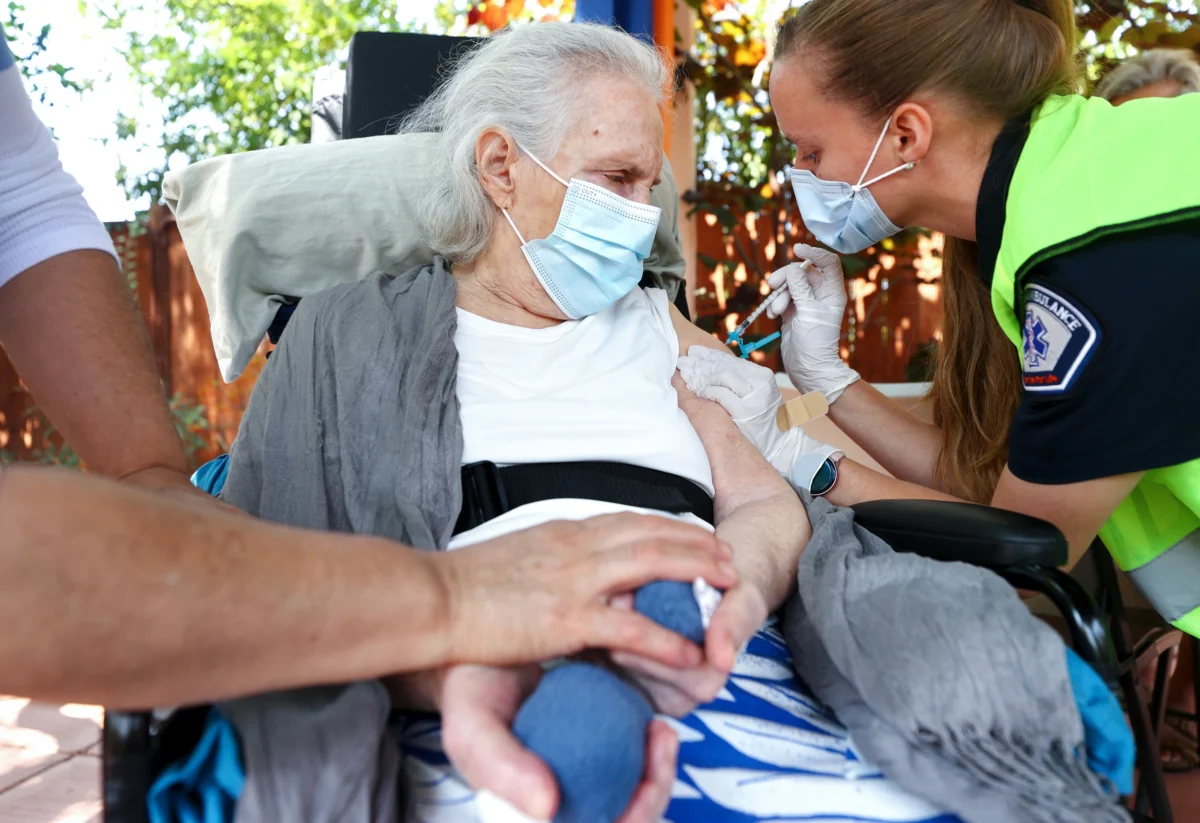
"While a preventive dementia vaccine remains hypothetical, a significant majority of older Americans indicate a strong willingness to receive one, highlighting a profound public desire for proactive brain health solutions. However, this enthusiasm is tempered by a notable segment of uncertainty and specific demographic hesitations, underscoring the need for targeted communication and education as such interventions potentially emerge."
A recent survey of 1,529 adults aged 50 and older has illuminated a compelling landscape of public sentiment regarding dementia prevention. Published in JAMA Network Open, the research, led by the USC Schaeffer Center for Health Policy & Economics, found that a substantial 72% of respondents expressed a likelihood to receive a hypothetical, low-cost, multidose vaccine designed to halve the risk of dementia for individuals at high risk. This strong inclination underscores the pervasive fear of dementia among the aging population and the deep-seated desire for measures that could safeguard cognitive function in later life. While the vaccine in question does not currently exist, the survey’s findings offer invaluable insights into public receptivity, potential barriers to adoption, and crucial considerations for future public health strategies aimed at combating neurodegenerative diseases.
The implications of this hypothetical interest are far-reaching, particularly for families navigating the complexities of aging and healthcare decisions. Adult children often play a pivotal role in assisting their elderly parents with health choices, and the survey’s data suggests a broad openness to preventative measures. This openness, however, is not universal, and the identified areas of uncertainty and demographic-specific hesitation provide critical guidance for how any future dementia vaccine might be most effectively rolled out to reach those who stand to benefit most, especially those at higher risk. The research, therefore, moves beyond a simple count of potential recipients to offer a nuanced understanding of public opinion that can shape future public health initiatives.
Uncertainty and Hesitancy: A Closer Look at Public Opinion
The survey data reveals that outright opposition to a hypothetical dementia vaccine is relatively low, with only 7% of respondents indicating they would be unlikely to take it or would definitely refuse it. A more significant proportion, 21%, expressed uncertainty. This finding is particularly noteworthy, as it suggests that "uncertainty rather than opposition may be the principal barrier to adoption" for such a novel intervention. When broken down further, 34% of participants stated they would "definitely yes," 21% "very likely," and 17% "likely" to receive the vaccine, according to reporting by CIDRAP.
Interestingly, interest in the hypothetical vaccine increased with age, mirroring the rising prevalence of dementia across successive decades of life. The proportion of individuals who indicated they would "definitely" receive the vaccine rose from 31% among those in their 50s to 35% for individuals aged 70 and older. This correlation between age and willingness to embrace preventative measures aligns with the biological reality that dementia risk escalates significantly with advancing age.
However, the study also uncovered significant demographic disparities in vaccine interest. Women exhibited more hesitancy than men, with 23% of women expressing uncertainty or unlikelihood compared to 19% of men. Furthermore, women were less likely to definitively commit to receiving the vaccine (29% versus 39% for men). Racial and ethnic differences were also pronounced. Black adults reported the highest level of hesitation among all groups at 26%, and were nearly half as likely as white adults to state they would "definitely" get the vaccine (20% versus 36%).
J. Felipe Montano-Campos, the lead author of the study and a postdoctoral researcher at USC Schaeffer, commented on these findings, stating, "Older adults are highly interested in receiving a preventive dementia vaccine, while relatively few are opposed. As vaccine options emerge, efforts may be needed to address hesitancy among some groups, including those at higher risk for dementia." This highlights the critical need for tailored outreach and communication strategies that acknowledge and address the specific concerns and reservations of different demographic segments.
The Chasm Between Stated Intentions and Real-World Behavior
It is crucial to acknowledge the limitations inherent in survey research, particularly when assessing hypothetical scenarios. As Gretchen Chapman, a psychologist specializing in vaccine decisions at Carnegie Mellon University, cautioned, survey responses represent "cheap talk." This means that stated intentions do not definitively translate into actual behavior. The actual uptake of a future dementia vaccine will depend on a complex interplay of factors that were not fully captured in this hypothetical scenario.
The parameters of the survey itself also played a role in shaping the responses. Participants were asked to consider a "low-cost vaccine that cut risk in half for high-risk people." Real-world vaccines may come with higher price tags, potentially reduced efficacy, or unforeseen side effects, all of which could significantly alter an individual’s decision-making process. The findings, therefore, should be interpreted as a strong indicator of public desire and potential receptivity, rather than a concrete prediction of vaccination rates.
The study was a cross-sectional survey that captured stated intentions regarding a hypothetical product. It did not provide evidence that individuals would actually get such a vaccine, nor did it confirm the efficacy of any such vaccine or its potential availability timeline. The robust public interest observed is partly fueled by the success and growing awareness of existing vaccines, such as the shingles vaccine. USC Schaeffer notes emerging evidence suggesting a link between the shingles vaccine and a roughly 15% to 20% lower risk of dementia. However, these findings are largely observational, and as Gavi, the Vaccine Alliance, points out, such associations do not establish a causal relationship. This distinction is vital, emphasizing that while correlations exist, definitive proof of prevention through these existing vaccines is still under investigation.
Navigating Brain Health Decisions in the Present
Given the current absence of an approved dementia vaccine, individuals and families are left to make informed decisions based on existing knowledge and recommendations. Age remains the most significant risk factor for dementia. Data from the National Center for Health Statistics for 2022 indicates that 13.1% of adults aged 85 and older received a dementia diagnosis. This underscores the immediate relevance of brain health considerations for individuals in their 70s and 80s, and for their caregivers.
For now, the most actionable steps involve embracing vaccines that are already recommended for their primary, well-established benefits. The shingles vaccine, for instance, is recommended for adults aged 50 and older to prevent shingles and its associated painful nerve complications. Any potential benefit in reducing dementia risk is considered a possible secondary advantage, not a proven primary indication for vaccination. Fortunately, Medicare Part D now covers recommended adult vaccines, including the shingles shot, at no out-of-pocket cost for beneficiaries since 2023.
The shingles vaccine is widely accessible in major metropolitan areas across the United States, available at numerous retail pharmacies. For individuals without insurance, local county health departments can often provide information on low-cost adult vaccine programs, which vary by region.
It is imperative for the public to exercise caution and critical judgment regarding products marketed as dementia "vaccines" or brain protection shots. The U.S. Food and Drug Administration (FDA) has not approved any such products. Anyone experiencing memory loss that interferes with daily activities, persistent confusion about time or place, or difficulties managing finances or performing familiar tasks should promptly schedule an evaluation with a primary care clinician. Early detection and diagnosis are critical for managing cognitive decline and exploring available treatment options.
The Road Ahead: Research, Development, and Public Health Preparedness
The landscape of dementia prevention is evolving, with vaccine candidates targeting the underlying biology of Alzheimer’s disease currently in development. These experimental vaccines often require multiple doses, as noted by USC Schaeffer. However, no specific approval dates have been set for these promising but still investigational interventions. The researchers behind the survey strongly advocate for the proactive development of outreach plans, particularly for demographics that showed higher hesitancy, such as women and Black adults. These plans should be established before a product becomes available, rather than being developed reactively.
In conclusion, the survey presents a hopeful yet nuanced picture of public sentiment towards dementia prevention. The strong reported willingness of older Americans to embrace a hypothetical dementia vaccine signals a profound public desire for solutions to combat cognitive decline. Nevertheless, the significant proportion of uncertainty and the identified demographic hesitations highlight the complex challenges that lie ahead. For the present, the most effective course of action for individuals and families is to engage in open conversations with healthcare providers about recommended adult vaccines and to address any emerging concerns about memory loss promptly. This proactive approach, combined with ongoing scientific research and thoughtful public health planning, will be crucial in the ongoing effort to protect cognitive health across the lifespan.
