
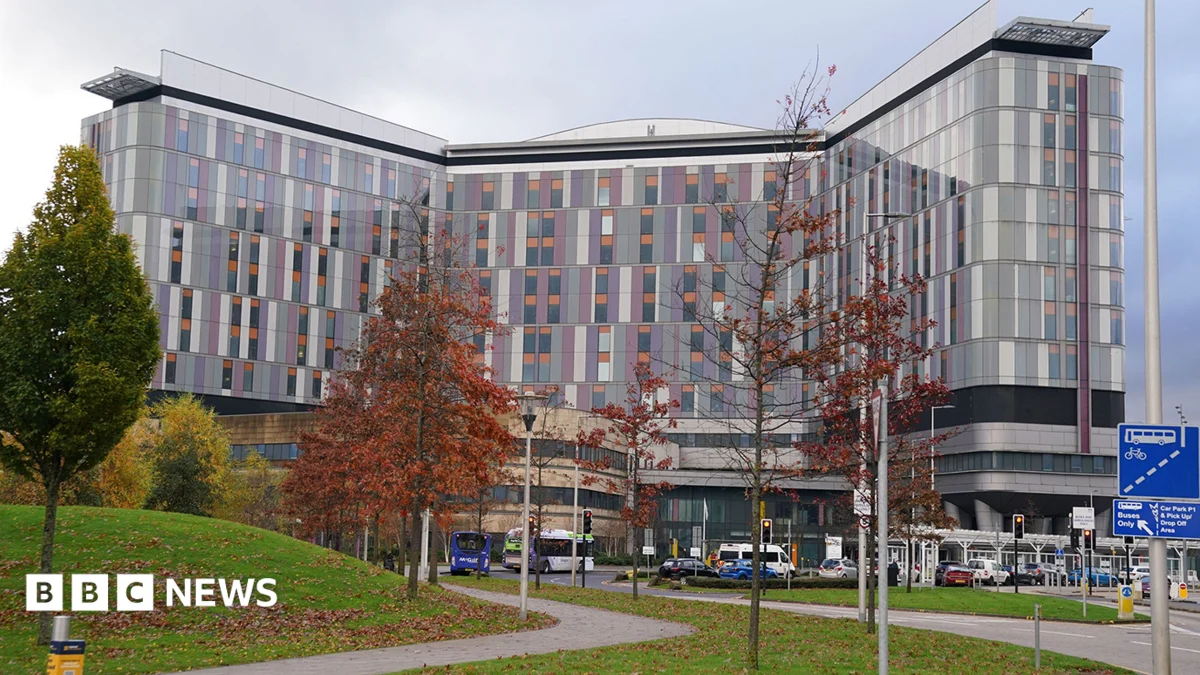
"A ‘chilling’ letter has exposed critical safety concerns at Queen Elizabeth University Hospital, particularly regarding patient resuscitation, prompting urgent calls for Scottish Government intervention amid an ‘utter failure of accountability’ in the NHS."
This stark warning underscores a deepening crisis at Glasgow’s Queen Elizabeth University Hospital (QEUH), where patient safety, especially concerning critical resuscitation efforts, has been severely compromised. The revelations, stemming from an internal communication described as "chilling," have ignited a political firestorm, with opposition parties demanding immediate government action to rescue an NHS system they claim is failing its most vulnerable patients. The situation highlights systemic issues within one of Scotland’s busiest hospitals, pointing to an ongoing struggle with patient flow, capacity, and the fundamental ability to provide guaranteed emergency care.
The core of the issue, brought to light by an internal letter whose contents have been widely discussed, points to a perilous environment where the safety of patients requiring resuscitation at QEUH cannot be assured. This alarming disclosure prompted Adam Harley MSP, the Scottish Liberal Democrats’ health spokesman, to issue a scathing critique, stating, "This letter is chilling. The Scottish government needs to wake up to the crisis at the QEUH and intervene." Harley’s condemnation extends beyond the immediate concerns at QEUH, asserting that the "constant crisis" should not be accepted as the "status quo" within the National Health Service. He argued forcefully that the inability to guarantee patient safety in such critical circumstances represents "an utter failure of accountability" and provides unequivocal proof that the NHS is "in dire need of rescue."
The Queen Elizabeth University Hospital, a flagship facility within NHS Greater Glasgow and Clyde (NHSGGC), is one of the largest acute hospitals in Europe, serving a vast population and handling a high volume of complex medical cases. Its critical role in Scotland’s healthcare landscape means that any significant operational or safety failures have wide-ranging implications, not just for the immediate patient population but for public confidence in the entire health service. The current concerns about resuscitation safety are particularly grave, as they touch upon the most fundamental aspect of emergency medical care: the ability to save lives in immediate peril. Resuscitation protocols are cornerstones of patient safety in any acute setting, and any perceived breakdown in this area signals a deep-seated systemic issue that demands urgent attention.
NHS Greater Glasgow and Clyde has acknowledged the issues raised in the letter, indicating that a programme of improvement work is underway to address challenges related to patient flow and numbers. In a statement, the health board confirmed, "NHSGGC recognises that, despite the work to date, further support is required in the Queen Elizabeth University Hospital (QEUH). In recognising this, the continuation of our improvement work, including a refreshed whole system approach, is a priority." This acknowledgement signals that the problems are not new and previous interventions have not fully resolved the underlying issues. The emphasis on a "refreshed whole system approach" suggests a recognition that isolated fixes are insufficient and a more holistic strategy is required to tackle the complex interplay of factors contributing to the crisis.
One of the most significant contributing factors highlighted by NHSGGC is the persistent challenge of patient flow and hospital capacity. The statement explicitly mentioned, "We recognise that some patients continue to wait too long within the emergency department, particularly when there are pressures on hospital capacity and delays in discharging patients who are clinically ready to leave, and improving this situation for both our patients and colleagues is really important to us." This paints a vivid picture of an emergency department (ED) under siege. When the ED becomes overcrowded, patients awaiting admission are held for extended periods, often in corridors or unsuitable areas. This "boarding" phenomenon creates a bottleneck, preventing ambulances from offloading patients promptly and delaying critical care for those arriving with acute conditions.
The issue of "delayed discharges," often referred to as "bed blocking," is a well-documented and pervasive problem across the Scottish NHS, and indeed, the wider UK health system. It occurs when patients are medically fit to leave the hospital but cannot be discharged due to a lack of available social care packages, community support, or appropriate care home placements. This directly impacts hospital capacity, as beds remain occupied by patients who no longer require acute medical care, thereby reducing the number of beds available for new admissions from the ED. The ripple effect is profound: elective surgeries are cancelled, waiting lists grow, and, most critically, the ED becomes gridlocked, increasing the risk for acutely unwell patients, including those who may suddenly require resuscitation. The longer a patient waits in an overcrowded ED, the higher the risk of adverse events, including deterioration, infections, and delayed diagnosis.
The Scottish Liberal Democrats’ call for government intervention is rooted in the belief that the current operational challenges at QEUH, and by extension, other parts of the NHS, are indicative of a broader systemic failure that transcends the direct management capabilities of individual health boards. Adam Harley’s assertion of an "utter failure of accountability" implies a demand for ministerial oversight and responsibility. In Scotland’s devolved political system, the Scottish Government, through its Health Secretary, holds ultimate accountability for the performance and safety of NHS Scotland. Opposition parties frequently leverage such crises to scrutinise government policy, funding decisions, and strategic planning for healthcare services. The "chilling" nature of the letter suggests a breakdown not just in operational efficiency but potentially in the very governance and oversight structures designed to protect patient safety.
The concept of a "constant crisis" becoming the "status quo" speaks to a dangerous normalisation of acute pressures within the healthcare system. When staff are perpetually operating under extreme stress, with inadequate resources and overwhelming patient numbers, burnout becomes rampant, and the risk of error increases. This environment erodes morale, leading to staff retention challenges and exacerbating existing workforce shortages. For patients, it means a healthcare system that struggles to deliver the expected standards of care, undermining public trust and confidence. The "dire need of rescue" highlighted by Harley suggests a requirement for substantial, transformative intervention, potentially involving significant investment, strategic workforce planning, and a fundamental re-evaluation of how healthcare services are structured and delivered across Scotland.
Looking beyond the immediate response from NHSGGC, a "refreshed whole system approach" could encompass a range of initiatives. This might include, but is not limited to: increased investment in social care to facilitate timely patient discharge; expansion of community health services to manage patients closer to home and prevent unnecessary hospital admissions; enhanced workforce recruitment and retention strategies, including international recruitment; better integration of primary and secondary care; and the adoption of innovative technologies to improve patient flow and communication. Addressing the resuscitation safety concerns, specifically, would require a rigorous review of emergency response protocols, equipment availability, staff training, and team coordination within the QEUH’s most critical areas.
The situation at QEUH is not an isolated incident but rather a symptom of the immense pressures facing NHS Scotland as a whole. The health service is grappling with the lingering effects of the COVID-19 pandemic, an aging population with increasingly complex health needs, and long-standing workforce challenges. Funding constraints, combined with rising demand, have created a perfect storm, pushing hospitals and staff to their limits. While health boards like NHSGGC are tasked with managing these pressures operationally, the strategic direction, overall funding, and national policy frameworks ultimately fall under the remit of the Scottish Government.
The call for government intervention, therefore, extends beyond mere operational adjustments; it is a demand for a comprehensive, national strategy to address the underlying vulnerabilities of the entire health system. The Scottish Government has been approached for comment on the unfolding situation, and its response will be keenly awaited. It will need to demonstrate not only an understanding of the gravity of the situation at QEUH but also a credible plan for how it intends to support NHSGGC and indeed all health boards in navigating these turbulent times, ensuring that patient safety is unequivocally prioritised and that the "constant crisis" does not, in fact, become the new normal. The integrity and efficacy of Scotland’s healthcare system hang in the balance, with the lives and well-being of its citizens at stake.
