
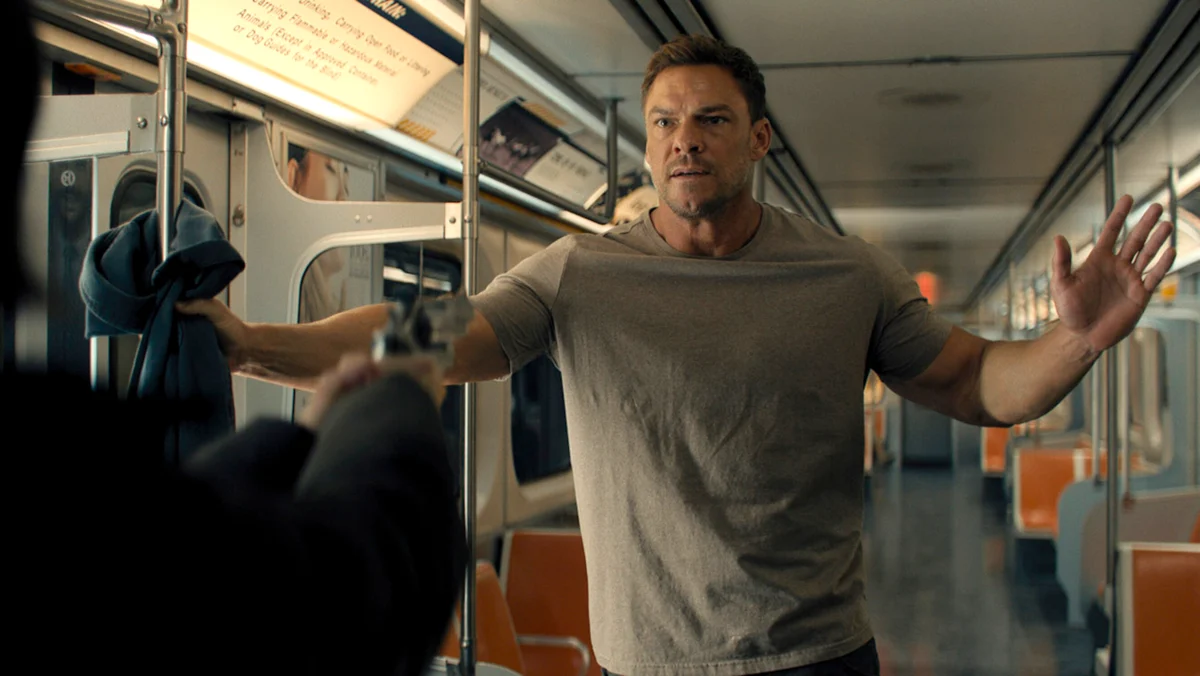
"By anchoring its fourth season in the gritty landscape of Philadelphia and the high-stakes world of cyber-espionage, Reacher continues to refine its winning formula of visceral action and procedural simplicity."
The immense success of Prime Video’s Reacher is rooted in its refusal to overcomplicate the traditional action-hero archetype, leaning instead into the stoic, hyper-capable nature of Lee Child’s iconic protagonist. As the series enters its fourth season, it transitions from the rural conspiracies and military-centric vendettas of previous outings into the labyrinthine world of urban political intrigue. By adapting the 2009 novel Gone Tomorrow, the production team has signaled a shift toward a more modern, technologically driven conflict, while maintaining the physical brutality and deductive brilliance that have made Alan Ritchson’s portrayal a definitive interpretation of the character.
The Evolution of the Jack Reacher Archetype
To understand why Reacher has become a cornerstone of Prime Video’s original programming, one must look at the character’s literary origins. Created by British author Lee Child, Jack Reacher is a former military policeman who lives a nomadic life, traveling across the United States with nothing but a folding toothbrush and the clothes on his back. While previous cinematic adaptations opted for a different physical profile, Alan Ritchson’s casting brought the series closer to Child’s original vision: a 6’5", 250-pound force of nature.
The fourth season continues to leverage this physicality, but it places Reacher in an environment that challenges his "off-the-grid" lifestyle. In Philadelphia, the "big man" is forced to navigate a world of digital footprints and political maneuvering. The appeal of the show remains its simplicity—the audience is invited to watch a morally upright powerhouse solve mysteries and administer justice to those who deserve it. This season, however, the stakes are elevated by a "cyber thriller" framework, proving that even a man who avoids technology can be drawn into its most dangerous webs.

Adapting Gone Tomorrow: From Page to Screen
The narrative foundation for Season 4 is Gone Tomorrow, the 13th book in Lee Child’s long-running series. Originally published in 2009, the novel was written during a period of heightened anxiety regarding domestic security and surveillance. The story begins with one of the most famous opening sequences in the franchise: Reacher is on a New York City subway (relocated to Philadelphia for the series) where he utilizes a specific set of behavioral markers to identify a potential suicide bomber.
In the television adaptation, this premise is expanded into a fast-paced political thriller. The inciting incident involves a woman who takes her own life on a subway car while in possession of a mysterious disk drive. This drive serves as the season’s "MacGuffin," a catalyst that draws in a diverse array of antagonists, including corrupt government officials, foreign agents, and private mercenaries. By focusing on a cyber-threat, the show explores the intersection of old-school detective work and modern digital warfare, forcing Reacher to rely on new allies to decode the technical aspects of the conspiracy.
A New Urban Battlefield: Philadelphia
Each season of Reacher functions as a soft reboot, moving the protagonist to a new location with a fresh supporting cast. After the small-town grit of Margrave, Georgia, in Season 1, and the bicoastal investigation of Season 2, Philadelphia provides a unique backdrop for Season 4. Known as the "City of Brotherly Love," the setting offers a mix of historical gravitas and modern urban decay that suits the show’s noir-inflected tone.
The move to a major metropolitan area changes the tactical landscape for Reacher. Unlike the open fields or industrial warehouses of previous seasons, the narrow alleys, crowded transit systems, and towering office buildings of Philadelphia create a sense of claustrophobia. This environment necessitates a different style of combat and investigation, emphasizing Reacher’s ability to blend in—as much as a man of his size can—and his skill in using the urban environment to his advantage.
Expanding the Ensemble: New Faces and Familiar Dynamics
While Alan Ritchson remains the undisputed star, the strength of Reacher often lies in its ensemble. Season 4 introduces several seasoned actors to the mix, filling the void left by previous fan favorites. Among the most notable additions are Christopher Marquette and Kevin Corrigan.

Marquette, known for his versatile roles in films like Just Friends and Fanboys, as well as his work on HBO’s Barry, brings a level of character-driven intensity to the season. His role is central to the mystery surrounding the subway incident, providing a bridge between the street-level violence and the higher-level political machinations.
Kevin Corrigan, a veteran character actor with a filmography that includes Goodfellas, The Departed, and Pineapple Express, adds a layer of authenticity and "East Coast" grit to the production. Corrigan’s presence often signals a narrative complexity; he is an actor capable of playing both the sympathetic underdog and the cunning adversary, making him a perfect fit for a season defined by shifting loyalties and hidden agendas.
The "Dad TV" Phenomenon and the Appeal of Competence
Critics have often categorized Reacher as a prime example of "Dad TV"—a genre of television characterized by competent protagonists, clear moral boundaries, and a focus on procedural storytelling. However, the show’s massive viewership suggests a much broader appeal. In an era of complex anti-heroes and convoluted multiverses, there is a profound satisfaction in watching a character who is simply very good at what he does.
Reacher’s competence is his superpower. Whether he is analyzing a crime scene with Sherlockian precision or dispatching four attackers in a matter of seconds, the character provides a sense of catharsis. The fourth season leans into this "competence porn" by pitting Reacher against a system—the political and digital infrastructure of a major city—that is designed to be opaque. Watching him dismantle that system, one punch and one clue at a time, remains the show’s primary draw.
Technical Prowess: Production and Direction
The production quality of Reacher has seen a steady increase with each season. For Season 4, the action choreography continues to be a highlight. Eschewing the "shaky cam" and rapid-fire editing common in modern action cinema, Reacher opts for wide shots and long takes that showcase Ritchson’s physical performance. This clarity in action storytelling allows the audience to follow the logic of a fight, making the violence feel earned rather than gratuitous.

Furthermore, the "cyber thriller" elements are handled with a grounded realism. Rather than relying on "Hollywood hacking" tropes, the show focuses on the physical security of data and the human cost of information brokerage. This keeps the story tethered to Reacher’s world, where the most important tools are still observation and interrogation.
Release Strategy and Viewer Engagement
Prime Video has adopted a specific release cadence for its flagship series, balancing the modern desire for "binge-watching" with the traditional benefits of a weekly rollout. Season 4 consists of eight episodes, a structure that allows for a tight, focused narrative without the "mid-season slump" often found in longer network orders.
A notable quirk of Prime Video’s distribution is the "early drop" phenomenon. While episodes are officially scheduled for Wednesdays, the streamer frequently releases them on Tuesday evenings in North American time zones. This strategy has created a dedicated "Tuesday night" viewing culture among the show’s most ardent fans, driving social media engagement and keeping the series in the cultural conversation for two months.
The Season 4 Release Schedule
For viewers looking to track Reacher’s journey through the Philadelphia underworld, the following is the complete release schedule for Season 4:
- Episode 1, "City of Brotherly Love": Released August 12
- Episode 2, "Cage Fight": Released August 12
- Episode 3, "One Small Step": Released August 12
- Episode 4, "Karambits and Pieces": Released August 19
- Episode 5, "Bridge": Released August 26
- Episode 6, "Plum Out of Luck": Released September 2
- Episode 7, "Vote for Sampson": Released September 9
- Episode 8, "Cut": Scheduled for September 16
As the season approaches its finale, the threads of the political conspiracy and the mystery of the subway disk drive are expected to converge in a climactic confrontation. If previous seasons are any indication, the finale will offer a definitive resolution to the current conflict while setting the stage for Reacher to once again move on to a new town, a new problem, and a new way to deliver his brand of uncompromising justice.
