
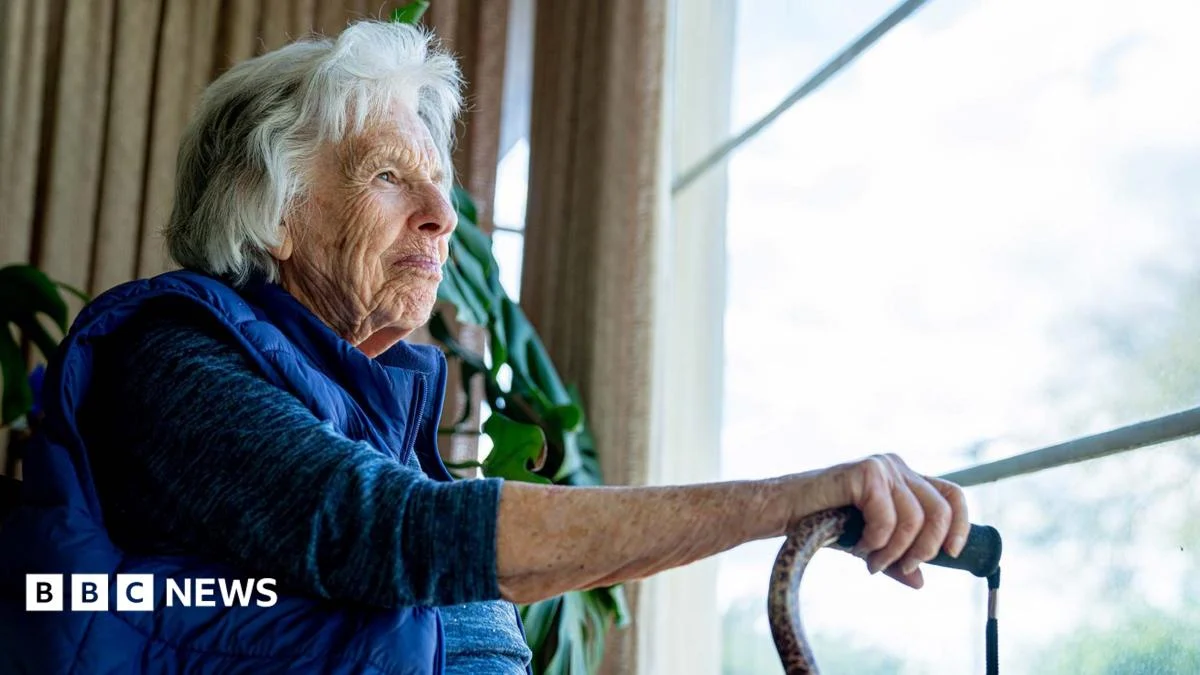
"Successive governments have been asleep at the wheel, allowing England’s social care system to become a national shame. The failings identified by the Covid inquiry highlight a fragmented, market-dominated landscape where the most vulnerable are routinely underserved."
Baroness Casey has delivered a scathing indictment of England’s social care system, describing the systemic failings exposed by the recent Covid inquiry as "so awful" and "a national shame." Her comments underscore a pervasive sense of neglect and a critical lack of strategic oversight that has left the sector in disarray. As her commission prepares to publish its final recommendations, the urgency for a fundamental overhaul is clearer than ever, with research revealing England as an international outlier in its approach to care stewardship.
The recent report from the Covid inquiry, which meticulously examined the UK’s pandemic response, delivered a stark assessment of how social care was treated in the early stages of the crisis. It concluded that the sector appeared to be "something of an afterthought," a designation that allowed the highly contagious virus to spread with devastating speed, like "wildfire," through care homes and communities. This oversight, according to Baroness Casey, whose own commission is tasked with shaping a new future for social care, is not merely an unfortunate consequence of unprecedented times but a symptom of deeper, long-standing systemic failures rooted in years of government inaction.
The inquiry’s findings painted a grim picture of inadequate preparedness and a clear disparity in focus between the National Health Service (NHS) and the social care sector. Crucial resources, including Personal Protective Equipment (PPE), testing capabilities, and clear guidance, were often delayed or insufficient for care providers. Policies regarding hospital discharges, which saw patients moved into care homes without adequate testing, inadvertently fueled the spread of the virus among vulnerable residents. This tragic sequence of events led to a disproportionate number of deaths within the social care setting, a human cost that Baroness Casey argues reflects a profound societal failing.
Baroness Casey, who is set to address a conference of social care leaders, did not mince words, stating that "successive governments have been asleep at the wheel. We’ve got our heads in the sand." This pointed criticism highlights a historical pattern of neglect and underinvestment that predates the pandemic. For decades, social care has struggled with chronic underfunding, a fragmented service delivery model, and a workforce that is often undervalued, underpaid, and lacking adequate training and support. Unlike the NHS, which enjoys a clear national mandate and funding structure, social care in England operates through a complex patchwork of local authority commissioning and private provision, leading to inconsistencies in quality, access, and equity. Attempts at reform have been numerous but have consistently stalled, often due to political inertia, the vast financial implications, and a lack of cross-party consensus on a sustainable long-term vision.
The work of Baroness Casey’s commission, established by the Starmer government, aims to address these fundamental deficiencies. Her final recommendations for services for older people and adults with disabilities, encompassing care homes and domiciliary care, are anticipated next summer. These recommendations are expected to lay out a comprehensive blueprint for reform, focusing on sustainable funding, workforce development, improved quality, and clearer accountability. The timing of these recommendations, following the damning Covid inquiry, places immense pressure on policymakers to finally grasp the nettle of social care reform.
Adding further weight to the critique, the commission has published research that positions England as a significant international outlier. The study reveals a conspicuous absence of a "clear system of stewardship" for social care, a stark contrast to countries like France and Germany. In these nations, social care is often integrated more seamlessly with health services or supported by robust national insurance schemes, ensuring consistent standards, adequate funding, and a more coherent strategic direction. "Stewardship" in this context refers to a national framework that encompasses strategic planning, quality assurance, workforce development, and a transparent funding model, all designed to ensure equitable access to high-quality care. Without such a system, England’s reliance on a market-driven approach has led to significant vulnerabilities.
This market, according to Baroness Casey, is predominantly "dominated by private providers," a structure that, while offering some benefits in terms of innovation and choice, has also introduced challenges. The profit motive can, at times, conflict with the delivery of high-quality, person-centred care, particularly when services are commissioned at unsustainably low rates. This dynamic creates a precarious environment where providers often operate on thin margins, impacting staff pay, training, and the overall quality of provision.
Furthermore, Baroness Casey delivered a particularly sharp critique of the Care Quality Commission (CQC), England’s independent regulator of health and social care. She described the CQC as being a "spectator at the site of a car crash." This powerful metaphor suggests that the regulator, despite its crucial role, has been unable to effectively intervene or prevent the systemic failures unfolding within the sector. The CQC’s mandate primarily focuses on inspecting and rating individual services, ensuring compliance with minimum standards. However, critics argue that its powers are often reactive rather than proactive, and its resources are insufficient to tackle the deeply embedded structural issues that plague the market. The CQC’s ability to influence strategic direction or address market failures, such as provider closures or widespread workforce shortages, is limited, leaving it to observe rather than fundamentally reshape the landscape.
The issue of social care has intermittently risen to prominence on the political agenda, with various political figures acknowledging its critical importance. Previous leaders, such as Andy Burnham, have highlighted social care as a key priority, reflecting a cross-party recognition of the challenges. The establishment of the Casey commission by the Starmer government signifies a renewed political commitment to addressing these deeply entrenched problems. However, the path to reform is fraught with difficulties, demanding significant financial investment and a willingness to confront powerful vested interests.
Baroness Casey’s ultimate vision is for a "new settlement for care." This is not merely a call for more funding but for a fundamental re-evaluation of how society values and provides care. She articulated this vision, stating, "One based on values I still believe this country shares – decency, contribution and a duty to care for our neighbours, our loved ones and ourselves." This proposed settlement aims to re-centre the social care system around human dignity, ensuring that care recipients receive compassionate and effective support, and that care workers are afforded the respect, fair pay, and professional development they deserve. It also calls for a broader societal contribution, moving beyond a narrow view of social care as a burden to be managed, towards recognizing it as a vital societal investment that enables individuals to live fulfilling lives, supports families, and strengthens communities.
The implications of failing to achieve this "new settlement" are profound. A crumbling social care system not only impacts the individuals who rely on it but also places immense pressure on the NHS, exacerbates economic inequalities, and burdens unpaid family carers. Conversely, a well-funded, professionally managed, and compassionate social care system could unlock significant societal benefits, promoting healthier communities, reducing demand on acute healthcare, and fostering a more equitable and caring society.
As Baroness Casey’s commission progresses towards its final recommendations, the stakes could not be higher. The Covid inquiry has laid bare the devastating consequences of neglecting social care, and the commission’s research underscores England’s isolated position globally. The coming year will be critical in determining whether political will can finally translate into meaningful, transformative reform, moving England from being an "international outlier" to a nation that truly embodies its stated values of decency and a duty to care.
