
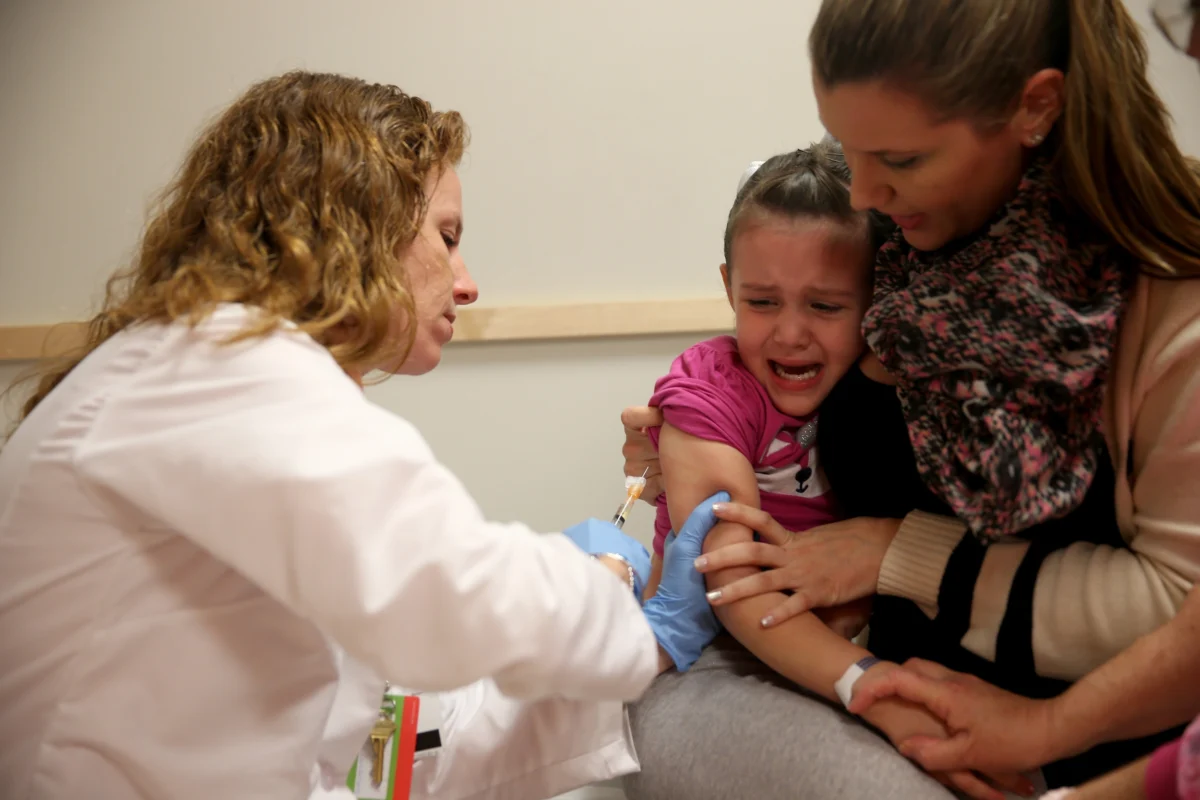
"Two states simultaneously issued their own vaccine recommendations, marking a significant shift in how public health guidance is disseminated and underscoring the growing divergence between state and federal immunization strategies. This move, particularly Maryland’s historic establishment of its own vaccine schedules, creates a more complex landscape for residents navigating essential health decisions."
In a notable development for public health policy, two states, Maryland and Illinois, have independently issued their own distinct vaccine recommendations on the same day, signaling a significant departure from reliance solely on federal guidelines. Maryland, in particular, has made history by establishing its own comprehensive vaccine schedules for both children and adults for the 2026-2027 period. This action, empowered by newly enacted state legislation, allows the Maryland Department of Health to set official immunization recommendations. Concurrently, the Illinois Department of Public Health has adopted fall respiratory virus immunization guidance developed by a dedicated state expert committee, further illustrating a trend of states taking a more localized approach to public health directives.
The practical implications of these independent state schedules are profound, directly impacting households by making vaccine recommendations contingent on geographical location. Maryland’s newly released schedules are extensive. The pediatric schedule meticulously outlines 18 recommended vaccines from birth through age 18. The adult schedule is equally comprehensive, detailing 16 vaccines categorized for pregnant individuals and for distinct age demographics: 19-49, 50-64, and 65 years and older. This granular approach ensures that residents can find guidance tailored to their specific life stages and health needs within their state.
The tangible impact of these state-level recommendations becomes particularly evident in the realm of insurance coverage. Maryland’s Vax Act mandates that state-regulated health plans must cover routine immunizations recommended by the state without any out-of-pocket expenses for residents. Furthermore, the legislation empowers pharmacists to administer these state-recommended vaccines to individuals aged 3 and older without requiring a prescription. This significantly enhances accessibility and reduces financial barriers to essential preventive care.
The Statutory Foundation for State-Led Immunization Guidance
The emergence of Maryland’s independent vaccine schedule is not an arbitrary administrative decision but a direct consequence of legislative action. Governor Wes Moore signed the Vax Act into law in April, following its passage through both the House of Representatives (HB 637) and the Senate (SB 385). This pivotal legislation, which took effect on July 1, formally grants the Secretary of Health the authority to establish official state-endorsed recommendations for immunizations, screening services, and other preventive health measures.
Health Secretary Meena Seshamani articulated the rationale behind this legislative push, highlighting the challenges Marylanders face in navigating evolving federal vaccine guidance amidst the resurgence of back-to-school illnesses and the ongoing respiratory virus season. She emphasized the need for a consolidated and clear source of recommendations to alleviate confusion. Deputy Secretary of Public Health Services Meg Sullivan further elaborated on this objective, stating in an interview with Maryland Matters that the state aimed to create a singular, accessible repository of clear recommendations. Maryland’s guidance explicitly anchors itself to the established recommendations from respected professional organizations such as the American Academy of Pediatrics, the American Academy of Family Physicians, and the American College of Obstetricians and Gynecologists, consciously choosing not to cite the Centers for Disease Control and Prevention (CDC) or the Food and Drug Administration (FDA) as the primary basis for its schedules.
Notably, Maryland’s guidance specifically reaffirms the importance of the combined measles, mumps, and rubella (MMR) vaccine and the hepatitis B series, including the birth dose. These reaffirmations come at a time when federal recommendations regarding these vaccines have undergone recent modifications, underscoring Maryland’s intent to provide a stable and consistent immunization pathway for its residents.
Illinois, while arriving at a similar outcome, utilized a distinct procedural route. Its fall respiratory virus immunization guidance was adopted following recommendations issued on September 9 by the Illinois Immunization Advisory Committee. This committee is a multidisciplinary body comprising 20 experts from various fields, including infectious diseases, pediatrics, family medicine, internal medicine, obstetrics and gynecology, nursing, pharmacy, and public health. The Illinois Department of Public Health (IDPH) indicated that this guidance was a response to federal immunization actions that the committee deemed not sufficiently grounded in scientific evidence.
Navigating Flu, RSV, and Routine Immunizations Under New State Guidance
Illinois’s newly adopted guidance offers specific recommendations for key public health concerns. For influenza, it recommends vaccination for all individuals aged 6 months and older. Regarding Respiratory Syncytial Virus (RSV), the state advises vaccination for pregnant individuals between weeks 32 and 36 of gestation, provided they have not been previously vaccinated. The maternal vaccination season for RSV is extended from September through March 1. The state also prioritizes protection for infants under 8 months entering their first RSV season without maternal antibody protection, extends recommendations to certain higher-risk toddlers, and includes adults aged 75 and older.
Beyond seasonal recommendations, Illinois has also endorsed routine, non-seasonal adult and maternal immunization schedules that have been previously approved by leading medical associations. For pediatric immunizations, IDPH directs healthcare providers to adhere to the American Academy of Pediatrics’ immunization schedule, a framework that the state officially adopted in February.
It is crucial to note that neither Maryland nor Illinois has introduced new vaccination mandates through these recent advisories. Maryland’s established back-to-school immunization requirements for the 2026-2027 academic year remain unchanged. This distinction is significant, as school entry requirements are typically set independently from broader recommendation schedules across the nation.
The actions of Maryland and Illinois place them among a growing cohort of states, including California, Colorado, Maine, and Massachusetts, that have consciously chosen to decouple their vaccine recommendations from federal guidance over the past year. This trend suggests a broader movement towards greater state autonomy in public health decision-making.
Understanding Cost and Access: Local Verification is Key
The financial implications of these state-specific recommendations are substantial, particularly concerning insurance coverage. In Maryland, the coverage guarantee for routine state-recommended immunizations without out-of-pocket costs applies specifically to state-regulated health plans. Residents enrolled in self-funded employer plans, which cover a significant portion of the workforce, are governed by federal law, not state insurance regulations. Therefore, individuals in such plans are strongly advised to verify coverage directly with their plan administrators rather than assuming the state mandate applies. Illinois has a similar statutory requirement through state law, mandating that insurers cover IDPH recommendations, though this also carries the limitation concerning plan types.
For uninsured and underinsured residents in Illinois, the state directs individuals to local health departments and utilizes its vaccine locator dashboard to identify no-cost vaccination options. The state also provides a seasonal respiratory illness dashboard that allows residents to track flu and COVID-19 vaccine coverage rates within their respective counties, offering valuable localized data.
Pharmacy access represents another critical variable in the practical implementation of these recommendations. Maryland’s Vax Act permits pharmacists to administer state-recommended vaccines to individuals aged 3 and older without a prescription. This age threshold means that parents of younger children will typically still need to consult a pediatrician, underscoring the importance of planning these appointments well in advance, especially as clinics tend to fill up rapidly in the early fall.
For most households, the most prudent course of action involves a few key steps: first, identifying which vaccine schedule your state publishes; second, confirming with your health insurance provider whether a recommended vaccine is covered without cost-sharing; and third, booking appointments before the end of October. This timeframe is strategic because full immunization protection typically takes approximately two weeks to develop, and respiratory viruses commonly reach their peak incidence in December.
Families who have relocated between states during the year, or who have children attending college in a different state, must exercise particular diligence by checking the recommendations and regulations in both jurisdictions. A health insurance rule governing a plan in Maryland, for instance, does not automatically extend to another state. Similarly, a pharmacy operating in a state without a comparable law might require a prescription for a child who would not need one under their home state’s regulations.
Several unresolved questions remain within this evolving landscape. The extent to which insurers operating outside of direct state regulation will cover vaccines recommended by a state but not federally approved is still uncertain. The potential for more states to adopt independent recommendation schedules is also a significant consideration. Furthermore, the logistical challenges for pharmacies and electronic health record systems in managing and reconciling potentially dual sets of vaccine recommendations require ongoing attention. Both Maryland and Illinois have indicated their commitment to updating their guidance as the immunization season progresses, acknowledging the dynamic nature of public health recommendations.
Key Questions Answered
What did Maryland actually do? Maryland has issued its inaugural state-specific vaccine schedules for both children and adults. This initiative is authorized under the Vax Act, which became effective on July 1, granting the state’s health secretary the authority to establish official immunization recommendations.
Does this change school requirements? No, the issuance of these new recommendation schedules does not alter existing school immunization requirements. Maryland’s back-to-school immunization mandates for the 2026-2027 academic year remain unchanged, as recommendation schedules are distinct from school entry regulations.
Will my insurance cover a state-recommended vaccine? In Maryland, state-regulated health insurance plans are required to cover routine immunizations recommended by the state at no out-of-pocket cost. However, self-funded employer plans are subject to federal regulations, so individuals enrolled in these plans should verify coverage directly with their plan administrator.
Can a pharmacist give the shot? Yes, in Maryland, pharmacists are permitted to administer state-recommended vaccines to individuals aged 3 and older without requiring a prescription.
What does Illinois recommend for RSV in pregnancy? Illinois recommends that pregnant individuals receive the RSV vaccine during weeks 32 through 36 of their pregnancy if they have not been previously vaccinated. The maternal vaccination season for RSV in Illinois runs from September 1 through March 1.
Where can uninsured residents get vaccinated? Illinois directs uninsured residents to their local health departments and to the state’s vaccine locator dashboard for information on obtaining vaccinations at no cost. Maryland residents seeking similar assistance can contact their local health department.
When should someone get vaccinated? The general recommendation is to get vaccinated before the end of October. This timing ensures that individuals have adequate protection, as full immunity typically takes about two weeks to develop, and common respiratory viruses like influenza, COVID-19, and RSV typically peak in incidence during December.
