
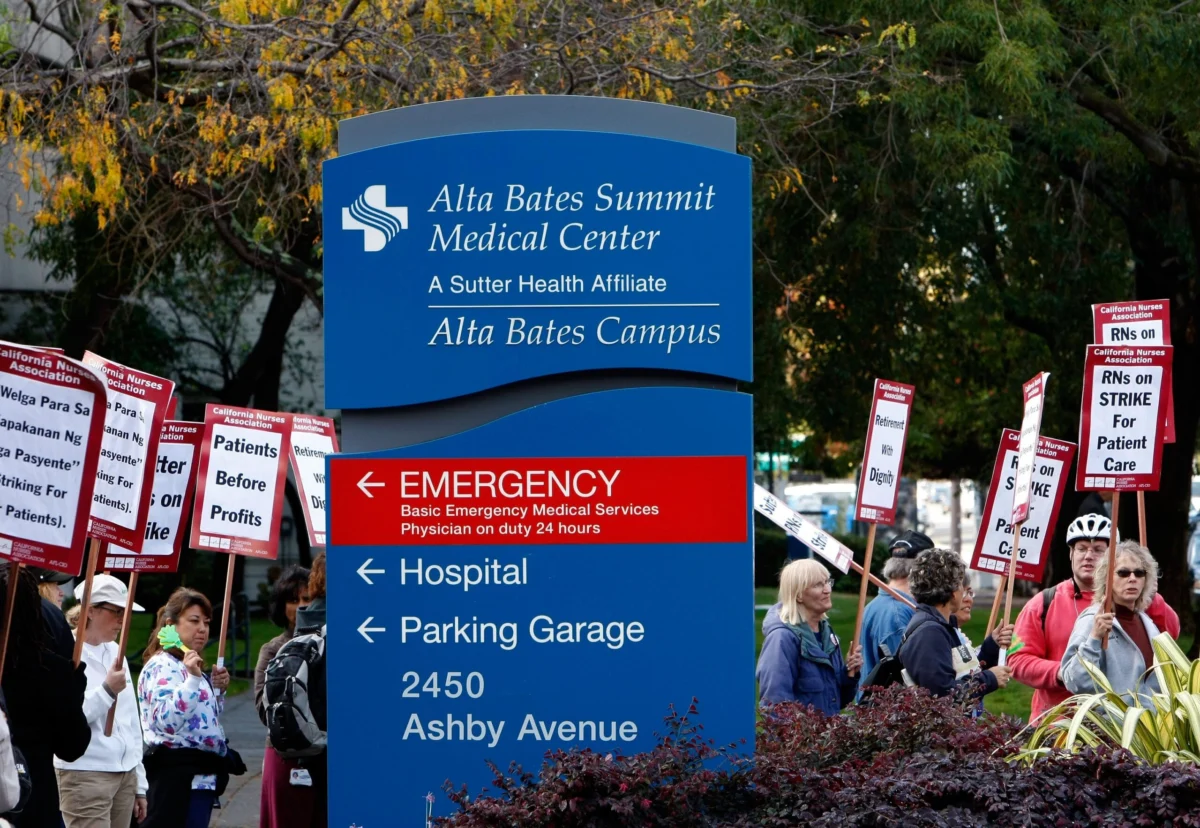
"Sutter Health’s decision to abandon its planned 200-bed hospital in Emeryville, a project intended to replace acute care services at its Alta Bates campus, underscores the significant challenges healthcare providers face navigating complex regulatory environments and the persistent uncertainty surrounding the future of essential medical services in the East Bay."
Sutter Health has officially withdrawn its proposal for a new hospital in Emeryville, California, a project that was slated to feature up to 200 beds and serve as a replacement for acute care services at its existing Alta Bates Summit Medical Center campus in Berkeley. The Sacramento-based health system announced this significant shift in its expansion plans on October 30th, citing a lack of a predictable regulatory pathway and the substantial risk of protracted litigation as the primary drivers behind the decision. This abrupt cancellation of a key component of a more than $1 billion East Bay expansion raises critical questions about access to healthcare for residents and the long-term viability of acute care services in Berkeley, which currently relies solely on the Alta Bates campus.
The withdrawn Emeryville hospital project was a cornerstone of Sutter Health’s ambitious $1 billion-plus East Bay expansion strategy, initially unveiled in February 2025. The proposed medical center was envisioned as a state-of-the-art, 335,000-square-foot facility designed to enhance patient capacity and modernize care delivery. With a projected opening between 2032 and 2033, the hospital was intended to significantly increase the number of patients Sutter Health could serve in the region, from approximately 480,000 to 800,000 annually. Concurrently, plans for the existing Berkeley campus included a transformation into an ambulatory surgery center, an urgent care clinic, and potentially a skilled nursing facility, signaling a strategic shift in how acute services would be managed in the East Bay.
In an open letter to the community, Sutter Health articulated its rationale for halting the Emeryville development, emphasizing that more than two years of efforts under the California Environmental Quality Act (CEQA) failed to provide the necessary certainty for such a substantial undertaking. The health system stated, "The most significant barrier was the lack of a clear and predictable regulatory path." This regulatory ambiguity, coupled with the persistent threat of lawsuits, could have potentially delayed construction and the commencement of new hospital services for an indefinite period, rendering the project financially untenable. Sutter also indicated that relocating the proposed hospital to a different site would not, in itself, resolve these underlying regulatory and legal challenges.
While the Emeryville hospital project has been shelved, Sutter Health affirmed that there will be no immediate disruption to patient care or services at the Alta Bates campus. The health system has expressed its commitment to keeping the Berkeley facility operational and is actively pursuing legislative action that would allow it to continue functioning while a new East Bay hospital is planned and constructed. This legislative push aims to address the looming seismic safety deadline that threatens the future of the Alta Bates campus. Sutter also stated that it is actively evaluating alternative sites within the East Bay for future development, though no specific locations have been identified or selected as of this announcement.
The decision to cancel the Emeryville hospital project reopens a deeply rooted and long-standing concern for East Bay residents: the future of acute care in Berkeley. Alta Bates Summit Medical Center stands as Berkeley’s sole hospital, and its potential closure would leave the city without a critical emergency room, a prospect that has been a significant source of anxiety for the community since at least 2018, as reported by KTVU. For years, residents, community leaders, and healthcare advocates have grappled with the implications of transitioning acute services away from Berkeley, particularly concerning emergency response, maternity care, and inpatient treatment accessibility.
The seismic safety deadline presents a critical challenge for the Alta Bates campus. California law mandates that all hospital buildings meet stringent seismic safety standards, with a compliance deadline of 2030. Alta Bates, in its current configuration, does not meet these requirements. Sutter Health had previously announced plans in 2016 to close the Berkeley hospital by 2030, with local leadership at the time deeming retrofitting the existing structure by the end of 2029 as unfeasible. The expectation was that the state would grant an extension for hospitals undertaking replacement projects. With the Emeryville project now canceled, Sutter’s pursuit of legislative intervention to extend the operating life of the Alta Bates campus until a new facility can be established is paramount. The specifics of any proposed legislation or a revised seismic deadline remain undisclosed in Sutter’s recent statement.
In the interim, Sutter Health has pledged to continue investing in the Alta Bates campus, including enhancements to its emergency department and patient care areas. The health system is also engaging with state officials on broader regulatory reforms, which include exploring the possibility of a full CEQA exemption for future hospital projects. This suggests a proactive approach to addressing the regulatory hurdles that contributed to the cancellation of the Emeryville plan.
Concerns regarding access to care following the potential closure of Alta Bates are not new. A UC Berkeley analysis released in 2018, commissioned by East Bay officials, highlighted the significant negative impact a closure would have on vulnerable populations, including seniors and individuals experiencing homelessness. The report also projected adverse effects on maternity and infant care across the East Bay and indicated that rush-hour commutes to Sutter’s Summit campus in Oakland would become considerably longer for many patients. Sutter Health, at the time, characterized the report as "limited in scope."
Sutter Health asserts that it serves over 540,000 patients across the East Bay and points to other regional investments as evidence of its commitment to the area. This includes the forthcoming Stanford Medicine Sutter Health Cancer Center in Oakland, scheduled to open in December 2026. For current patients, Sutter emphasizes that no immediate changes to their care plans are necessary. Individuals with scheduled procedures, prenatal appointments, or deliveries at Alta Bates are advised to proceed as planned and confirm details with their healthcare providers. Emergency situations, such as chest pain, stroke symptoms, serious injuries, or difficulty breathing, should continue to be addressed by calling 911.
The path forward for East Bay healthcare access now rests significantly on the actions of state lawmakers and Sutter Health’s ability to secure a new site and navigate the development process for a future hospital. The acquisition of land, securing financing, and successfully completing environmental reviews are complex undertakings that typically span several years. Berkeley officials and nurses have historically opposed the closure of acute care services at Alta Bates, with the Berkeley City Council unanimously voting in 2016 to oppose Sutter’s initial closure proposal. The current statement from Sutter does not clarify whether emergency care would remain in Berkeley if a new hospital is eventually built elsewhere in the East Bay.
While there are no immediate changes for patients, the cancellation of the Emeryville hospital plan signifies the collapse of a proposed solution for Alta Bates’ future. MedicalDaily will continue to monitor legislative developments, Sutter Health’s site selection process, and any further announcements regarding services in Berkeley.
Key Questions Answered:
What did Sutter announce? On October 30th, Sutter Health announced it was dropping its plan to build a hospital with up to 200 beds in Emeryville, which was intended to replace acute care services at its Alta Bates campus in Berkeley.
Why did Sutter drop the plan? The health system cited a lack of a clear and predictable regulatory path under California’s environmental review law (CEQA) and the significant risk of lawsuits that could have indefinitely delayed the project.
Is Alta Bates closing? Not immediately. Sutter has stated there will be no immediate change to patient care at the Berkeley campus and is seeking legislation to keep it open until a new hospital can be built.
What will happen at the Emeryville site? Sutter plans to proceed with developing outpatient services at the Emeryville site, which will include primary and specialty care, imaging, laboratory and pharmacy services, and outpatient surgery.
Will there still be a new East Bay hospital? Sutter Health is actively evaluating other East Bay locations for a potential new hospital but has not yet selected a site.
Should patients change their care plans? No. Patients can continue with their scheduled care at Alta Bates and should confirm details with their doctors.
