
"By harvesting and banking youthful stem cells today, we are moving beyond temporary topical treatments toward a future where our own biology becomes the primary tool for repairing the effects of aging and injury."
This shift in longevity science represents a transition from "anti-aging"—which often focuses on masking symptoms—to "regenerative aesthetics," a field dedicated to restoring the body’s cellular function. At the center of this movement is the use of the "secretome," a potent distillation of growth factors and signaling molecules derived from an individual’s own stem cells, harvested non-invasively from hair follicles. By leveraging these biological "master builders," clinicians are now able to accelerate healing and enhance skin quality with a level of personalization previously unimaginable in traditional dermatology.
The Evolution of Personalized Biology
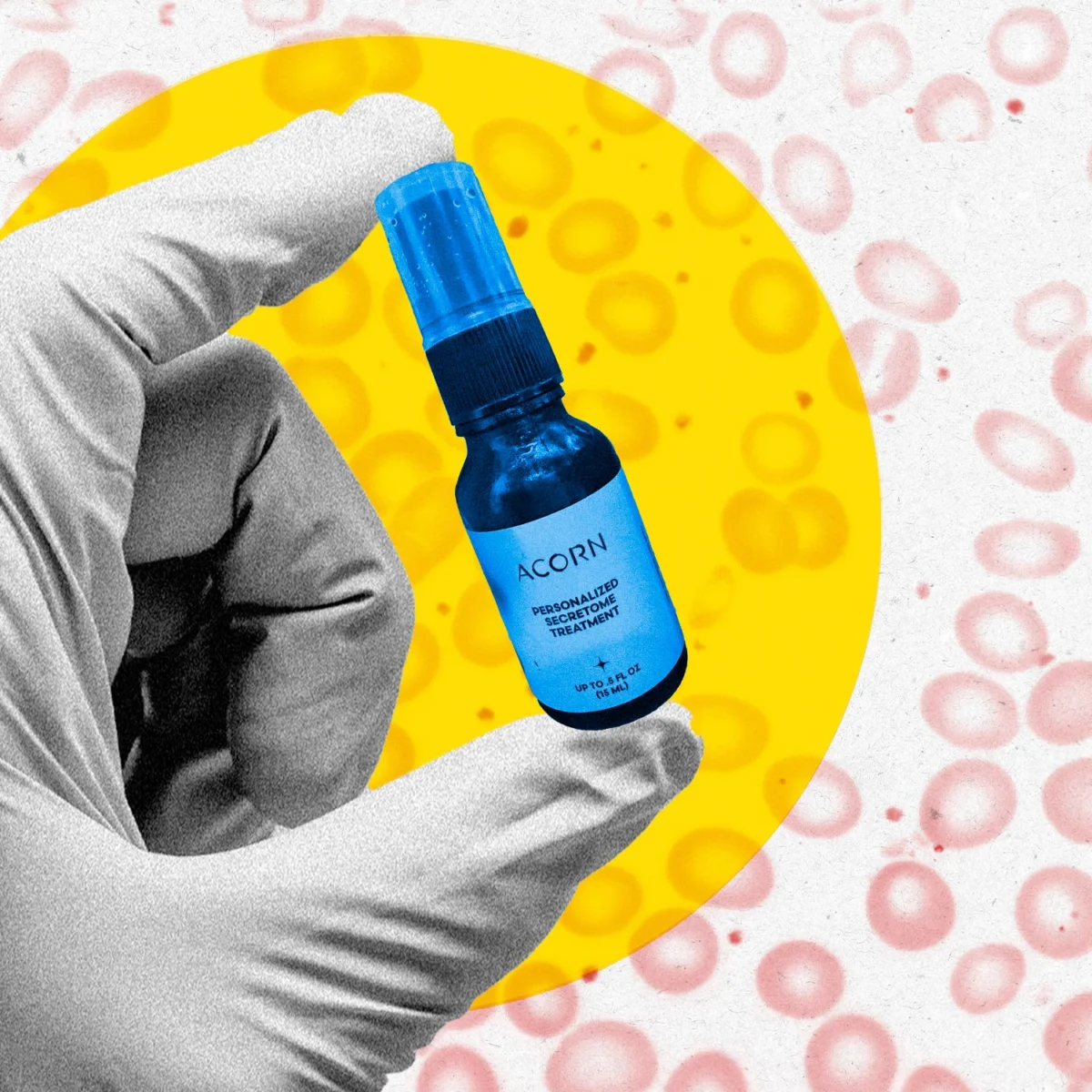
In a laboratory environment, a small blue vial represents more than just a skincare product; it is a liquid distillation of an individual’s peak biological potential. This substance, known as a secretome, is at the forefront of a burgeoning industry that seeks to weaponize the body’s own regenerative capabilities. The concept is championed by companies like Acorn Biolabs, which have identified the hair follicle as a goldmine of mesenchymal stem cells.
Stem cells are the body’s raw materials—the foundational units from which all other cells with specialized functions are generated. In the past, harvesting these cells required invasive procedures, such as drawing bone marrow or performing liposuction to extract adipose-derived cells. Acorn Biolabs has simplified this process by focusing on the hair follicle. By plucking approximately 50 hairs from the scalp, technicians can isolate viable stem cells that carry the patient’s unique genetic blueprint. These cells are then cryogenically frozen, effectively pausing their "biological clock" and preserving their youthful vigor for future use.
From Storage to Secretome: The Science of Cellular Signaling
The business of stem cell banking is often criticized for its "vaguely defined future," where patients pay annual fees to store cells they may never use. However, the innovation lies in the transition from storage to active application. While the direct injection of live stem cells into the skin remains a complex regulatory landscape, the use of their secretions—the secretome—offers a viable, highly effective alternative.
The secretome is the "instruction manual" of the cell. Over several weeks in a controlled laboratory setting, the harvested stem cells are prompted to secrete a cocktail of chemical signals, including growth factors, cytokines, and exosomes. These molecules are the primary drivers of intercellular communication. When applied to human tissue, they act as messengers that command surrounding cells to repair damage, produce new collagen, and modulate inflammation.
By freeze-drying this secretome and shipping it to a clinician, the laboratory provides a personalized serum that is 100% autologous—meaning it is derived entirely from the patient’s own body. This eliminates the risk of allergic reactions or rejection that can sometimes accompany synthetic or donor-derived products.
The Clinical Application: Microneedling and Deep Penetration
To be effective, the secretome cannot simply sit on the surface of the epidermis. The molecular weight of many growth factors is too high to penetrate the skin’s natural barrier. This necessitates a delivery system, most commonly "standard microneedling."
Microneedling, or collagen induction therapy, involves the use of a device equipped with fine needles that create thousands of microscopic "micro-channels" in the skin. This controlled trauma triggers the body’s natural wound-healing response. When the secretome is applied during this process, it travels through these channels deep into the dermis, where cellular regeneration occurs.

In a recent trial of this protocol, the application of the secretome significantly altered the standard recovery trajectory. Typically, microneedling results in several days of erythema (redness), inflammation, and dryness. However, when paired with a personalized secretome, the healing phase is often truncated. Patients report a rapid return to "baseline" skin condition, followed by an improvement in texture, elasticity, and "glow." This "bouncy" quality is the result of increased elastin and collagen density, the two structural proteins that decline as we age.
Regenerative Aesthetics vs. Traditional Treatments
The emergence of regenerative aesthetics marks a departure from the "alphabet soup" of traditional dermatological add-ons, such as Platelet-Rich Plasma (PRP). While PRP uses a patient’s blood to concentrate growth factors, the secretome derived from banked stem cells offers a more targeted and potentially more potent concentration of regenerative signals.
However, the field is currently in a transitional phase. While the underlying mechanisms of cellular signaling are well-understood in a laboratory setting, large-scale, independent clinical validation is still ongoing. This creates a "frontier" environment where the science is promising, but the results are often anecdotal.
For the consumer, this requires a shift in mindset. Traditional cosmetic procedures, like Botox or hyaluronic acid fillers, provide immediate, predictable, but temporary results by paralyzing muscles or adding volume. Regenerative treatments like the secretome are an investment in the "biological infrastructure" of the skin. They do not provide an overnight transformation; instead, they optimize the skin’s ability to repair itself over time.
The Cost of Bio-Optimization
Participating in this new era of medicine involves significant commitment, both financial and temporal. Unlike a one-off facial or a bottle of over-the-counter retinol, stem cell banking and secretome production involve high-tech laboratory processing and cryogenic storage fees. It is a premium service designed for those who are already invested in advanced skincare regimens, such as laser resurfacing or hair restoration.
The value proposition of Acorn Biolabs and similar entities is not just the immediate aesthetic improvement, but the "insurance policy" of banked cells. As an individual ages, their stem cells become less efficient and less numerous. By banking cells at age 30 or 40, a person ensures that they have access to a younger, more robust version of their own biology when they are 60 or 70.
Beyond Aesthetics: The Future of Reprogrammed Biology
Perhaps the most compelling aspect of hair follicle stem cell banking is its potential beyond the dermatologist’s chair. Current research suggests that these cells are remarkably plastic. In the future, scientists believe they may be able to "reprogram" hair-derived stem cells into other cell types, such as chondrocytes for cartilage repair, osteoblasts for bone regeneration, or even neurons to treat neurodegenerative diseases.
In this context, using a secretome for a "glow-up" after microneedling is merely the "minimum viable product" of a much larger biological revolution. It serves as a proof of concept for a world where we no longer rely solely on external chemicals or donor tissues to heal our bodies.
Conclusion: Embracing the Premise
The use of a personalized secretome represents a fundamental change in the human relationship with aging. It moves us away from the role of passive consumers of healthcare and toward being active "contributors" to our own biological maintenance.
While the data continues to catch up with the enthusiasm of early adopters, the premise remains sound: the most effective tools for healing and rejuvenation are already located within our own genetic code. By capturing, preserving, and redeploying these cells, we are not just fighting the clock; we are building a biological bridge to a future where "optimization" is a standard part of the human experience. Whether it is for a more youthful complexion or the future repair of an injured joint, the vial in the refrigerator is a testament to the power of personalized medicine.
