
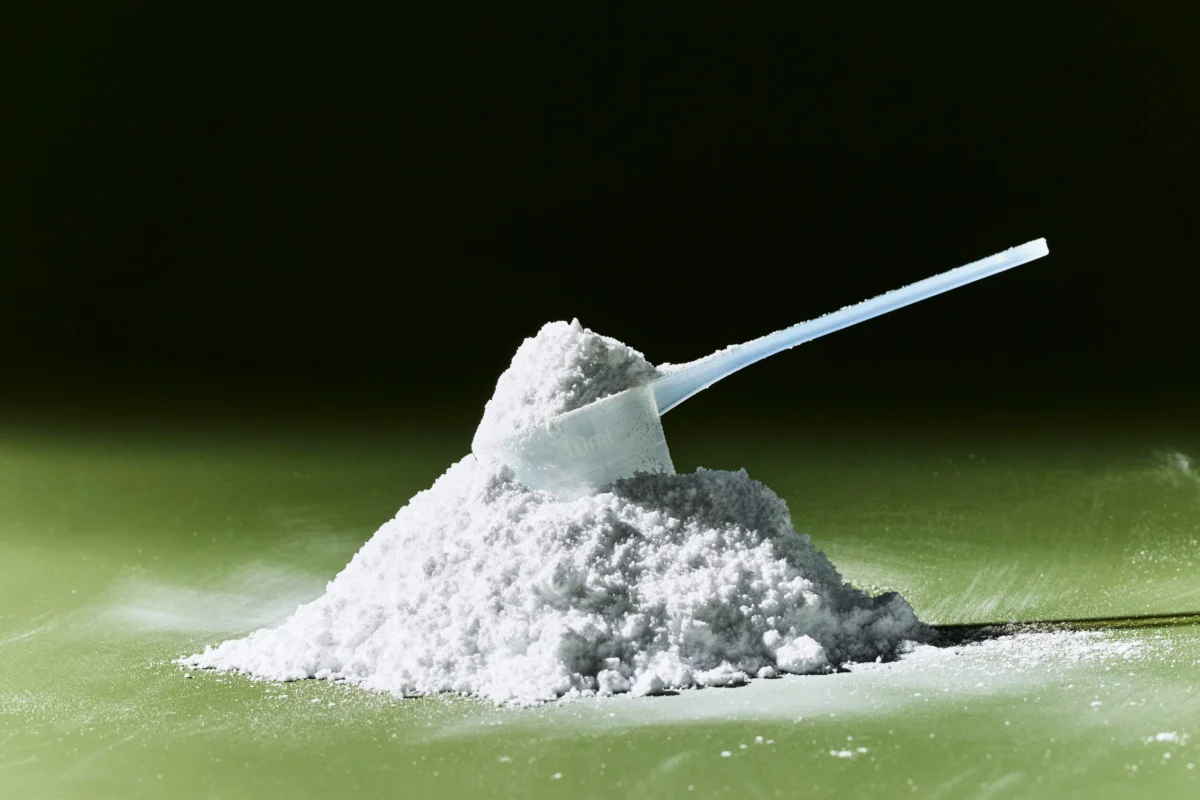
"While creatine-HCl offers superior solubility in water, scientific evidence suggests it provides no significant performance or muscle-building advantage over the more affordable, gold-standard creatine monohydrate."
The fitness supplement industry is frequently shaped by a cycle of innovation and marketing, where established "gold standard" products are challenged by new formulations promising faster results and fewer side effects. Creatine monohydrate, perhaps the most researched and validated ergonomic aid in history, has recently faced competition from creatine hydrochloride (HCl). This shift is driven largely by social media trends and strategic branding that positions HCl as a premium, more efficient alternative. However, understanding whether the increased cost of creatine-HCl translates into physical performance requires a deep dive into the biochemistry of creatine, the nuances of supplement absorption, and the current state of clinical research.
The Biological Foundation of Creatine
To understand the debate between monohydrate and HCl, one must first understand what creatine does within the human body. Creatine is a nitrogenous organic acid that occurs naturally in vertebrates and helps to supply energy to all cells in the body, primarily muscle. It achieves this by increasing the formation of adenosine triphosphate (ATP).
During high-intensity, short-duration exercise—such as sprinting or heavy weightlifting—the body’s primary energy source is the ATP-CP (creatine phosphate) system. ATP is broken down into ADP (adenosine diphosphate) to release energy. Creatine, stored in the muscles as phosphocreatine, "donates" a phosphate group to ADP, rapidly recycling it back into ATP. This allows athletes to maintain peak power output for a few seconds longer, leading to more repetitions, greater total volume, and eventually, more significant muscle hypertrophy.
Creatine Monohydrate: The Industry Standard
Creatine monohydrate consists of a creatine molecule with one water molecule attached. For decades, it has been the baseline for all creatine research. Thousands of studies have confirmed its safety and efficacy in increasing muscle mass, strength, and exercise performance. Because it has been on the market for so long, the manufacturing processes have become highly efficient, making it one of the most cost-effective supplements available.
Despite its success, monohydrate has a few known characteristics that some users find inconvenient. It has relatively low solubility in water, often leaving a "gritty" residue at the bottom of a glass. Furthermore, some users report gastrointestinal distress—bloating, cramping, or diarrhea—particularly during the "loading phase," where high doses (20 grams per day) are taken to saturate the muscles quickly.
Enter Creatine-HCl: The New Contender
Creatine-HCl is a creatine molecule bound with a hydrochloride group. This chemical modification significantly alters the supplement’s physical properties, most notably its solubility. According to Scott Keatley, RD, co-owner of Keatley Medical Nutrition Therapy, the primary distinction is how quickly the substance dissolves. Because the hydrochloride group lowers the pH of the creatine, making it more acidic, it becomes much more soluble in water than the monohydrate form.
On platforms like TikTok, fitness influencers have seized on this solubility, claiming that because it dissolves better in a glass, it must be absorbed more efficiently by the body. The narrative suggests that if the body absorbs it better, a "micro-dose" can achieve the same results as a standard 5-gram dose of monohydrate, without the water retention or stomach issues.
Evaluating the Claims: Absorption vs. Saturation
The central argument for creatine-HCl is superior absorption. While it is true that HCl is more soluble, the leap from "solubility in water" to "greater muscle hypertrophy" is a significant one that is not currently supported by robust data.
Albert Matheny, RD, CSCS, co-founder of SoHo Strength Lab, notes that the difference in efficacy between the two is negligible. "It’s like the difference between 99 percent and 100 percent," Matheny explains. Once creatine enters the highly acidic environment of the stomach, the hydrochloride bond is broken, and the body is left with the same creatine molecule it would have received from monohydrate.

The goal of creatine supplementation is muscle saturation. Once the muscles are fully saturated with creatine, taking "better" or "faster" creatine does not provide additional benefits. The body has a ceiling for how much phosphocreatine it can store. Whether you reach that ceiling through 5 grams of monohydrate or a smaller, more expensive dose of HCl, the performance outcome remains the same.
The Loading Phase and Digestive Health
One of the most common selling points for creatine-HCl is the claim that it requires no "loading phase." Traditionally, athletes take 20 grams of monohydrate for 5–7 days to saturate muscles quickly, followed by a 5-gram maintenance dose.
However, sports nutritionists have long pointed out that loading is an option, not a requirement. Taking 3 to 5 grams of creatine monohydrate daily will achieve full muscle saturation within three to four weeks. Therefore, the "no-loading" benefit of HCl is not a unique advantage; it is a standard characteristic of how creatine works in the body.
Regarding digestive health, some proponents argue that because HCl is more soluble and taken in smaller doses, it is gentler on the stomach. While anecdotal evidence exists—some individuals do report less bloating with HCl—clinical evidence is sparse. Dr. Shane Davis, a sports medicine physician at Tufts Medical Center, notes that while solubility is a legitimate physical advantage for mixing the drink, the claims regarding digestive superiority and lower effective dosages have not been convincingly established in peer-reviewed literature.
What the Science Says
To date, very few head-to-head studies compare these two forms of creatine. One notable study involved 40 participants who were divided into groups to test the effects of each form during a resistance training program. After eight weeks, researchers concluded that both groups saw significant improvements in strength and body composition. However, there was no statistically significant benefit to using creatine-HCl over the traditional monohydrate.
This suggests that the "performance edge" marketed by supplement companies is likely a result of strategic branding rather than biological superiority. For the vast majority of consumers, the high concentration of marketing surrounding HCl serves to justify a higher price point for a result that could be achieved more affordably.
The Marketing Influence
The rise of creatine-HCl can be viewed as a case study in supplement marketing. In a saturated market where creatine monohydrate has become a low-margin commodity, manufacturers have a financial incentive to develop "new and improved" versions that can be sold at a premium.
By targeting common (though often minor) complaints about monohydrate—such as its mixability or the perceived "bloat" of water retention—companies can carve out a niche for HCl. As Matheny points out, the popularity of these products is often driven more by the "strategic marketing" of the supplement industry than by a breakthrough in exercise science.
Practical Recommendations for Athletes
When choosing between creatine monohydrate and creatine-HCl, the decision ultimately comes down to three factors: cost, convenience, and personal tolerance.
- Cost: Creatine monohydrate is significantly cheaper. For those on a budget or those looking for the best value per gram of actual creatine, monohydrate is the clear winner.
- Convenience: If the "grittiness" of monohydrate is a major deterrent, the superior solubility of HCl may be worth the extra cost. HCl dissolves almost instantly, making for a smoother drinking experience.
- Tolerance: For the small percentage of users who experience genuine, persistent gastric distress with monohydrate even at low doses (3–5 grams), trying a hydrochloride version is a reasonable experiment.
Conclusion
While creatine-HCl is a legitimate and effective way to supplement with creatine, it is not the "revolutionary" upgrade that social media advertisements might suggest. It offers a solution to a minor problem—solubility—but does not change the fundamental way creatine interacts with muscle tissue or enhances athletic performance.
For the average gym-goer or professional athlete, creatine monohydrate remains the most evidence-based, cost-effective choice. As Dr. Shane Davis and other experts suggest, until research can prove that HCl leads to greater muscle cross-sectional area or higher power output than monohydrate, the "gold standard" remains unchallenged. In the world of supplements, more expensive does not always mean more effective; often, it simply means more soluble.
