
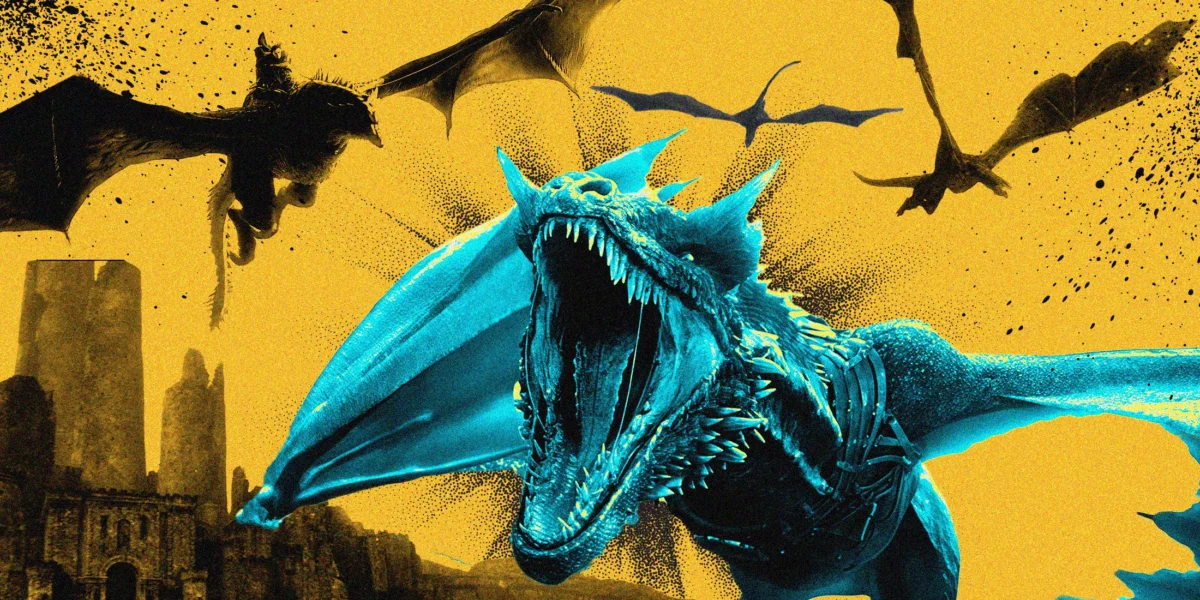
"The ultimate success of a digital creature is measured not by the realism of its scales, but by the weight of the grief felt when it falls, proving that visual effects have evolved from spectacle into soul-driven performance."
In the third season of HBO’s House of the Dragon, the line between digital artifice and emotional reality has blurred more than ever before. As the Targaryen civil war, known as the Dance of the Dragons, reaches a fever pitch, the production team has transitioned from creating mere monsters to crafting nuanced, multifaceted characters. By grounding fantasy in the laws of nature—from the clumsy landings of an albatross to the gritty survival instincts of a stray pit bull—the show’s visual effects team has managed to make the loss of a dragon as devastating to the audience as the death of a human protagonist.

The Evolution of the Draconic Character
When Game of Thrones first introduced Daenerys Targaryen’s three dragons, they were symbols of a lost age, growing from hatchlings into weapons of mass destruction. However, House of the Dragon operates on a vastly different scale. With over 20 dragons populating the skies of Westeros, the challenge for VFX Supervisor Dadi Einarsson and his team was to ensure that each beast possessed a distinct personality, history, and physical "dialect."
Einarsson, a veteran animator with decades of experience, notes that the dragons have evolved significantly over the show’s three seasons. This evolution is not merely technological but narrative. In the early stages of the series, dragons were defined by their size and color. In Season 3, they are defined by their psychology. The team utilizes a "Dragon Bible," a massive repository of lore developed alongside showrunner Ryan Condal and based on George R.R. Martin’s source material. This document dictates every detail: age, gender, temperament, and even the specific way a dragon’s rider influences its behavior.
For instance, Syrax, the mount of Queen Rhaenyra, is designed with a regal, graceful silhouette that mirrors the queen’s own status. In contrast, Caraxes is a long-necked, temperamental "blood wyrm" that acts as a physical manifestation of Daemon Targaryen’s chaotic energy. This "alter ego" relationship between rider and dragon ensures that the visual effects are always serving the broader themes of the story.

Sheepstealer: The Anatomy of a Stray
One of the most striking additions to the Season 3 roster is Sheepstealer, a wild dragon that offers a sharp departure from the pampered "Velaryon dragons" raised in the Dragonpit. Einarsson describes Sheepstealer through the lens of a "back-alley stray" or a "pit bull"—a creature that has never known the touch of a dragon keeper.
To convey this sense of isolation and feral survival, the VFX team moved away from the sleek, iridescent scales of the royal dragons. Sheepstealer is "gnarly," sporting a pronounced underbite and vitiligo—a skin condition that creates patches of depigmentation. These physical "deformities" serve a dual purpose: they suggest a history of being shunned by its own kind and provide a point of connection for Lady Rhaena, who sees a kindred spirit in the beast’s imperfections. This level of detail transforms a digital asset into a tragic figure, making the bond between dragon and rider feel earned rather than inevitable.
Bridging the Gap: Practicality on a Digital Set
While the final product on screen is a marvel of computer-generated imagery, the process of filming requires a surprising amount of tactile, physical intervention. For actors to deliver authentic performances, they cannot simply stare at a blank green screen.

The production utilizes "dragon performers"—specialists dressed in blue suits who manipulate fiberglass dragon heads on long poles. For intimate scenes, such as when a character touches a dragon’s snout, these physical props provide the necessary resistance and eye-line for the actors. When the dragons are too large for fiberglass models, the crew resorts to laser pointers or tennis balls on poles, but the goal remains the same: suspending disbelief for the cast so they can project genuine emotion.
The riders themselves experience the most intense physical demands. To simulate flight, the production uses a "buck"—a high-tech gimbal that rolls and pitches the dragon’s saddle in sync with pre-visualized animation. This system is surrounded by a "Volume" of LED lights and massive wind fans. For Season 3, the team took this a step further by 3D printing the "skin" of the dragons. When Phoebe Campbell, who plays Rhaena, climbs onto Sheepstealer, she isn’t holding onto a plastic prop; she is gripping a 3D-printed model of the dragon’s back, complete with spikes and the exact texture that will appear in the final render.
The Physics of the Impossible
One of the most difficult aspects of creature animation is conveying weight. A creature that weighs several tons cannot simply take off like a sparrow. Einarsson’s team looks to the natural world to solve these problems, utilizing a principle known as "overlap and follow-through."

When a dragon like Vhagar or Sheepstealer takes flight, the movement begins in the head, ripples through the chest, and finally reaches the pelvis and tail. There is a "drop" after the jump where the audience feels the weight of the beast before the wings finally catch the air. This season, the team specifically studied the albatross to model Sheepstealer’s landings. Because the albatross is a heavy bird that spends most of its time soaring, its landings on solid ground are often clumsy and uncoordinated. By giving a dragon a "clumsy" landing, the VFX team humanizes the creature, stripping away its invincibility and making it feel like a living, breathing animal subject to the laws of gravity.
This commitment to realism extends to the dragon’s fire. Rather than relying solely on digital flames, the production employs a world-class stunt team to perform practical "burns." By setting fire to actual structures and, occasionally, stunt performers in controlled environments, the VFX team gains a "ground truth" for how light, smoke, and heat behave. This allows them to layer digital fire over practical elements, creating a composite that feels dangerously real.
The Legacy of the Digital Dinosaur
The work on House of the Dragon stands on the shoulders of giants, specifically the ground-breaking work done in Steven Spielberg’s Jurassic Park. Einarsson acknowledges that the 1993 film established the "visual grammar" for how modern audiences expect large, reptilian creatures to move.

"They are the grandfathers of digital creature animation," Einarsson says of the Jurassic Park animators. The industry has spent the last thirty years refining those rules, moving from the revolutionary novelty of seeing a dinosaur to the sophisticated emotional resonance of seeing a dragon mourn.
In the Season 3 premiere, the death of the dragon Vermax served as a litmus test for this philosophy. The reaction from fans was not focused on the technical fluidity of the water or the rendering of the scales; it was a reaction of pure, unadulterated grief. By treating the dragons as characters with agency, flaws, and vulnerabilities, House of the Dragon has ensured that the "Dance of the Dragons" is not just a battle of pixels, but a tragic operatic struggle where the stakes are felt in every beat of a leathery wing.
As the season progresses toward its finale, the complexity of these digital stars will only increase. The dragons are no longer just the "nuclear weapons" of Westeros; they are the heart of its tragedy. Through a combination of rigorous biological study, tactile on-set tools, and a deep respect for the source material, the VFX team has achieved the ultimate goal of the medium: making the impossible feel inevitable.
