
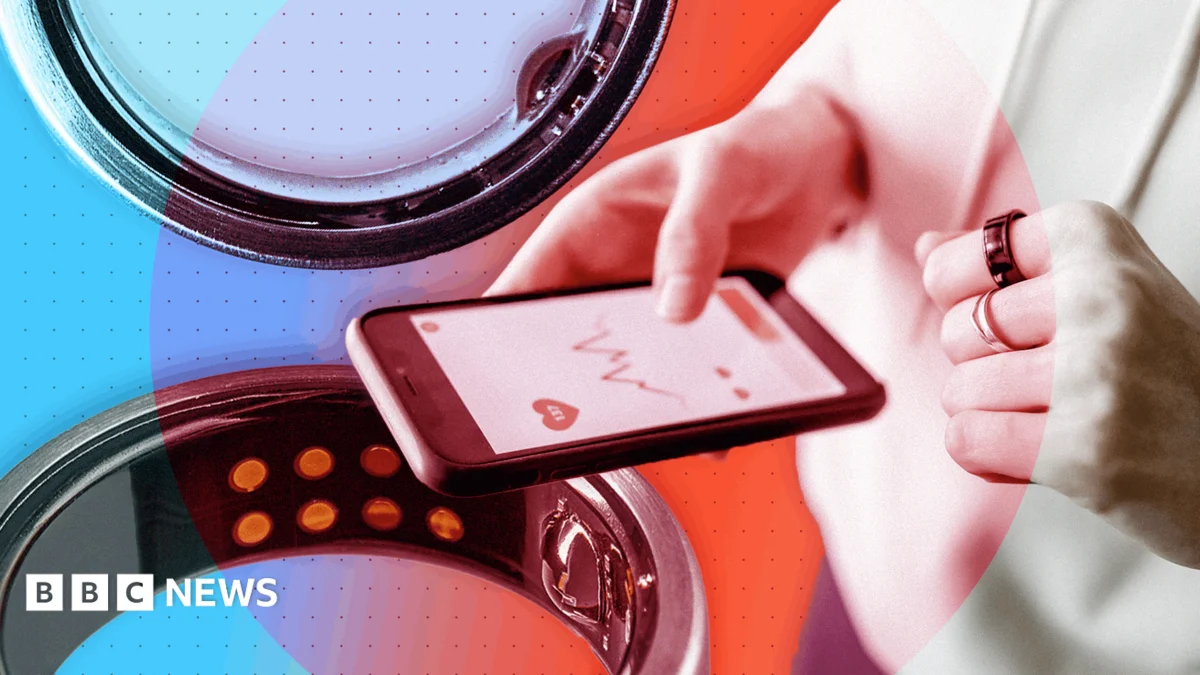
"While wearable technology offers unprecedented insights into our bodies, its application in the sensitive early stages of pregnancy highlights a critical tension between the desire for early detection and the potential for profound psychological distress."
The burgeoning landscape of personal health technology has profoundly reshaped how individuals monitor their well-being, extending into highly sensitive areas like fertility and early pregnancy. Devices such as the Oura ring, which track biometric data like body temperature and heart rate variability, are increasingly being used by individuals hoping to gain an early understanding of their reproductive health and the earliest signs of conception. However, as personal stories and expert opinions reveal, this technological empowerment comes with a significant caveat: the potential to amplify anxiety and distress during an already vulnerable period, necessitating a careful re-evaluation of how these tools are integrated into personal health journeys.
For many women, the promise of early insight into their reproductive health through wearable technology is a powerful draw. Sofia, a 32-year-old, epitomizes this trend, having relied on her Oura ring for data during her pregnancy attempts. Her journey began with a hopeful anticipation, meticulously checking her app each morning for temperature trends indicative of a healthy progression. Early last year, during her first pregnancy, she became acutely attuned to these data points. "When I would wake up to see the [temperature] line progressing, and then I saw in the app one morning that my temperature had dropped – and that’s how I knew, something’s weird," she recounted. This stark drop in her basal body temperature, a key indicator often associated with hormonal shifts preceding menstruation or miscarriage, provided Sofia with an unsettling premonition. When the miscarriage eventually occurred, she admitted, "I kind of was already mentally prepared because of the data I saw."
This pattern tragically repeated just three months later. The same tell-tale dip in temperature, communicated through her wearable device, foreshadowed another devastating loss. The emotional toll of these experiences led Sofia and her husband to decide on a temporary hiatus from trying to conceive. Yet, even during this break, her Oura ring continued its silent vigil, eventually flagging a notification of "minor signs of strain" and an unexpected elevation in her temperature. Prompted by this unsolicited data, she took a pregnancy test, which surprisingly returned positive.
While this third pregnancy proved to be healthy, Sofia’s prior experiences had etched a deep sense of anxiety within her. The very data that had previously offered a morbid form of preparation now fueled incessant worry. She found herself caught in a cycle of obsessive monitoring during those crucial early weeks. "I was like, ‘Oh my God, is this going to happen again?’, and I remember I would wake up at four or five in the morning and just check my app to see if my temperature had dipped," she described. The constant vigilance, driven by the readily available biometric data, became emotionally exhausting. The desire for reassurance morphed into a source of intense stress, pushing her to a point where she felt compelled to disengage. "I was so conscious of that piece of data to the point where, when I reached seven or eight weeks [pregnant], I had to take my ring off and didn’t wear it for all of the first trimester." Her decision underscores a growing dilemma: when does the pursuit of data-driven insight cross the line into detrimental anxiety?
The medical community acknowledges the innate human desire for understanding and early detection, especially concerning life-altering events like pregnancy. Dr. Stuart Lavery, a consultant of reproductive medicine at University College Hospital in London, observes, "People are understandably using this technology to try to get a greater understanding, and to try and pick up things as early as possible because it has such a profound impact on your life if you’re planning a pregnancy." This sentiment reflects a broader societal trend towards the "quantified self," where individuals seek to leverage technology to gain greater control and insight into their physiological processes.
However, Dr. Lavery cautions against an overly enthusiastic embrace of these technologies without adequate scientific validation, stating, "we might be running before we can walk." His concern stems from the current gap in robust clinical evidence supporting the diagnostic reliability of consumer-grade wearables for complex physiological events like early pregnancy complications. "We probably need a lot more data on the reliability, we need a lot more research… otherwise what happens is your levels of anxiety will just skyrocket," he warns. The implicit danger lies in users misinterpreting raw data points as definitive medical diagnoses, leading to undue stress or, conversely, false reassurance. While acknowledging the inevitable integration of technology into health monitoring, Dr. Lavery insists on a "big health warning about how much we can rely on them for accuracy." This highlights the critical distinction between collecting data and providing clinically validated diagnostic information, a distinction often blurred in the consumer tech market.
Oura, a prominent player in the wearable technology space, recognizes the emotional complexities its users face. Dr. Chris Curry, Oura’s clinical director of women’s health, addresses the reported anxiety by stating, "With or without biometric tracking, pregnancy can be an uncertain time where many women, particularly those pregnant for the first time, are in the dark about the range of what’s normal." This perspective frames the technology as an added layer within an inherently uncertain experience. She emphasizes that the company "encourages members to take a break from the app experience, whilst Oura Ring continues to collect data and gather insights" if they feel overwhelmed. This recommendation underscores the company’s understanding of the psychological impact of continuous monitoring and positions the device as a "support tool, not a replacement for your care team." This distinction is crucial; wearables can provide personal data trends, but these should always be interpreted within the broader context of professional medical advice and care.
The experience of Ravika further illustrates the mental health implications of relying on such devices during vulnerable periods. After sadly experiencing a miscarriage, Ravika is contemplating future attempts to conceive. Her journey has led her to critically re-evaluate her relationship with her health tracker. "I didn’t really see myself as being an anxious person, but… I think going forward if it came to a point where I had an inkling that I was pregnant and my stats were low, as soon as that positive pregnancy test was there, I do think it would be the best thing for me to take the ring off." This sentiment echoes Sofia’s decision, highlighting a growing awareness among users that while data can be empowering, constant exposure to it can become a source of profound stress, especially when the data points are ambiguous or suggest negative outcomes.
The widespread adoption of wearable technology in health monitoring presents a fascinating, yet complex, interplay between technological advancement and human psychology. On one hand, these devices offer an unprecedented level of personalized data, potentially empowering individuals to be more proactive about their health. For those trying to conceive or in the early stages of pregnancy, the ability to track subtle physiological changes can offer a sense of control and early awareness. This can be particularly valuable in identifying optimal conception windows or even providing a preliminary signal that prompts earlier medical consultation.
However, the stories of Sofia and Ravika, alongside Dr. Lavery’s expert caution, reveal the significant downsides. The constant stream of data, often presented without clear clinical context or interpretation, can transform anticipation into apprehension and hope into anxiety. A slight dip in temperature, a minor fluctuation in heart rate variability, or a "sign of strain" notification, while potentially benign, can trigger intense worry in a user already navigating the emotional tightrope of early pregnancy. This phenomenon, often termed "data anxiety," arises when individuals feel overwhelmed or distressed by the sheer volume or ambiguity of their personal data, leading to obsessive checking and heightened stress levels.
The challenge for both technology developers and healthcare providers lies in striking a delicate balance. Companies developing these wearables have a responsibility to not only ensure the accuracy and reliability of their data but also to design user interfaces and communication strategies that mitigate anxiety. This includes clear disclaimers about the non-diagnostic nature of the data, guidance on when to seek professional medical advice, and features that allow users to manage their engagement with the data, such as "taking a break" from the app.
For healthcare professionals, the integration of wearable technology means adapting to a new landscape where patients arrive with pre-existing data and often pre-formed anxieties. Clinicians must be equipped to interpret this data within a medical context, educate patients on its limitations, and provide reassurance or appropriate medical interventions when necessary. The "support tool" paradigm articulated by Oura’s clinical director is critical: these devices should augment, not replace, the comprehensive care provided by medical teams.
Ultimately, the journey through early pregnancy is inherently fraught with uncertainty, irrespective of technological aids. While wearable devices offer a tantalizing glimpse into the body’s inner workings, their true value in this sensitive phase will depend not just on their technical sophistication, but on how effectively they can empower users with meaningful, context-rich insights without inadvertently escalating anxiety. The call for more rigorous research and a more cautious approach from experts like Dr. Lavery underscores the need for a deeper understanding of these tools’ psychological impact, ensuring that the quest for data does not inadvertently undermine the emotional well-being of individuals during one of life’s most profound and delicate experiences.
