
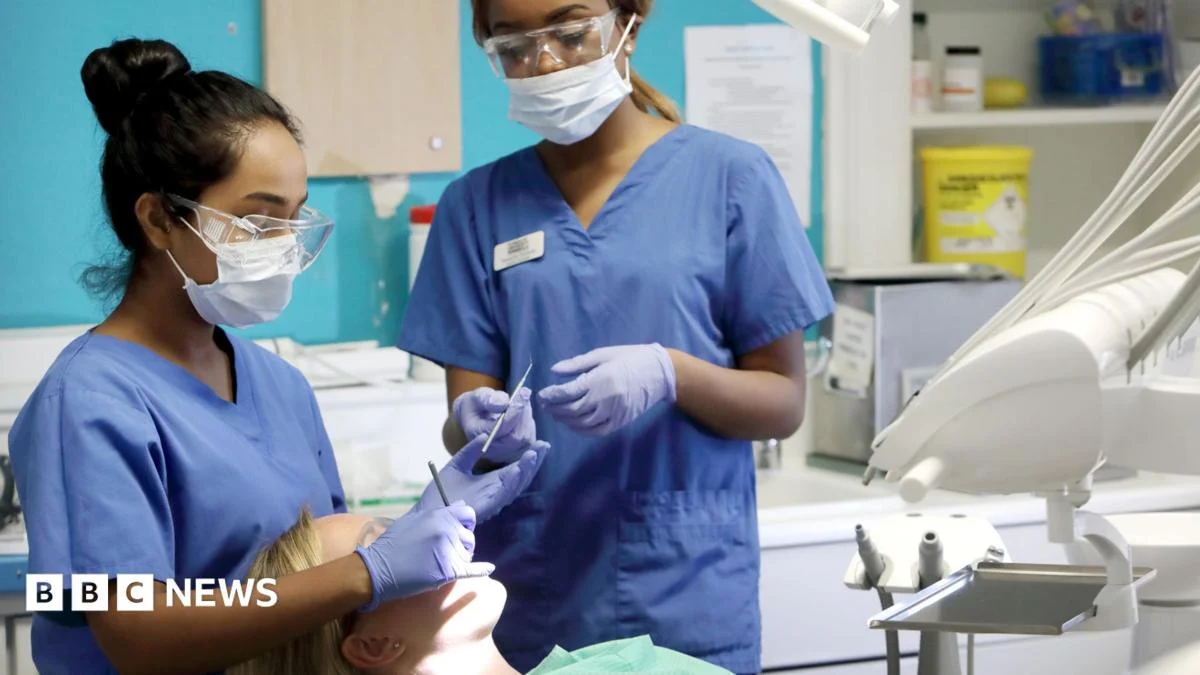
Across England, a silent transformation is turning dentistry into a two-tier service where access increasingly depends on what people can afford and where they live, leaving vast swathes of the population struggling in ‘dental deserts’.
The availability of NHS dental care in England is undergoing a profound and concerning decline, with significant regions experiencing a dramatic reduction in practices willing to provide publicly funded treatment. This systemic shift is creating "dental deserts" where patients face immense difficulty securing appointments, often leading to prolonged suffering, reliance on emergency services, or the prohibitive cost of private care. Despite ministerial pledges to address the crisis, dentists consistently report that the current NHS contract model is financially unviable, compelling many to reduce their NHS commitments or abandon them entirely, fundamentally reshaping the landscape of oral healthcare in the country.
The geographical impact of this exodus from NHS dentistry is starkly evident across numerous counties. Cornwall stands out as one of the most severely affected regions, where more than a quarter of practices that previously offered NHS treatment have ceased doing so. This dramatic reduction exemplifies the widespread shift away from public provision. Similar, significant reductions in NHS dental practices have been observed in Devon and Northamptonshire, indicating a pervasive issue that transcends specific localities. These regional data points paint a picture of a health service under immense strain, struggling to maintain its foundational principle of universal access.
For individuals like Alan, an 83-year-old resident of Somerset, the crisis is not merely a statistic but a daily reality of discomfort and resignation. In his county, fewer than one in five dental practices now offer NHS services, making access to care a formidable challenge. Alan recounts his fruitless attempts to secure an appointment: "I used to try, but getting a dental appointment anywhere near where I live would be impossible." His plight is particularly poignant; with only one tooth remaining after others "crumbled out over the years," he has had to fundamentally adapt his diet. While he manages a wry joke about perfecting the art of eating Brazil nuts, the underlying reality is a significant compromise to his quality of life and nutritional intake, a direct consequence of a failing system. His story is a powerful illustration of the human cost when essential healthcare services become inaccessible.
At the heart of this crisis is the profound struggle faced by dental professionals. Vivak Shah, who manages three dental practices in Northamptonshire, exemplifies the dilemma. Despite his commitment to offering NHS treatment, he admits these services operate at a loss. This financial strain has forced him to make difficult decisions, including no longer accepting new NHS patients. Shah articulates the annual struggle: "Each year we struggle to decide what to do, and there is a limit to how much the private side can cover the NHS losses." The underlying issue, according to many dentists, lies in the structure and funding of the NHS dental contract, which often uses the Units of Dental Activity (UDA) system. This system is frequently criticised for not adequately reflecting the actual cost or complexity of treatments, leading to practices essentially subsidising NHS work through private earnings. Shah warns that if practices continue to withdraw from NHS provision, many patients will be left in intractable pain or forced to seek help from already overburdened hospital accident and emergency departments, diverting resources from critical care.
Jim Sykes, a dentist in Hexham, provides another personal account of this professional anguish. He made the "really hard emotional decision" to hand back his NHS contract in 2024, explaining that "the NHS work was running at such a loss. I had to think of my team of staff and make it work." His attempt to maintain a partial commitment, by offering to treat only children, was rejected, with the stipulation that he had to accept adults as well or relinquish all NHS work. This inflexibility highlights a key frustration for many practitioners. Sykes expresses a deep sense of betrayal, stating, "There has been a real breakdown in trust for me. Even if there was a new government offer, I would still be very nervous about entering a new NHS contract." This sentiment is echoed across the profession, with Sykes noting that none of his graduating class now works in the NHS, having instead opted for private practice, retirement, or teaching – "any pathway to avoid NHS dentistry." This mass exodus of experienced professionals represents a significant loss of expertise and capacity from the public health system.
Mark Dayan, head of public affairs at the Nuffield Trust, offers an expert perspective on the broader implications of these individual decisions. He describes the cumulative effect as a "quiet transformation of dentistry into a two-tier service," even if a single contract hand-back attracts little national attention. Dayan argues that "access to dental care increasingly depends on what people can afford to pay and where they live." This observation underscores a fundamental shift away from the NHS’s founding principles, where healthcare should be free at the point of need. He clarifies that the problem is not a general "shortage of dentistry" but specifically a "shortage of NHS dentistry," pointing out that overall dentist practice numbers have, in fact, risen in England over the last decade. The challenge, therefore, is to "incentivise practices back into NHS work in the places where the NHS footprint has thinned most." This requires a re-evaluation of the contractual and financial mechanisms that currently deter dentists from public service.
Shiv Pabary, chair of the British Dental Association’s General Dental Practice Committee, directly attributes the current predicament to "the direct result of choices made by successive governments." This critique often points to long-standing issues such as underfunding, the inadequacies of the 2006 dental contract, and the persistent use of the UDA system, which dentists argue prioritises volume over quality and patient need, while failing to cover operational costs. He warns that without urgent action to "fix and fund NHS dentistry," more dentists will inevitably reduce their NHS commitments or leave the service entirely, exacerbating an already critical situation.
While the overall number of dental practices has increased, this obscures a crucial nuance: the amount of health service capacity available. Looking solely at practice numbers can be misleading, as practices vary significantly in size and the proportion of NHS work they undertake. When other measures, such as the actual amount of treatment being delivered, are considered, the numbers are still down, though perhaps not as steeply as the fall in practice numbers. This indicates that even where practices still exist, their NHS provision may have been significantly curtailed.
The decline in NHS dental care has not been uniform across England. While most regions have seen reductions, some areas have experienced smaller declines. North West London, the Black Country, and North East London recorded the smallest reductions. Remarkably, North East London was the only area to see any increase during the period, recording one additional practice offering NHS treatment compared with a decade ago. Every other region of England saw the number of NHS dental practices fall. These regional variations suggest that local factors, demographics, specific commissioning efforts, or urban density might play a role in mitigating the crisis in certain areas, but they do not negate the overwhelming national trend.
In response to the growing public outcry and mounting pressure, the government has announced measures aimed at tackling the "dental deserts." These pledges include reforms to the dental contract, a commitment to training more dentists in areas most in need, and a new requirement for newly qualified dentists to practice in the NHS for a minimum period of at least three years. While these steps acknowledge the problem, their efficacy remains a subject of intense debate among dental professionals and patient advocates. Many dentists question whether contract changes will be sufficient to address the root causes of financial unsustainability and whether mandatory service for new graduates will deter individuals from entering the profession or simply lead to a temporary fix without addressing long-term retention.
The campaign group 38 Degrees encapsulates the public’s frustration, branding the current dental crisis as "shameful." They highlight the devastating impact on individuals, who are "forced to pay money they can’t afford or suffer with the pain, shame, and further complications that come from being denied vital NHS healthcare." This underscores the broader public health implications, where untreated dental issues can lead to severe pain, infections, difficulty eating and speaking, and even systemic health problems, increasing the burden on other parts of the health service and contributing to health inequalities.
The erosion of NHS dentistry represents a critical challenge to the fabric of public healthcare in England. It is a complex issue rooted in historical policy choices, inadequate funding, and a contractual system that has alienated a significant portion of the dental profession. Without a comprehensive and sustainable overhaul of how NHS dentistry is funded and structured, the vision of universal, accessible dental care for all citizens risks becoming an increasingly distant memory, leaving millions to navigate a fragmented and increasingly inequitable system.
