
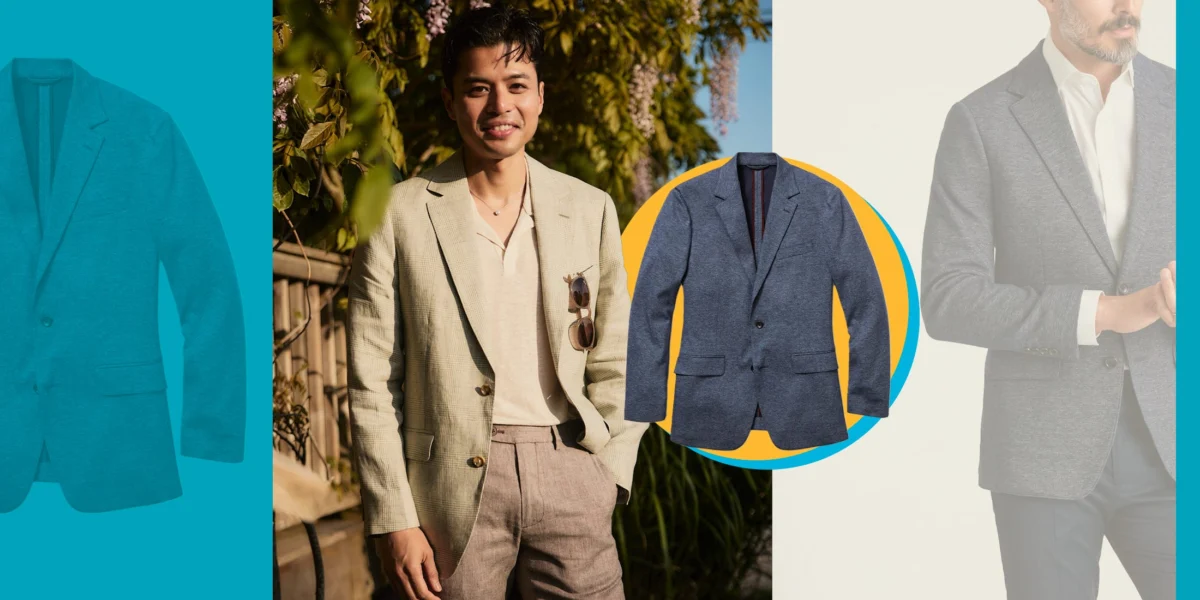
"A truly versatile blazer bridges the gap between formal tradition and modern mobility, offering a refined silhouette that survives the rigors of global travel without losing its sartorial integrity."

The contemporary landscape of men’s fashion is defined by an increasingly nebulous set of dress codes, where the boundaries between "smart casual," "business casual," and "cocktail attire" have largely dissolved. For the modern professional, the challenge lies in finding a garment that commands respect in a boardroom but remains comfortable enough for a ten-hour flight or a crowded subway commute. The travel blazer has emerged as the definitive solution to this dilemma, acting as a functional "daily driver" that provides the structure of a suit jacket with the resilience of performance gear. By prioritizing soft construction and innovative fabric blends, brands like Bonobos have redefined the blazer not as a ceremonial costume, but as an essential tool for the global traveler.
The Rise of the Versatile Blazer
For many men, the initial introduction to the blazer is a rite of passage associated with restrictive formality—weddings, religious ceremonies, and school portraits. These traditional garments were often characterized by heavy canvassing, rigid shoulder padding, and fabrics that required meticulous care. However, as the workplace has moved away from the mandatory suit-and-tie aesthetic, the requirements for tailoring have shifted. The modern man seeks a "beater" jacket—a term borrowed from horology referring to a reliable, high-quality watch worn daily regardless of the activity.

The Bonobos Jetsetter Blazer, launched in 2014, was a pioneer in this shift. Having already established a reputation for perfecting the fit of men’s chinos, Bonobos applied its "fit-first" philosophy to tailoring. The goal was to create a jacket that could be shoved into an overhead bin, subjected to the humidity of a packed train, and worn straight off a plane without the wearer looking like they had undergone a "sartorial walk of shame." Over a decade later, the Jetsetter has expanded from a single flagship product into a comprehensive fleet of garments, encompassing various textures, weights, and seasonal blends.
Technical Construction and Fabric Innovation
The brilliance of the Jetsetter lies in its unstructured design. Traditional blazers rely on internal layers of horsehair or synthetic canvas to maintain their shape, which adds weight and makes the garment prone to permanent creasing if folded incorrectly. The Jetsetter utilizes a soft-shoulder construction, removing the bulky padding that often makes off-the-rack jackets look dated or ill-fitting. This allows the fabric to drape naturally over the wearer’s frame, accommodating a wider range of body types—from those with broad shoulders and narrow waists to more athletic or rectangular builds.

Fabric selection is the second pillar of the travel blazer’s success. The original Jetsetter utilized a blend of wool and cotton with a strategic touch of elastane. This inclusion of stretch is critical; it provides "give" during movement, such as reaching for luggage or sitting for extended periods, while the wool ensures the jacket retains its shape. Today, the line has diversified into several distinct categories:
- The Knit Version: This is the most flexible iteration, offering the comfort of a cardigan with the visual profile of a blazer. It provides maximum stretch, making it ideal for long-haul flights where comfort is the primary concern.
- The Wool-Rich Blends: These are the workhorses of the collection. Wool is naturally temperature-regulating and odor-resistant, making it the gold standard for professional travel.
- Linen and Cotton Blends: Designed for warmer climates, these fabrics offer superior breathability. While linen is traditionally known for wrinkling, the blends used in travel blazers are engineered to minimize deep creasing, allowing for a relaxed, "lived-in" elegance that suits summer events in locales like the Hamptons or the Mediterranean.
The Geometry of Fit
Finding a well-fitting blazer off-the-rack is notoriously difficult for men whose proportions deviate from the standard "drop-six" suit sizing (where the waist is six inches smaller than the chest). For a man who is 5’8" and 140 pounds with broad shoulders and a 28-inch waist, traditional tailoring often results in a "skirting" effect, where the bottom of the jacket flares out due to a lack of taper. Conversely, sizing down to fit the waist often results in the "stuffed sausage" look, where the lapels pull and the shoulders pinch.

The Jetsetter’s design philosophy addresses these issues through its "Slim" and "Standard" cuts. Because the shoulders are soft and unpadded, they settle onto the body rather than standing out rigidly. This creates a silhouette that is contemporary without being trend-dependent. Unlike the shrunken, ultra-slim suits of the early 2010s or the oversized, boxy power suits of the 1980s, the Jetsetter occupies a middle ground that is likely to remain stylish for years to come. For most users, minor alterations—such as shortening sleeves—are the only adjustments needed to achieve a custom-tailored appearance.
Resilience and Maintenance in Transit
The true test of a travel blazer is its performance under duress. High-end bespoke suits are beautiful but fragile; they are not designed to be crumpled into a carry-on. The Jetsetter, however, is built for resilience. While no fabric is entirely wrinkle-proof, the high-twist yarns and synthetic blends used in these jackets are designed to "spring back" into place.

Maintenance while traveling is simplified by the jacket’s construction. A common "pro tip" for the traveling professional is to hang the blazer in a hotel bathroom while taking a hot shower; the ambient steam is often sufficient to release minor packing creases. For more stubborn wrinkles, a portable steamer or an overnight hang is usually effective. This eliminates the need for hotel dry-cleaning services, which can be both expensive and damaging to the fabric’s natural oils over time.
Global Versatility: From Paris to Tokyo
The utility of a travel blazer is best demonstrated through its ability to adapt to diverse cultural and social environments. In a formal setting, such as afternoon tea at Le Meurice in Paris, the Jetsetter can be paired with a crisp dress shirt and a silk tie. In this context, it functions as a traditional suit jacket, providing the necessary gravitas for high-end establishments.

Conversely, the jacket excels in "high-low" styling. In more relaxed settings, like a summer fundraiser in the Hamptons, the blazer can be worn over a simple tank top or a premium T-shirt, paired with dress sneakers. This "athleisure-adjacent" tailoring allows the wearer to blend into affluent circles without appearing over-dressed or stiff.
In hyper-modern urban environments like Tokyo’s Shinjuku district, the blazer serves as the perfect layer for a "hip salaryman" aesthetic. Paired with dark denim and an Oxford button-down, it transitions seamlessly from a business meeting to a late-night cocktail bar. This versatility is the hallmark of a well-designed garment; it does not dictate the style of the outfit but rather enhances the wearer’s intent.

The Value Proposition and Competitive Landscape
At a price point of approximately $375 to $400, the Bonobos Jetsetter represents a significant investment, yet it sits comfortably in the "accessible luxury" category. When compared to made-to-measure options from houses like Proper Cloth or Alan David, which can cost two to three times as much, the Jetsetter offers a compelling value proposition based on its "cost-per-wear."
However, the market for travel blazers has become increasingly competitive. Other notable options include:

- Uniqlo AirSense: An ultra-affordable, highly technical option for those on a budget.
- Rhone Commuter Blazer: A jacket that leans heavily into performance fabrics, feeling almost like athletic wear.
- Suitsupply Havana: A more traditional take on the unstructured blazer, utilizing high-end Italian fabrics.
- Buck Mason Capitola: A rugged, workwear-inspired version of the travel jacket.
Despite this competition, the Jetsetter remains a benchmark due to its balance of traditional aesthetics and modern functionality.
Final Verdict
While there will always be a place for the structured power suit and the formal tuxedo, the reality of modern life demands a more flexible wardrobe. The Bonobos Jetsetter Blazer succeeds because it acknowledges that men today lead multifaceted lives. It is a garment designed for the man who needs to be a professional in the morning, a traveler in the afternoon, and a guest of honor in the evening. For those seeking to simplify their wardrobe without sacrificing their style, the travel blazer is not just an option—it is a necessity. After years of testing in real-world conditions, it remains a rare example of a product that actually lives up to its name, allowing the wearer to navigate the world with ease, comfort, and an undeniable sense of confidence.
