
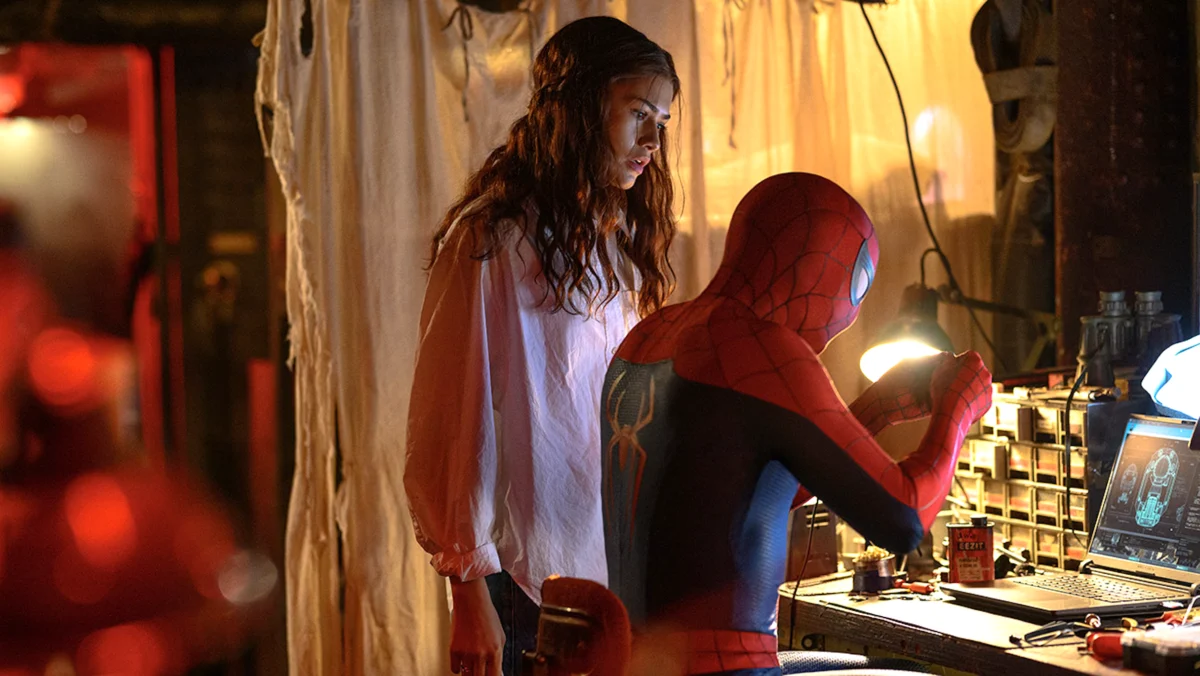
While Jean Grey’s cosmic destiny often takes center stage, the introduction of her sister Sara in Spider-Man: Brand New Day highlights a grounded, tragic human element that redefines the stakes of mutant integration within the MCU. This narrative choice shifts the focus from the spectacle of superpowers to the personal cost of the world’s growing anti-mutant sentiment.
Director Destin Daniel Cretton’s latest entry into the Marvel Cinematic Universe does more than just debut Sadie Sink as the iconic telepath Jean Grey; it serves as a foundational exploration of the trauma that defines the mutant experience. By drawing from decades of complex comic book lore—ranging from the high-stakes drama of the Dark Phoenix Saga to recent cosmic retcons—the film utilizes the character of Sara Grey to establish the emotional and political weight of the "mutant problem" in a world still reeling from the events of the Multiverse Saga. In doing so, the film creates a narrative bridge between the grounded heroism of Peter Parker and the sprawling, often alienating history of the X-Men.

The Arrival of the Grey Sisters in the MCU
Spider-Man: Brand New Day marks a pivotal moment for the Marvel Cinematic Universe. While previous iterations of Jean Grey, portrayed by Famke Janssen and Sophie Turner, focused heavily on her relationship with Professor Charles Xavier and her eventual corruption by the Phoenix Force, the MCU version introduces her through a more intimate, familial lens. The inclusion of Sara Grey, played by Olivia Booth-Ford, provides a necessary foil to Jean. Where Jean is a figure of immense, often uncontrollable potential, Sara represents the collateral damage of a world that fears what it does not understand.
The film’s third act, penned by veteran Marvel writers Chris McKenna and Erik Sommers, pivots toward the Grey family’s history. Through a series of haunting flashbacks, the audience learns that both sisters possessed latent psychic abilities. This shared "curse" led to their abandonment by their parents, a theme that resonates deeply with the X-Men’s traditional role as outcasts. However, the MCU adds a modern layer of bureaucracy to this tragedy: the involvement of the Department of Damage Control (DODC).
Led by the cold and calculating Bill Metzger (Tramell Tillman), the DODC is portrayed not just as a clean-up crew, but as a paramilitary organization seeking to weaponize the "anomalies" they capture. Sara’s death in their custody serves as the emotional anchor for Jean’s character arc, providing her with a motivation rooted in grief and a justified distrust of human authority.

Sara Grey’s Publication History: From Witness to Activist
To understand the significance of Sara’s inclusion in the film, one must look back at her long and often convoluted history in Marvel Comics. Sara Grey first appeared in the pages of X-Men #136 in 1980, during the height of the legendary "Dark Phoenix Saga" written by Chris Claremont and John Byrne. Initially, she was depicted as the "normal" sister—a tether to Jean’s humanity. When Jean, possessed by the Dark Phoenix, returned to her childhood home in the middle of the night, it was Sara who witnessed the terrifying extent of her sister’s transformation.
As the comics progressed, Sara’s role evolved from a mere bystander to a tragic figure caught in the crossfire of cosmic conflicts. One of the most harrowing chapters of her life involved the villainous Attuma and his Atlantean forces. Sara was captured and biologically altered into an Atlantean, a process so traumatic that Jean eventually used her Phoenix powers to revert the change and, controversially, wipe Sara’s memories of the event to spare her the psychological pain. This act of "mercy" through mind manipulation is a recurring theme in the Grey family legacy, one that Brand New Day touches upon through the sisters’ shared mind-control abilities.
Following Jean’s first "death" (a suicide committed to stop the Dark Phoenix), the memory blocks on Sara’s mind began to crumble. This led Sara to become a vocal advocate for mutant rights, using her platform to defend a community she was tangentially a part of but never fully belonged to. Her story appeared to end in tragedy when anti-mutant terrorists destroyed the Grey family home, leaving Sara and her children, Joey and Galen, presumed dead.

The Phalanx and the "Beacon" Retcon
In the world of comic books, death is rarely the final chapter. Years after her presumed demise, it was revealed that Sara had been abducted by the Phalanx—a collective of techno-organic extraterrestrial intelligences. The Phalanx sought to assimilate her consciousness, effectively turning her into a host for their hive mind. This transformation moved Sara from the realm of grounded family drama into the high-concept science fiction that often defines the X-Men.
More recently, writer Stephanie Phillips’ Phoenix miniseries offered a significant retcon to Sara’s fate. In this version of events, Sara managed to teleport herself to the distant planet Elarunn-7 during the Phalanx attack. On this alien world, she discovered her own latent mutant ability: the power to "unlock" the evolutionary potential in others. This revelation transformed her from a victim into a figure of cosmic importance known as the "Beacon."
Phillips’ narrative positioning is particularly relevant to the themes of Brand New Day. In the comics, Sara as the Beacon serves as a balance to Jean as the Phoenix. While the Phoenix represents life, fire, and the destructive power of rebirth, the Beacon represents compassion and the preservation of the soul. Together, they form a duality—one sister providing the raw power to change the universe, the other providing the moral compass to ensure that change is rooted in empathy.

Implications for the Future of the MCU
The decision by Destin Daniel Cretton to include Sara Grey in a Spider-Man film suggests a strategic rollout for the X-Men within the MCU. By establishing the Grey family’s trauma early on, the franchise is setting the stage for a Jean Grey who is more cynical and guarded than previous film versions. The death of Sara at the hands of the DODC creates a direct link between the "street-level" politics of Spider-Man and the "global-level" crisis of mutant emergence.
Tramell Tillman’s portrayal of Bill Metzger further solidifies this connection. The DODC has evolved from a minor nuisance in Spider-Man: Homecoming to a legitimate threat to superpowered individuals, mirroring the role of organizations like the Sentinels or the Friends of Humanity in X-Men lore. Sara’s death is not just a personal tragedy for Jean; it is a political statement about the safety of mutants in the modern MCU.
As Marvel Studios prepares for its dedicated X-Men film, with Sadie Sink expected to reprise her role as Jean, the shadow of Sara Grey will undoubtedly loom large. Whether the MCU will eventually explore the "Beacon" storyline or keep Sara as a symbol of the human cost of the mutant struggle remains to be seen. However, by grounding Jean’s origin in the loss of her sister, Brand New Day ensures that when the Phoenix eventually rises, its fire will be fueled by a very human sense of justice.

In conclusion, Sara Grey is far more than a "spoiler" or a minor supporting character. She is the emotional linchpin that connects the cosmic scale of the X-Men to the personal stakes of the Marvel Cinematic Universe. Her journey from the pages of a 1980s comic book to the screen in Spider-Man: Brand New Day reflects the enduring power of the Grey family legacy—a legacy defined by power, sacrifice, and the unbreakable, if often tragic, bond of sisterhood.
