
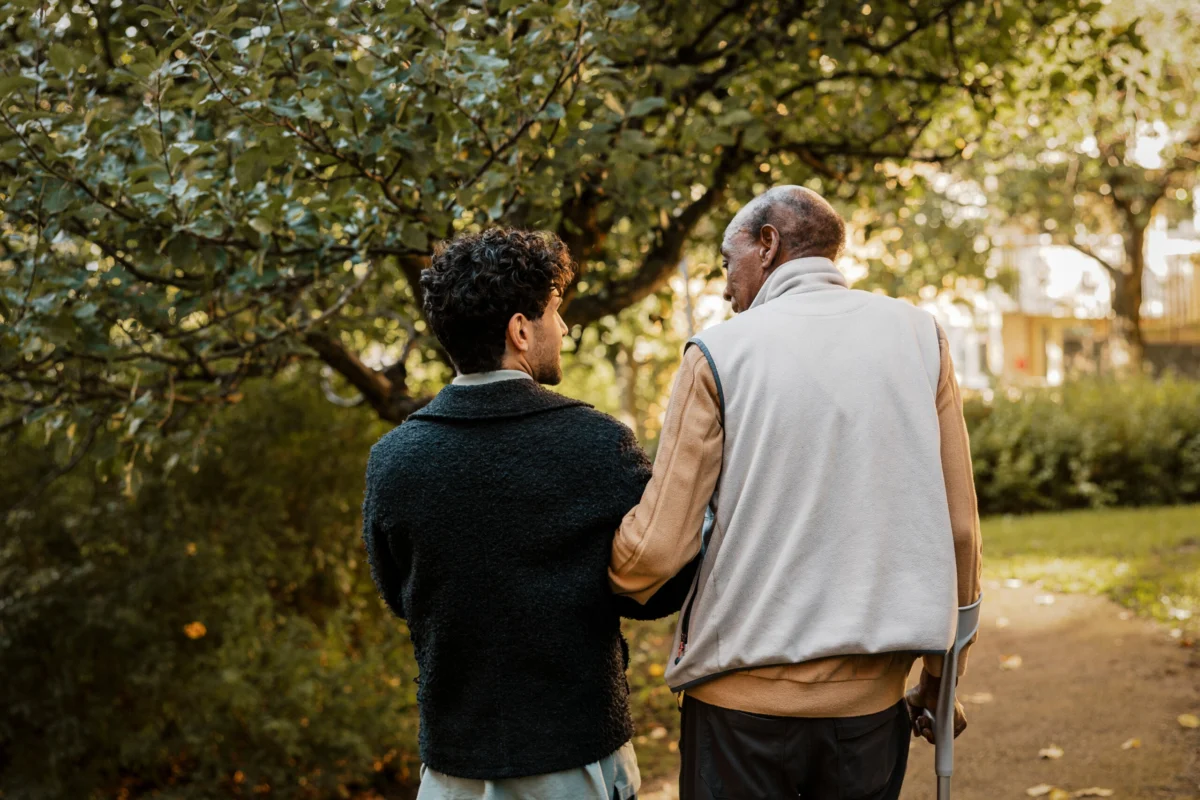
"As traditional family structures shift and individuals age alone, a growing network of friends and neighbors is stepping into critical caregiving roles, redefining community support and highlighting an often-unseen dimension of elder support."
The profound shifts in societal demographics and family structures are fundamentally reshaping how aging individuals receive care. Traditionally viewed as an obligation primarily borne by spouses and children, eldercare is increasingly relying on a broader, more informal network of support. This evolution is driven by several interconnected factors: an increasing number of older adults who are unmarried, divorced, or childless, coupled with geographic distances and family estrangements. In this evolving landscape, friendships and neighborly bonds are proving to be vital lifelines, filling essential caregiving gaps and offering companionship and practical assistance to those who might otherwise face isolation and unmet needs.
For years, Nicole Straight, a retired chef in Sausalito, California, and her neighbor Patricia Wood, an insurance executive, maintained a cordial but distant relationship, marked by pleasantries and occasional coffee meetings. This changed dramatically last October when Wood, at 93, suffered a fall that resulted in a broken neck. Following a three-month rehabilitation period, she returned home dependent on assistance for mobility, particularly navigating stairs. This life-altering event redefined their neighborly dynamic, transforming it into a deeply supportive bond.
Straight, 53, now makes weekly visits to Wood’s home, bringing not only comforting lattes and cookies but also prepared meals. Her practical support extends to home modifications, such as installing grab bars in Wood’s bathroom, adding shelving, and proactively replacing light bulbs and smoke detector batteries. Their communication has become a constant stream of texts, with Straight frequently offering to pick up groceries for Wood, who no longer drives. Wood describes Straight as "a gift from heaven," cherishing their conversations, which, though sometimes tinged with shared emotion, are predominantly filled with laughter. She expresses surprise and gratitude for forging such a close friendship at this stage of her life, a sentiment that underscores the profound impact of these evolving caregiving relationships.
Sociologist Deborah Carr of Boston University, who has extensively researched these demographic trends, explains that the traditional reliance on spouses and children for eldercare is becoming less assured. "The number of older adults who have never married or are divorced has been increasing, so we have more people aging alone," Carr notes. Furthermore, she adds, "The proportion who are childless, by choice or not, is also growing," and even families with children are having fewer offspring than in previous generations. These demographic shifts, combined with factors such as geographic separation or familial estrangement, create a growing need for alternative caregiving support systems, roles that friends and neighbors are increasingly stepping into.
The extent to which friends are filling these caregiving voids is becoming more apparent through recent research. A study published in JAMA Network Open, spearheaded by researchers at the University of Michigan, examined the roles of friends and neighbors in providing care, typically in supplementary capacities. Utilizing data from the National Health and Aging Trends Study, which surveyed over 2,600 older adults aged 79 on average, researchers identified individuals who received assistance from both family members and friends. While family members remained the primary caregivers, approximately 14% of participants identified friends, including neighbors, as providing help. This translates to an estimated 2.4 million caregiving friends nationwide. A national survey conducted by AARP and the National Alliance for Caregiving last year reported that 11% of caregivers support individuals who are not related to them.
Karen Fingerman, a gerontologist at the University of Texas-Austin and co-author of a commentary accompanying the JAMA study, emphasizes that "friends are among the auxiliary caregivers who have not been acknowledged." She highlights the often-overlooked sacrifices these individuals make. The study, considered the first nationwide exploration of caregiving friends, revealed distinct patterns in their involvement compared to family members. Caregiving friends are less likely to reside with the person they assist and rarely serve as the sole caregiver.
Yee To Ng, a gerontologist and lead author of the study, elaborated on these differences, stating, "They provide fewer care hours." On average, friends offered about 18 hours of assistance per month, a stark contrast to the approximately 67 hours provided by family caregivers. The nature of their support also differs. "Friends are more likely to provide transportation," Ng observed. Driving friends to appointments, shopping, accompanying them on outings, meal preparation, and assisting with medical appointments were identified as the top five tasks undertaken by caregiving friends.
In some instances, friends provide support that extends beyond these common tasks. Czes Ferrino, an 82-year-old widow living alone in Westerly, Rhode Island, recently experienced this when her car broke down. Her next-door neighbor accompanied her to multiple car dealerships to help her find a suitable replacement, a gesture Ferrino described as akin to how a son would assist his mother or grandmother.
However, Ng also pointed out that "there are some tasks friends might not be well equipped to provide or be comfortable with." Intimate personal care, such as bathing and dressing, remains largely within the purview of family members. Ng explains that these tasks can impact an individual’s self-esteem, and while family members are often accepted to provide such intimate care during severe illness, it can be embarrassing to have friends assist with activities like using the toilet.
The research also indicated that individuals who identified friends as caregivers tended to be younger than those relying solely on relatives and were more likely to hold college degrees. Fingerman suggests that individuals with higher education often possess larger social networks, which can translate into more potential sources of support. Unsurprisingly, those assisted by friends were also less likely to be married and more apt to live alone.
Ann Greenwater, an 84-year-old resident of a mobile home park in rural Humboldt County, California, exemplifies this. She managed independently until a few years ago when severe back pain confined her to bed for nearly three months. Although she has since regained mobility and can manage daily tasks, she acknowledges that she has "never really fully recovered." Single and with only a distant nephew she barely knows, Greenwater has also stopped driving. Fortunately, a network of friends from a local Zen Buddhist center has stepped in to provide support. Milli Quam, 86, diligently does Greenwater’s laundry and picks up her prescriptions. Another friend, aged 73, assists with her computer, and several others regularly take her grocery shopping or do it for her. Members of a local volunteer organization provide transportation to her medical appointments. Quam expresses her affection for Greenwater and her satisfaction in being able to offer tangible help, hoping to continue for "a long time."
Friends possess certain advantages as caregivers. Carr notes that "our friends are our own age and understand what we’re going through." They may exhibit greater empathy and possess practical knowledge gained from their own experiences. When family caregivers are involved, the assistance provided by friends can alleviate their burden.
However, the stability of friends as a consistent source of support can be less certain. Neighbors may move away, and strains can arise if the care recipient becomes overly demanding or experiences guilt over accepting help, challenging the reciprocal nature of friendships. A study led by Carr indicated that these strains can exacerbate depression in individuals with physical limitations.
Furthermore, policy support for these informal caregiving relationships is notably limited. Laura Lawless, a labor and employment lawyer, stated that the federal Family and Medical Leave Act, with rare exceptions, does not provide job-protected leave for caring for a friend with a serious health condition. Carr observes that while the expectation for family is to provide care "through thick and thin," and there is significant stigma associated with family estrangement, "it’s kind of normal for some friendships to just fall away."
In Sausalito, Wood humorously tells Straight that she’s "not allowed to move until I die," a testament to their deep bond. Similarly, Greenwater’s friends in Humboldt County have not faltered in their support, though they are also aging. Quam, at 86, acknowledges that she may soon be unable to drive. Greenwater voices her concern about what will happen when her friends are no longer able to provide assistance, concluding, "I guess we’ll deal with it when it comes." These narratives underscore the vital, evolving role of friendship and community in the complex tapestry of modern eldercare.
