
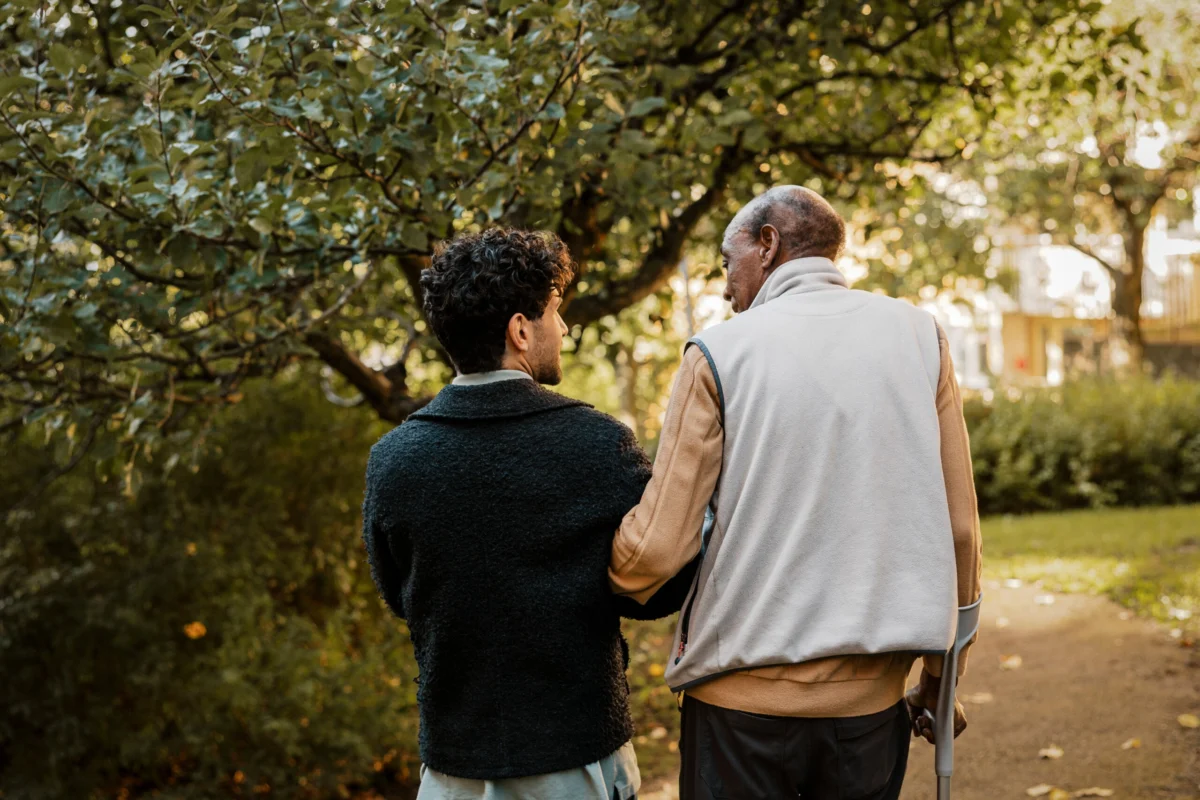
"In an era of increasing isolation and changing family structures, the bonds of friendship are stepping in to fill critical gaps in eldercare, offering a vital, though often overlooked, layer of support."
The traditional model of eldercare has long been envisioned as a deeply ingrained family obligation, a testament to lifelong bonds and filial duty. However, shifting demographic trends—including rising rates of individuals who are unmarried, divorced, or childless, alongside geographic distances and familial estrangements—are profoundly reshaping this landscape. As reliance on spouses and children becomes less assured for a growing number of older adults, the role of friends and neighbors in providing essential care and support is emerging as a significant, yet historically underacknowledged, facet of aging. This evolution highlights a societal adaptation where the definition of caregiving is expanding beyond biological ties to encompass the chosen families and supportive networks individuals cultivate throughout their lives.
In Sausalito, California, the story of Nicole Straight, 53, and Patricia Wood, 93, exemplifies this profound transformation. What began as a cordial neighborly acquaintance, marked by pleasantries and occasional coffee, blossomed into a deep, life-altering caregiving relationship following Wood’s severe fall last October. The incident resulted in a broken neck and a three-month rehabilitation, after which Wood returned home requiring assistance to walk and navigate her stairs. Straight, a retired chef, now dedicates her time weekly to Wood, bringing not just lattes and cookies, but also nourishing leftovers and essential home maintenance. Her husband has proactively installed grab bars, shelves, and replaced light bulbs and smoke detector batteries, tangible acts of support that significantly enhance Wood’s safety and independence. Their communication, now a constant stream of texts, underscores the seamless integration of their lives, with Straight readily offering to pick up groceries for Wood, who no longer drives. "She is a gift from heaven," Wood, a retired insurance executive, shares, her voice filled with gratitude. "We talk and talk. Sometimes we shed a few tears, but mostly we laugh. I never thought I’d have a new best friend at this time of my life." This remarkable bond illustrates the potent capacity of chosen relationships to provide comfort, practical aid, and profound companionship during vulnerable life stages.
The increasing reliance on friends and neighbors for caregiving is not an isolated phenomenon but a nationwide trend supported by recent research. A study published in JAMA Network Open, conducted by researchers at the University of Michigan, utilized data from the National Health and Aging Trends Study, surveying over 2,600 older adults aged 79 on average, who had health limitations. The findings indicated that while family members remained the primary caregivers, approximately 14% of participants identified friends, including neighbors, as providing assistance. This translates to an estimated 2.4 million caregiving friends across the United States. Echoing these findings, a national survey by AARP and the National Alliance for Caregiving in 2023 reported that 11% of caregivers were supporting individuals outside of their immediate family.
Karen Fingerman, a gerontologist at the University of Texas-Austin and co-author of a commentary accompanying the JAMA study, emphasizes the often-overlooked contributions of these "auxiliary caregivers." "Friends are among the auxiliary caregivers who have not been acknowledged," she states. "We neglect the sacrifices they make."
The research further distinguishes the roles played by caregiving friends compared to family members. Typically, friends are less likely to cohabitate with the person they are assisting and rarely serve as the sole caregiver. Yee To Ng, a gerontologist and lead author of the study, explains that caregiving friends provide fewer hours of support on average – approximately 18 hours per month – in contrast to the substantial 67 hours provided by family caregivers.
The nature of assistance also differs. Friends are more frequently involved in providing transportation, with two-thirds of caregiving friends driving their friends to appointments or errands. Other common tasks include shopping, accompanying individuals outdoors, preparing meals, and attending medical appointments.
In Westerly, Rhode Island, Czes Ferrino, 82, a widow living alone, experienced this firsthand when her car broke down. Her next-door neighbor accompanied her to multiple dealerships to help find a replacement vehicle. Ferrino described the experience as deeply supportive, remarking, "He walked me through it like a son would for a mother or grandmother."
However, certain intimate caregiving tasks remain largely within the purview of family. As Ng notes, "There are some tasks friends might not be well equipped to provide or be comfortable with." Personal care, such as bathing and dressing, is an area where friends may hesitate due to the potential for infringing on an individual’s self-esteem and the inherent intimacy involved. This distinction highlights the different emotional and relational boundaries that govern friendships versus familial caregiving.
Demographically, individuals who identify friends as caregivers tend to be younger than those solely relying on family, and they are more likely to hold college degrees. Fingerman suggests that this correlation may stem from higher education levels being associated with broader social networks. Unsurprisingly, those receiving care from friends are also less likely to be married and more inclined to live alone, mirroring the circumstances of Ann Greenwater, 84, residing in rural Humboldt County, California.
Greenwater, who lives in a mobile home park, managed independently until severe back pain left her bedridden for nearly three months a few years ago. Although she has since regained mobility, she acknowledges a lasting impact on her health. Single and with only a distant nephew for family, she has also ceased driving. Fortunately, a supportive network of friends from a local Zen Buddhist center has stepped in. Milli Quam, 86, regularly does Greenwater’s laundry and picks up her prescriptions. Another friend, aged 73, assists with her computer and, along with others, helps with grocery shopping or does it for her. Local volunteers also provide transportation to medical appointments. "I love Ann, and I’m happy there’s something concrete I can do," Quam expresses. "I hope I can keep doing it for a long time."
The unique advantages of friend-based caregiving include a shared generational understanding. As sociologist Deborah Carr of Boston University explains, "Our friends are our own age and understand what we’re going through. They may have more empathy and sometimes real knowledge they’ve acquired." The support from friends can also alleviate the burden on family caregivers, creating a more comprehensive care ecosystem.
Yet, the sustainability of friend-based caregiving presents its own set of challenges. Neighbors can relocate, and the inherent egalitarian nature of friendships can be strained by the demands of caregiving. The recipient may experience guilt, or the caregiver may feel overwhelmed, potentially leading to increased depression for the individual receiving care, as indicated by a study led by Carr.
Furthermore, policy support for these non-familial caregiving relationships is notably scarce. Laura Lawless, a labor and employment lawyer, points out that the federal Family and Medical Leave Act, with rare exceptions, does not offer job-protected leave for caring for a friend with a serious health condition. This lack of formal recognition and support leaves these crucial relationships vulnerable.
The expectation for family is often framed as enduring "through thick and thin," a commitment less ingrained in friendships, where relationships can more readily dissolve. While there is significant societal stigma attached to familial estrangement, the gradual fading of friendships, though painful, is sometimes perceived as a more acceptable outcome.
In Sausalito, Wood’s lighthearted declaration to Straight, "she’s not allowed to move until I die," underscores the depth of their bond, albeit with a touch of humor. Similarly, Greenwater’s friends in Humboldt County have, thus far, remained steadfast. However, as they too are aging, Greenwater voices a concern about future support: "I’m wondering what will happen when these friends aren’t able to come to me," she muses. "I guess we’ll deal with it when it comes." This sentiment reflects the growing awareness and uncertainty surrounding the long-term sustainability of eldercare networks that increasingly rely on the goodwill and evolving capacity of friends.
The New Old Age is produced through a partnership with The New York Times.
