
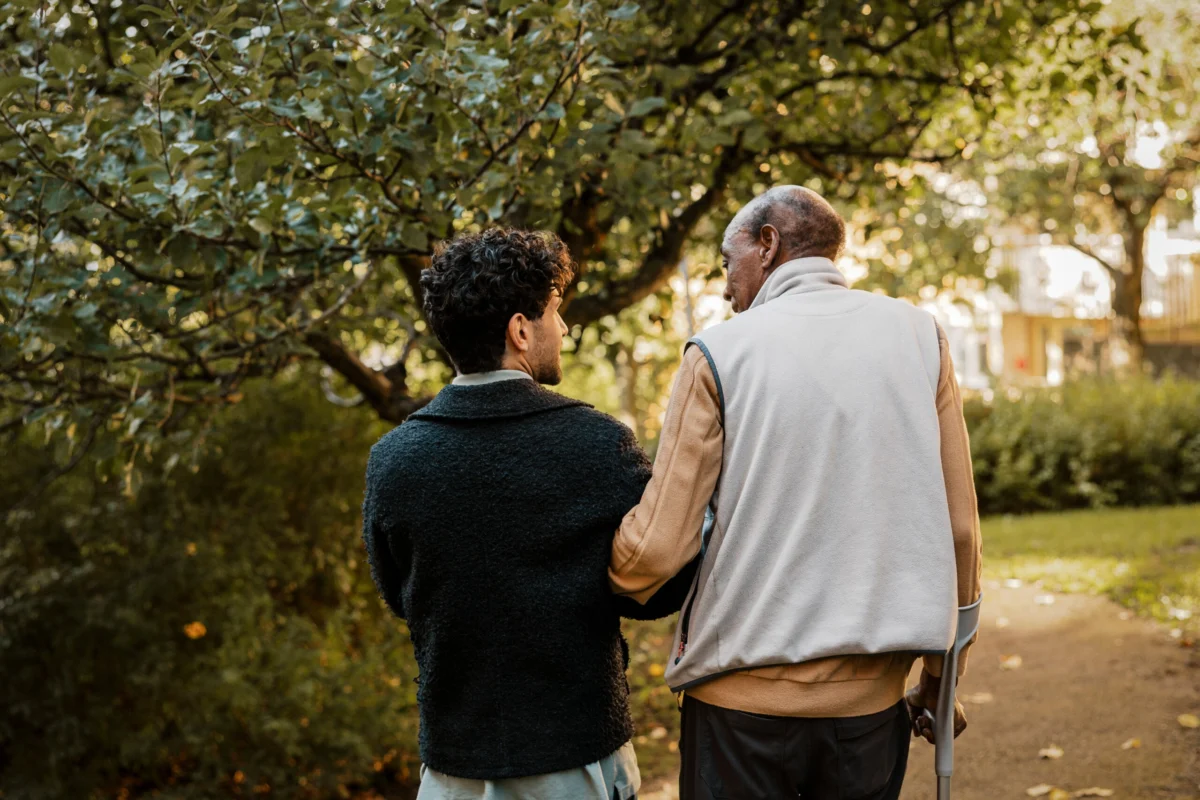
"As traditional family structures shift and individuals age alone, friendships are increasingly stepping in to fill critical caregiving gaps, offering invaluable support that extends beyond mere neighborly kindness."
The evolving nature of eldercare is being shaped by profound demographic and societal changes. For decades, the primary responsibility for supporting aging individuals was assumed to fall within the family unit, typically on spouses or adult children. However, a growing number of older adults are finding themselves without these traditional support systems due to increasing rates of singlehood, divorce, and childlessness, as well as geographical distances and familial estrangements. This emergent reality is highlighting the vital, and often underacknowledged, role that friends and neighbors are playing in providing essential care and companionship to those in need.
In Sausalito, California, the relationship between Nicole Straight, a 53-year-old retired chef, and Patricia Wood, a 93-year-old retired insurance executive, exemplifies this societal shift. What began as cordial neighborly exchanges across the street transformed into a profound caregiving bond after Wood suffered a severe neck injury last October. Following a three-month rehabilitation, Wood returned home with significant mobility challenges, requiring assistance for even simple tasks like navigating stairs. Straight, upon witnessing Wood’s vulnerability, stepped into a role that transcended casual acquaintance.
Straight’s commitment is multifaceted. She now visits Wood weekly, bringing not only treats like lattes and cookies but also comforting leftovers from her own meals. Beyond these thoughtful gestures, Straight’s husband provided practical home modifications, installing a grab bar in Wood’s bathroom, erecting shelves, and ensuring essential safety measures like changing light bulbs and smoke detector batteries were up-to-date. Their communication has become a constant flow of texts, with Straight proactively checking if Wood needs anything from her grocery runs, a crucial service for Wood, who no longer drives.
Wood, deeply touched by Straight’s dedication, describes her neighbor as "a gift from heaven." Their conversations are a blend of shared stories, emotional moments, and laughter, forging a deep connection that neither anticipated. "I never thought I’d have a new best friend at this time of my life," Wood shared, underscoring the emotional sustenance derived from this evolving friendship.
This personal narrative reflects a broader national trend, as highlighted by sociological research. Deborah Carr, a sociologist at Boston University specializing in aging and caregiving, notes the increasing number of older adults who are aging alone. "The number of older adults who have never married or are divorced has been increasing, so we have more people aging alone," Carr stated. She further observes that the proportion of individuals who are childless, whether by choice or circumstance, is also growing, and families are having fewer children than in previous generations. These factors, combined with geographical dispersion and instances of family estrangement, create a growing need for alternative forms of caregiving, a role that friends and neighbors are increasingly assuming.
A recent study published in JAMA Network Open, conducted by researchers at the University of Michigan, offers empirical evidence of friends and neighbors stepping into these caregiving roles. Analyzing data from the National Health and Aging Trends Study, which surveyed over 2,600 older adults with health limitations (averaging 79 years of age), the research found that while family members remain the primary caregivers, approximately 14% of participants identified friends, including neighbors, as providing assistance. This translates to an estimated 2.4 million caregiving friends nationwide. Complementing these findings, a national survey by AARP and the National Alliance for Caregiving from the previous year indicated that 11% of caregivers support individuals who are not related to them.
Karen Fingerman, a gerontologist at the University of Texas-Austin and a co-author of a commentary accompanying the JAMA study, emphasizes the often-overlooked contributions of these "auxiliary caregivers." "Friends are among the auxiliary caregivers who have not been acknowledged," Fingerman stated. "We neglect the sacrifices they make."
The study further delineates how caregiving friends differ from family members. It is uncommon for friends to live with the person they are assisting, and they rarely serve as the sole caregiver. Yee To Ng, a gerontologist and lead author of the study, explained that caregiving friends typically provide fewer hours of support compared to family members. On average, friends offered 18 hours of help per month, a stark contrast to the approximately 67 hours provided by family caregivers.
The nature of assistance provided by friends also tends to differ. "Friends are more likely to provide transportation," Ng noted. Common tasks include driving friends for errands and appointments, assisting them with outdoor activities, preparing meals, and accompanying them to medical visits.
In some instances, friends undertake more involved tasks. Czes Ferrino, an 82-year-old widow living alone in Westerly, Rhode Island, experienced this firsthand when her car broke down. Her next-door neighbor accompanied her to multiple dealerships to help her find a replacement vehicle. Ferrino described the experience as being guided "like a son would for a mother or grandmother," highlighting the profound trust and support that can develop.
However, there are certain caregiving responsibilities that friends may not be as equipped or comfortable providing. Ng pointed out that tasks involving personal care, such as bathing and dressing, remain predominantly within the purview of family members. "Those can infringe on people’s self-esteem," Ng explained. "With family, we accept that when you’re really ill, they step up with intimate activities. It’s embarrassing to have your friends help you use the toilet."
The research also identified demographic characteristics of individuals who receive care from friends. Those who named friends as caregivers were generally younger than those solely relying on family and more likely to hold college degrees. Fingerman suggests that individuals with higher education levels tend to have more extensive social networks, which may facilitate these non-familial caregiving relationships. Unsurprisingly, individuals receiving help from friends were also less likely to be married and more inclined to live alone.
Ann Greenwater, an 84-year-old resident of rural Humboldt County, California, embodies this profile. After managing independently for years, severe back pain rendered her bedridden for nearly three months. Although she has since regained some mobility, she acknowledges never fully recovering and has stopped driving. With no close family beyond a distant nephew, Greenwater relies on a network of friends from a nearby Zen Buddhist center.
Friends like Milli Quam, 86, assist with practical needs such as laundry and prescription pick-ups. Another friend, aged 73, helps with technology and regularly joins others in grocery shopping or runs errands for Greenwater. Local volunteers also provide transportation for her medical appointments. "I love Ann, and I’m happy there’s something concrete I can do," Quam expressed, reflecting the reciprocal nature of these supportive friendships. "I hope I can keep doing it for a long time."
The advantages of friends as caregivers are significant. Carr notes that friends, being of similar age, often possess a greater understanding of the challenges their peers face, leading to enhanced empathy and shared experiences. Their support can also serve to alleviate the burden on family caregivers when they are present.
However, the stability of friend-based caregiving can present its own set of challenges. Neighbors may relocate, and strains can emerge if the care recipient’s needs become excessively demanding or if they experience guilt over receiving assistance, potentially undermining the egalitarian foundations of friendship. Such pressures can exacerbate depression in individuals with physical limitations, as identified in a study led by Carr.
Furthermore, policy support for these non-familial caregiving relationships remains limited. Laura Lawless, a labor and employment lawyer, points out that the federal Family and Medical Leave Act, with rare exceptions, does not provide job-protected leave for individuals caring for friends with serious health conditions. While familial relationships often operate under an expectation of enduring commitment, "through thick and thin," friendships, by contrast, can be more transient. "There’s huge stigma to being estranged from your family, but it’s kind of normal for some friendships to just fall away," Carr observed.
In Sausalito, Wood’s playful declaration to Straight, "she’s not allowed to move until I die," encapsulates the deep bond that has formed, albeit with a touch of humor. Meanwhile, Greenwater’s friends in Humboldt County continue to provide invaluable support, but as they age alongside her, concerns about future sustainability arise. Quam herself anticipates potentially ceasing to drive in the future, raising questions about how their needs will be met as their support network ages. "I’m wondering what will happen when these friends aren’t able to come to me," Greenwater mused. "I guess we’ll deal with it when it comes," she concluded, reflecting a sentiment of resilience in the face of an evolving caregiving landscape.
