
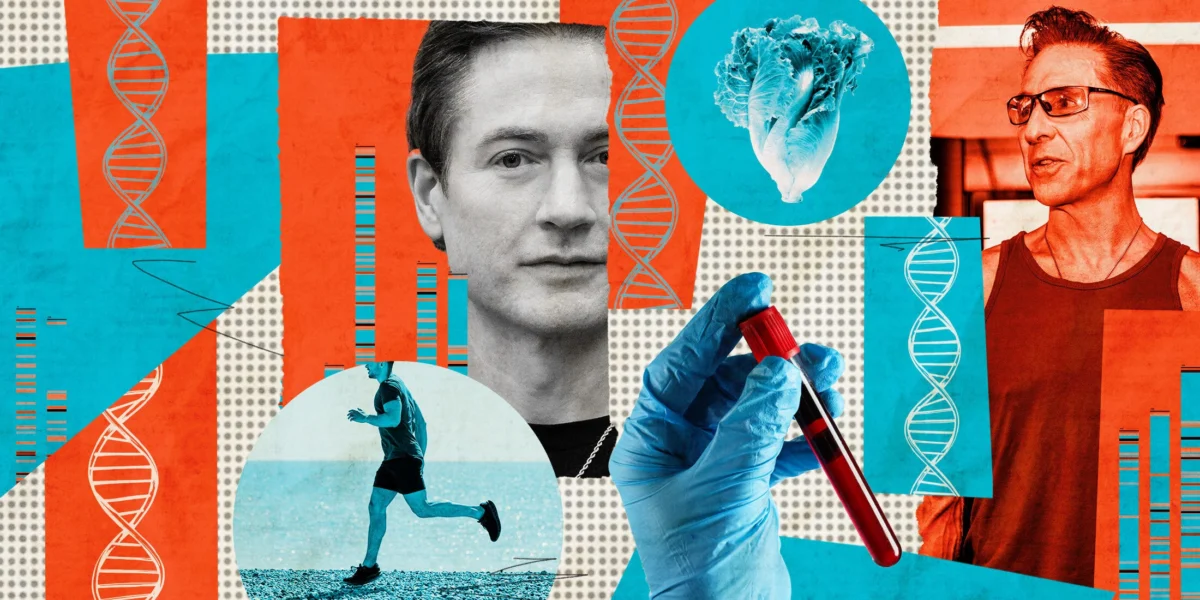
"While lifestyle choices are the primary drivers of daily health, new research suggests that up to 50 percent of our lifespan is determined by genetics, effectively setting a biological ceiling that habits alone cannot break."
The modern longevity movement is built on the optimistic premise that human aging is a malleable variable, capable of being paused or even reversed through rigorous intervention. However, a landmark study published in Science has fundamentally shifted the conversation, suggesting that our genetic blueprint plays a far more dominant role in determining the length of our lives than previously estimated. By reassessing how we calculate heritability and removing external factors like accidents and infections from the data, researchers are uncovering a sobering reality: while we have significant control over our "healthspan"—the years we live in good health—our ultimate expiration date may be largely written in our DNA.
The Rise of the Longevity Industrial Complex
In recent years, the pursuit of extreme longevity has transitioned from the fringes of science fiction to a multi-billion-dollar industry. High-profile "biohackers" like Bryan Johnson have become the face of this movement, adhering to monastic protocols involving hundreds of supplements, precision-timed sleep, and constant biomarker monitoring. The underlying message of this industry is one of radical agency: with enough data, enough money, and enough discipline, death is a problem that can be "solved" or at least significantly delayed.
For decades, this industry leaned on a specific scientific consensus: that genetics accounted for only 20 to 30 percent of the variation in human lifespan. The logical corollary was that 70 to 80 percent of the aging process was within our control, determined by diet, exercise, and environment. This "20/80 rule" provided the perfect marketing foundation for everything from full-body MRI scans to specialized peptide therapies. If the majority of our longevity is a choice, then failing to optimize is seen as a personal oversight.
The 50 Percent Correction
The narrative of total control was recently challenged by a 2026 study published in the journal Science. Researchers sought to refine the heritability of lifespan by filtering out "extrinsic deaths"—fatalities resulting from accidents, violence, or acute infections that do not reflect the body’s underlying biological aging process. When these "noise" variables were removed, the data revealed that the heritable component of lifespan is likely closer to 50 percent.
This shift is more than just a statistical adjustment; it represents a paradigm shift in how we view the human life cycle. Daniel Belsky, PhD, an epidemiologist at the Columbia University Mailman School of Public Health, notes that this higher figure aligns longevity with other major health indicators. We have long accepted that the risk for heart disease, cancer, and psychiatric conditions is heavily influenced by genetics. It stands to reason that the cumulative biological decline we call "aging" is similarly governed.
Winning the Genetic Lottery
The most compelling evidence for the power of genetics comes from the study of centenarians—individuals who live to 100 or beyond. Nir Barzilai, MD, director of the Institute for Geroscience at the Albert Einstein College of Medicine, has spent decades studying these "super-agers." His findings are often frustrating for health enthusiasts: many centenarians do not follow "optimized" lifestyles. In fact, many have histories of smoking, poor diets, and minimal exercise.
The difference, Barzilai explains, is that centenarians possess genetic safeguards that protect them from the damage that would kill an average person. Their biological clocks simply tick at a slower rate from birth. This genetic advantage is highly heritable. If both of your parents reached 100, your probability of living significantly beyond the average life expectancy for your demographic increases by 24 percent. With one centenarian parent, the boost is 13 percent; even having a centenarian grandparent offers a 7 percent advantage.
As Jay Olshansky, PhD, of the University of Illinois Chicago, puts it: "Unless you win the genetic lottery, you are unlikely to live into your 90s or 100. It can’t happen any other way." This suggests that while lifestyle can prevent us from dying early, it may not be capable of pushing us past our innate biological limit.
Healthspan vs. Lifespan: The Role of Habit
Despite the weight of genetics, the 50 percent that remains—lifestyle and environment—is far from negligible. The distinction between "lifespan" (total years lived) and "healthspan" (years lived in good health) is where human agency remains paramount. Even if a person is genetically predisposed to live until 85, poor lifestyle choices can easily truncate that potential to 65.

Uri Alon, PhD, lead author of the Science study, emphasizes that genetic liability is not a fixed destiny. For example, individuals with a genetic predisposition for high cholesterol can mitigate that risk through modern medicine and diet. Lifestyle factors like exercise, social connectivity, and sleep act as the "maintenance crew" for the biological machine. They ensure that the machine runs as smoothly as possible for as long as the blueprint allows.
The primary control humans exert over their longevity is, paradoxically, the ability to shorten it. In the United States, lifestyle-related chronic diseases—driven by sedentary behavior, ultra-processed diets, and substance use—frequently prevent individuals from reaching their natural genetic ceiling. We are, as Olshansky notes, "really good" at shortening our lives.
The Noise in the Longevity Market
As the science of aging matures, it is being outpaced by the marketing of longevity. Geroscientists warn that many of the interventions currently being sold to the public are backed by "hope rather than promise."
Peptides, for instance, are frequently marketed as "fountains of youth," yet many strains lack rigorous human clinical trials. Similarly, the obsession with "optimizing" biomarkers can lead to a "treating the number" fallacy. Jay Olshansky illustrates this with the example of PSA levels in prostate cancer. A patient could take a drug to lower their PSA number (the biomarker), but if the underlying cancer remains untreated, the "optimized" number is meaningless.
The same applies to the frequent testing of biological age. While these tests can provide a snapshot of health, the industry often suggests that micro-adjustments in supplement intake can "reverse" aging. In reality, these fluctuations often represent short-term physiological changes rather than a fundamental alteration of the epigenetic clock.
The Future of Gerotherapeutics
While the current market is filled with noise, the field of geroscience is on the cusp of legitimate breakthroughs. Researchers are moving away from treating individual diseases—like heart disease or diabetes—and toward treating the biological process of aging itself.
One of the most promising avenues involves GLP-1 medications, such as Ozempic and Mounjaro. While originally designed for diabetes and obesity, emerging research suggests these drugs may have systemic anti-aging effects, slowing the decline of the heart and brain. Barzilai suggests that in the future, such "gerotherapeutic" drugs could be used by individuals over 60 to delay the onset of their next age-related disease, regardless of their genetic baseline.
However, even with these advancements, the "maximum lifespan" of the human species appears to be capped at approximately 115 years. While we may eventually develop the technology to help more people reach that cap, the idea of living to 160 remains, for now, in the realm of speculation.
Conclusion: The Fundamentals Remain Unchanged
The revelation that genetics account for half of our lifespan does not render healthy living obsolete. Rather, it clarifies the goal. The most effective "longevity protocols" are not the most expensive ones. Social connectivity, consistent physical activity, restorative sleep, and a balanced diet remain the only interventions with a mountain of evidence supporting their efficacy.
The longevity industry’s promise that we can "hack" our way to immortality may be an exaggeration, but the science of geroscience offers a more grounded hope: that we can live more of our lives in a state of vigor and health. Whether our limit is 80 or 100, the quality of those years is the one variable where we truly hold the pen.
