
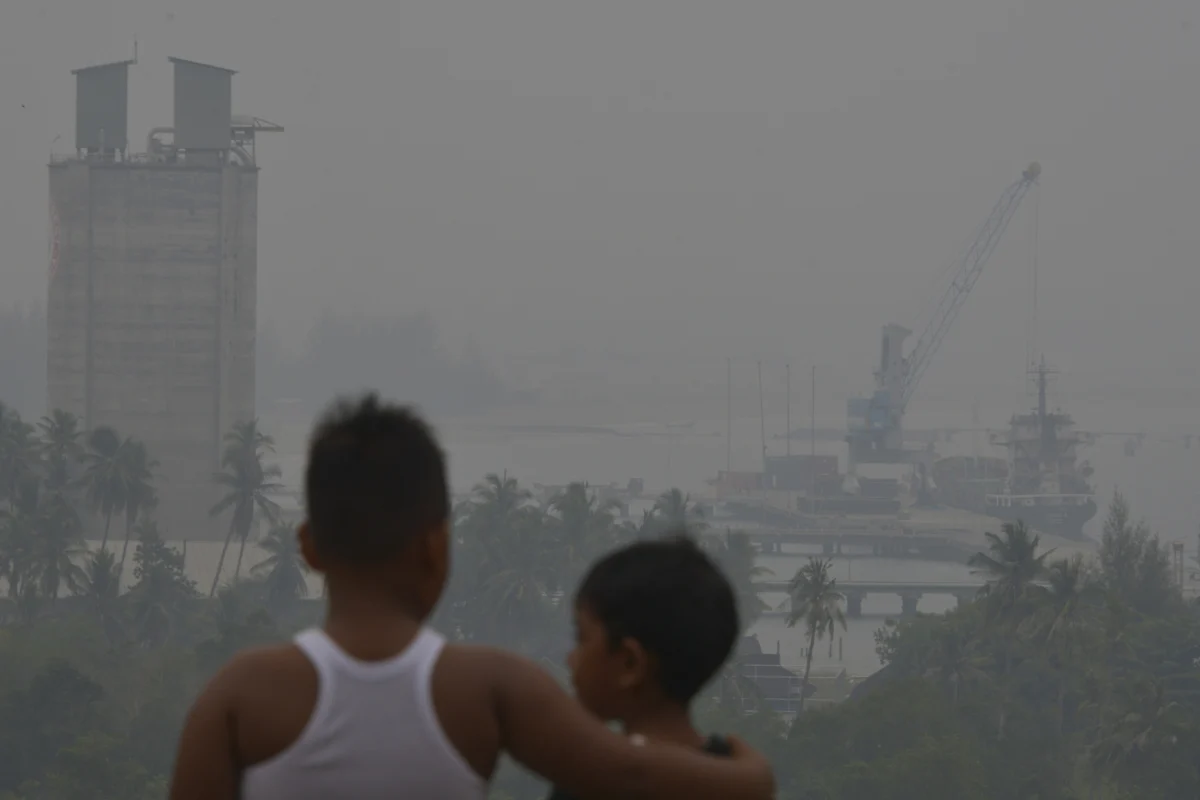
"Genetic predisposition to chronic lung disease is not a fixed destiny; its impact on early lung development is profoundly influenced by the air children breathe, highlighting the critical role of environmental factors in shaping long-term respiratory health."
This groundbreaking research reveals a crucial conditional interaction between genetic risk and environmental exposure in the early stages of life, specifically impacting the growth of children’s lungs. While a higher genetic susceptibility for chronic obstructive pulmonary disease (COPD) was identified, its detrimental effect on lung function development between birth and age six was only evident in children exposed to significant air pollution. Conversely, in cleaner environments, the same genetic risk showed a negligible impact. This nuanced finding shifts the understanding from isolated genetic or environmental causes to a complex interplay, suggesting that environmental factors can amplify or mitigate inherent genetic vulnerabilities, a concept with far-reaching implications for public health and policy.
The origins of chronic obstructive pulmonary disease (COPD), a progressive and debilitating respiratory condition affecting millions worldwide, may be rooted much earlier in life than previously understood, according to new research presented at the European Respiratory Society (ERS) Congress in Barcelona. A study conducted by researchers at the University Children’s Hospital Basel (UKBB), the University of Basel, and Bern University Hospital has uncovered a compelling gene-environment interaction: infants born with a higher genetic predisposition to COPD exhibited slower lung function growth, but this effect was significantly amplified only in those who grew up breathing polluted air. In cleaner environments, the same genetic risk appeared to have minimal impact, underscoring the critical role of environmental exposures in modulating genetic susceptibilities from the earliest stages of life.
The study, led by Dr. Carla da Silva Sena, meticulously tracked 484 children as part of the Basel-Bern Infant Lung Development study, a Swiss birth cohort that has been monitoring participants born between 1999 and 2020. This longitudinal approach allowed researchers to assess lung function at two key developmental stages: within the first month of life, using a tidal breathing test during sleep to capture natural breathing patterns, and again at age six, employing spirometry, a standard measure of lung capacity and airflow. This dual-methodology, adapted for the developmental stages of infancy and early childhood, provided a robust assessment of lung development trajectories.
To quantify genetic risk, the research team developed a polygenic risk score (PRS) from blood samples. This score aggregates numerous small genetic variations previously associated with COPD in adults into a single, comprehensive measure of an individual’s inherited susceptibility. Simultaneously, each child’s exposure to outdoor fine particulate matter (PM2.5) and nitrogen dioxide (NO2)—two key air pollutants—was estimated from birth to age six. This dual assessment of genetic predisposition and environmental exposure formed the cornerstone of the study’s design, aiming to untangle their synergistic effects.
Dr. da Silva Sena emphasized the critical window of opportunity for intervention, stating, "COPD can result from lung function trajectories established early in life." The concept of lungs never reaching their full growth potential, she explained, is a significant pathway into the disease. This perspective highlights that lung health is not static but is built over time, with early developmental phases playing a pivotal role. The children in the study’s highest pollution group experienced average fine particulate matter exposure of 15.3 micrograms per cubic meter and average nitrogen dioxide exposure of 28.3 micrograms per cubic meter. Within this group, a higher genetic risk score was directly correlated with diminished lung function growth. In stark contrast, children residing in areas with lower pollution levels showed a much weaker, almost negligible, effect of the same genetic risk.
Crucially, the pollution levels encountered by the study participants were not extreme. They fell within the range typically observed in many urban areas across Europe and North America. This finding is particularly significant, as it suggests that the detrimental gene-environment interaction can occur at pollution levels commonly experienced by a substantial portion of the global population, rather than solely in heavily industrialized or highly polluted zones. This observation was echoed in subsequent coverage of the presentation, clarifying that the study did not involve children living in exceptionally hazardous environments, such as next to industrial smelters.
The conditional nature of the findings is not a mere technicality; it represents a fundamental shift in understanding how genetic risk operates. Traditionally, genetic risk scores are often presented as indicators of a predetermined fate. However, this study demonstrates that the same genetic predisposition can lead to vastly different outcomes depending on the environmental context. The genetic risk for COPD, therefore, appears to be expressed or activated through environmental exposures, rather than acting independently.
Professor Barbara Hoffmann, chair of the European Respiratory Society’s Advocacy Council at the University of Düsseldorf, who was not involved in the research, commented on the study’s implications. She described the research as revealing a genetic risk pathway that "only became apparent when researchers looked at the effects of air pollution" in children who otherwise appeared healthy. This suggests that environmental factors may be crucial in unlocking or manifesting latent genetic vulnerabilities.
Professor Hoffmann further connected this finding to a broader re-evaluation of COPD etiology, referencing a 2022 Lancet Commission report. This commission argued that COPD is shaped by a lifetime of risk pathways, moving beyond the sole attribution to adult smoking. This reframing helps to explain a phenomenon often observed by clinicians: the occurrence of COPD in individuals who have never smoked. The Centers for Disease Control and Prevention (CDC) estimates that nearly 16 million American adults have been diagnosed with COPD, with many more likely undiagnosed, underscoring the public health significance of understanding all contributing factors.
The policy implications of this research are direct and actionable. While genetic predispositions cannot be modified, air quality is a tangible environmental factor that can be improved. Professor Hoffmann’s perspective underscores this point, suggesting that the research strengthens the case for robust clean air policies, as pollution represents the modifiable component of this critical interaction. The ERS actively advocates for stricter regulations on air pollutants through its Environment and Health program, aligning with the study’s findings on the importance of environmental interventions.
The researchers themselves acknowledged several limitations inherent in their study. One significant constraint is the necessity of using different lung function testing methods for newborns and six-year-olds. While statistical techniques were employed to ensure comparability of the data from the tidal breathing test and spirometry, this approach inherently introduces a degree of uncertainty. This is a standard practice in pediatric lung function studies, but it remains a factor to consider when interpreting the results.
Another critical limitation pertains to the genetic risk score itself. The PRS was developed using data from populations of European ancestry, and the study cohort was predominantly Swiss. Consequently, the researchers cautioned that these findings may not be directly generalizable to children from different ethnic or ancestral backgrounds. This limitation is particularly relevant for the United States, where communities experiencing the highest levels of fine particulate matter exposure are disproportionately composed of Black, Hispanic, and low-income populations – groups on whom the current risk scores were not primarily built.
Furthermore, the study’s findings were presented as a conference abstract, meaning they have not yet undergone the rigorous peer-review process typically required for publication in a scientific journal. The cohort size of 484 children, while substantial for some types of research, is considered modest for gene-by-environment interaction studies, which often necessitate much larger sample sizes to achieve statistical power.
For parents, the practical implications of this research are limited and should be understood in proportion. Currently, no genetic test is available or recommended for assessing an individual child’s risk for COPD in this manner, nor would a clinician order one. The findings do not suggest any immediate screening or treatment decisions for families. Instead, the study serves to reinforce existing knowledge about the detrimental effects of air pollution on lung development in early childhood, even at levels that are not considered extreme by global standards. Several American metropolitan areas, including parts of California’s Central Valley and urban areas impacted by traffic and wildfire smoke, record comparable annual average fine particulate matter levels.
At the household level, parents can take modest steps to mitigate indoor air pollution exposure. This includes utilizing portable air cleaners equipped with HEPA filters, limiting strenuous outdoor activities on days with poor air quality readings, and monitoring daily local air quality reports. These are individual-level actions that can contribute to reducing overall exposure.
The larger levers for change, however, reside with regulatory bodies. As Professor Hoffmann highlighted, the research strengthens the imperative for clean air policies. The scientific observation that pollution is the modifiable component of this gene-environment interaction provides a clear rationale for focusing policy efforts on reducing air pollutant concentrations. This is a scientific determination about the feasibility of intervention, rather than a political statement on the desirability of specific policies.
Looking ahead, the researchers plan to continue following these children into adolescence and adulthood. This long-term follow-up is crucial for determining whether the observed differences in lung function growth persist or widen over time. Such longitudinal data will be instrumental in transforming an interesting association into more definitive evidence regarding disease risk. These future results will be reported through the ERS congress news channels, offering ongoing insights into the complex interplay between genetics, environment, and respiratory health. The path from initial association to robust evidence of disease risk is a long one, requiring sustained scientific inquiry.
