
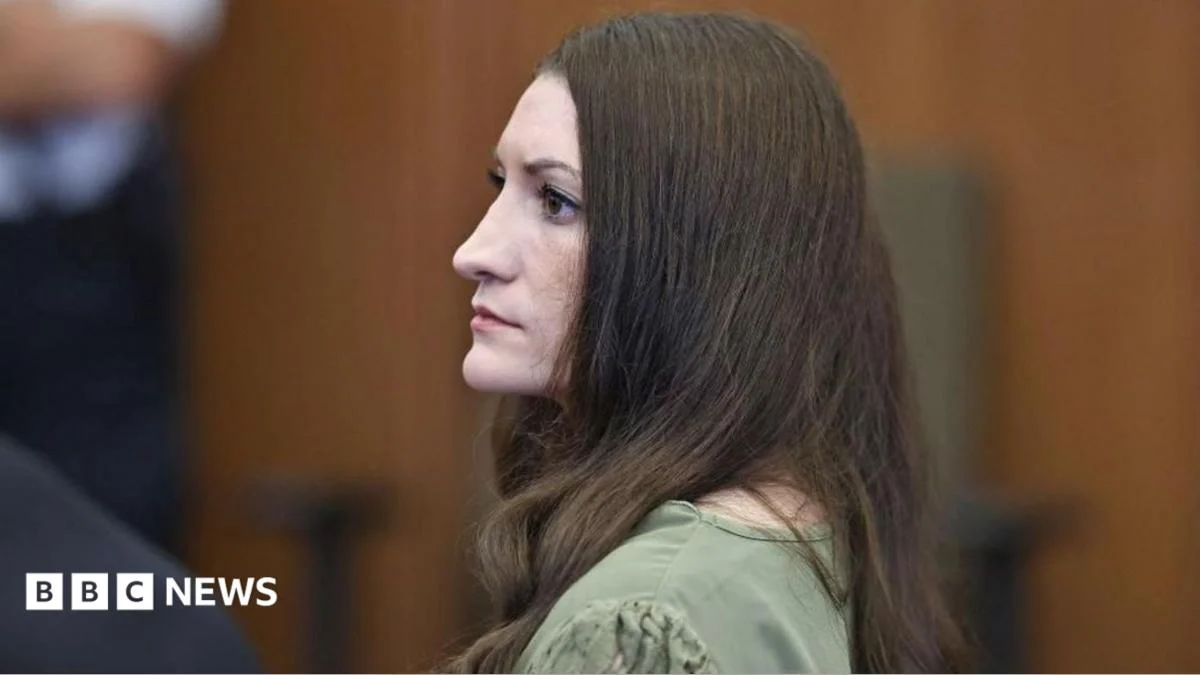
"The recent mistrial in the Lindsay Clancy case underscores the profound challenges our justice system faces when grappling with severe mental illness, particularly the rare and devastating condition of postpartum psychosis. It highlights the deeply personal and often conflicting interpretations of criminal responsibility versus the impact of a deranged mind."
The declaration of a mistrial in the high-profile case of Lindsay Clancy, accused of murdering her three young children, has left a community and a nation grappling with unanswered questions and profound sorrow. After nearly 40 hours of intense deliberation, the jury failed to reach a unanimous verdict, signaling the immense difficulty in reconciling a heinous act with the complex legal and medical arguments surrounding postpartum psychosis. The deeply divided jury, ultimately split 11-1, reflects the societal struggle to assign culpability when severe mental illness is at the heart of a tragedy, prompting renewed discussions about maternal mental health, the intricacies of the insanity defense, and the burden of proof in the American legal system.
The core of the legal quandary centered on whether Lindsay Clancy, a 36-year-old former labor and delivery nurse, was criminally responsible for the strangulation deaths of her five-year-old daughter, Cora, three-year-old son, Dawson, and eight-month-old son, Callan, in their Duxbury, Massachusetts home in January 2023, before she herself jumped from a second-story window. While Clancy admitted to the killings, her defense team steadfastly argued that she was suffering from a severe episode of postpartum psychosis (PPP) at the time, a rare but devastating mental health condition that they contended rendered her unable to understand the nature of her actions or distinguish right from wrong. Prosecutors, conversely, maintained that the killings were a calculated and premeditated act, arguing that Clancy was aware of her actions and intended to harm her children.
The lone holdout juror, Michael Desronvil, publicly stated his conviction that Clancy was indeed criminally responsible, asserting that he "didn’t have any doubts" regarding her culpability. In a statement to CBS News, a BBC US partner, Desronvil explained, "Based on all the physical evidence, key witnesses and what the prosecution presents, I thought it was enough proof that she knew exactly what she was doing and and planned it." His unwavering stance, he noted, often led to him feeling "cut off" during deliberations as he attempted to present alternative theories based on the evidence.
Conversely, the majority of the jury, comprising eleven individuals, leaned towards finding Clancy not criminally responsible, largely swayed by the extensive testimony and evidence presented by the defense regarding her severe mental state. Juror Paula Devlin recounted to CBS Mornings the panel’s arduous efforts to persuade Desronvil, describing how they "all worked together to convince ourselves once we got to that point where it was 10 to 2." The jury foreperson, a retired fifth-grade teacher, described the experience of not reaching a verdict as "awful" and an "emotional rollercoaster," further noting an instance where Desronvil allegedly admitted to having "reasonable doubt" but still refused to acquit Clancy by reason of insanity. Another juror told WBZ-TV that while Desronvil was not the only juror unwilling to see things from another side, his inability to logically justify his position after admitting reasonable doubt left them feeling Clancy had not received a fair trial.
Understanding Postpartum Psychosis and Its Legal Ramifications
At the heart of the defense’s case was the contention that Lindsay Clancy was experiencing postpartum psychosis, a condition starkly different from the more commonly known postpartum depression or "baby blues." Postpartum psychosis is a severe, rare, and acute mental health emergency affecting approximately 1 to 2 out of every 1,000 mothers after childbirth. Its onset is typically rapid, often within the first two weeks postpartum, and symptoms can include hallucinations (seeing or hearing things that aren’t real), delusions (false, fixed beliefs), paranoia, extreme confusion, disorganized thinking, rapid mood swings, and impulses for self-harm or harm to the baby. Without immediate medical intervention, it carries a significant risk of infanticide or suicide.
Clancy’s defense presented a detailed timeline of her mental health struggles leading up to the tragedy. They highlighted that she had been prescribed more than a dozen different medications in the months prior to the killings, suggesting a desperate search for stability amidst a deteriorating mental state. Evidence was also presented that Clancy had sought help from a suicide hotline and an emergency room, underscoring the severity of her distress and her attempts to find assistance. A forensic psychiatrist testifying for the defense elaborated on Clancy’s state, suggesting she experienced a "command hallucination"—an auditory hallucination instructing her to act—and a "delusion of influence," wherein she believed external forces were controlling her actions. Her lawyers argued that these psychotic symptoms rendered her incapable of understanding the wrongfulness of her actions, a critical component of the insanity defense.
However, the prosecution countered these arguments by presenting testimony from a psychiatrist who had treated Clancy, who stated that she did not exhibit signs of psychosis during their sessions. Furthermore, another psychiatrist noted that postpartum psychosis is not currently recognized as a distinct diagnostic category by the American Psychiatric Association (APA) in its Diagnostic and Statistical Manual of Mental Disorders (DSM-5), though its symptoms are covered under other psychotic disorders. This distinction, while potentially nuanced in a clinical setting, can become a significant point of contention in a legal battle, particularly when attempting to establish a direct link between a specific diagnosis and a defendant’s criminal responsibility.
The Burden of Proof and the Insanity Defense
Under Massachusetts law, the legal threshold for finding a defendant guilty is exceptionally high: prosecutors must prove beyond any reasonable doubt that the defendant is criminally responsible for their actions. This means the jury must be unanimously convinced that Clancy intentionally killed her children and that she did not do so as a result of postpartum psychosis. The defense, critically, did not bear the burden of proving her mental illness or lack of criminal responsibility; rather, they only needed to raise reasonable doubt in the minds of the jurors regarding her capacity for criminal intent.
The concept of "not criminally responsible by reason of insanity" is a highly complex and often controversial legal defense. While it acknowledges that a defendant committed the act, it argues that due to a severe mental disease or defect, they lacked the capacity to appreciate the criminality of their conduct or to conform their conduct to the requirements of the law. The Clancy trial starkly illustrated the immense difficulty jurors face in applying these legal principles to tragic human circumstances, particularly when expert opinions conflict, and the nature of mental illness itself is often invisible and difficult for laypeople to fully comprehend. The societal expectation of accountability clashes with the legal recognition of diminished capacity due to severe mental disorder.
The Aftermath: Unresolved Questions and a Lingering Grief
The declaration of a mistrial leaves the case in a precarious and unresolved state. Prosecutors have not yet announced whether they will seek a retrial, a decision that will weigh heavily on the resources of the state and the emotional toll on all parties involved. Clancy’s lawyer, Kevin Reddington, has publicly expressed his hope of reaching an agreement with prosecutors to avoid a second trial, telling ABC’s Good Morning America that he was "upset" the lone juror would not acquit Clancy, arguing that the holdout "would not apply the law of reasonable doubt" as instructed by the judge.
For Patrick Clancy, the children’s father and Lindsay Clancy’s ex-husband, the grief remains profound and enduring. He is scheduled to speak publicly about the case in an interview with the CBS program 60 Minutes, where he is expected to discuss his personal anguish, his cherished memories of Cora, Dawson, and Callan, and the painful proliferation of conspiracy theories that have circulated on social media since the trial began. His poignant admission that he still speaks to his children "all the time" serves as a heartbreaking reminder of the immeasurable loss at the core of this legal battle.
The Lindsay Clancy case transcends the courtroom, sparking vital conversations about the critical need for greater awareness, understanding, and support for maternal mental health. It underscores the challenges faced by families grappling with severe mental illness and the immense pressure placed upon a legal system tasked with rendering justice in the most emotionally charged and medically complex circumstances. The next court hearing, scheduled for September 29 at Plymouth Superior Court in Massachusetts, will be a critical juncture in determining the future trajectory of this deeply tragic and profoundly complex case.
