
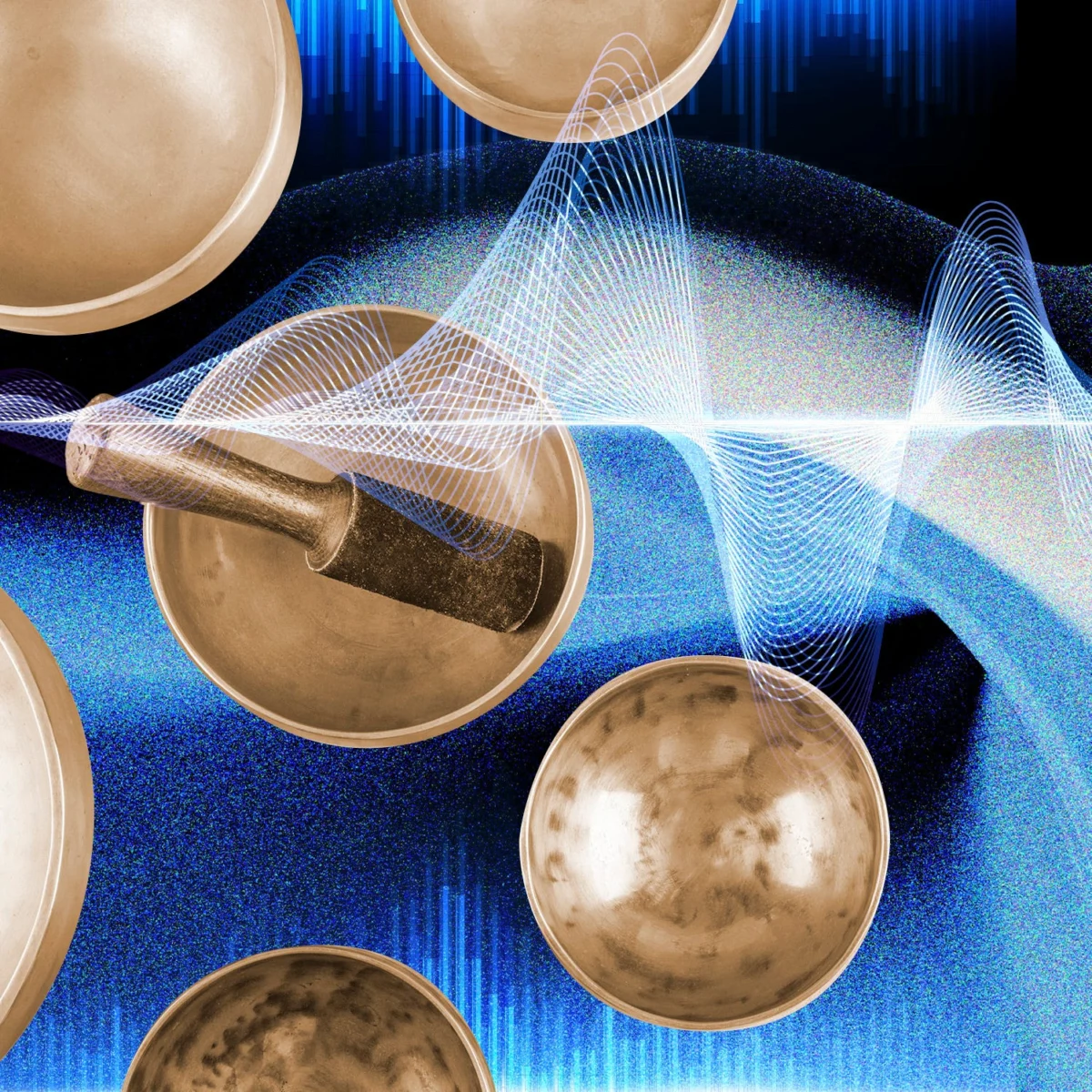
"Sound baths occupy a unique intersection of neuroscience and ancient ritual, offering a sensory reset that coaxes the nervous system into a state of profound, restorative stillness."
In an era defined by relentless digital stimulation and chronic stress, sound therapy has re-emerged as a potent tool for physiological and psychological recalibration. By utilizing the physical properties of vibration and frequency, these sessions—often termed "sound baths"—aim to bypass the analytical mind and induce a state of deep relaxation that many find difficult to achieve through traditional meditation alone.
The Return to Resonance
For the modern seeker of wellness, the pursuit of health often involves a revolving door of cutting-edge innovations: biohacking gadgets, proprietary supplements, and data-driven recovery technologies. However, a significant subset of the contemporary optimization movement involves looking backward. Ancient practices are being dusted off, rebranded, and integrated into the high-performance lifestyles of the 21st century. This is precisely how the "sound bath" transitioned from a niche "woo-woo" practice to a staple of luxury wellness centers and corporate retreats.
A sound bath is not a bath in the literal sense; there is no water involved. Instead, participants are "bathed" in sound waves produced by various instruments, most commonly quartz crystal bowls, gongs, and chimes. The experience typically begins with participants lying in a supine position—often referred to as Savasana in yoga—using eye masks to block out visual stimuli. As the practitioner begins to manipulate the instruments, the room fills with sustained, resonant tones that vibrate through the air and, crucially, through the bodies of those present.
The Evolution of the Bowl
While the concept of using sound for healing traces its roots back thousands of years to ancient Tibetan and Himalayan cultures—utilizing metal singing bowls, gongs, and chanting—the modern iteration is a relatively recent Western adaptation. The translucent, frosted crystal bowls that have become synonymous with "wellness Instagram" are largely a late-20th-century development.
These bowls are made of high-purity quartz, often a byproduct of the semiconductor industry. When played, they produce a much purer, more sustained "sine wave" tone compared to the complex harmonic overtones of traditional metal bowls. This purity of sound is central to the modern sound bath’s appeal. It aligns with the contemporary obsession with "mindfulness" and the growing realization that the constant barrage of notifications and blue light is pushing the human nervous system to its breaking point.
The Physiology of Vibration: "Tickled from Within"
To the uninitiated, the idea of lying on a floor while someone hits a bowl might seem reductive. However, the physical sensation is often described as transformative. Participants frequently report a feeling of being "tickled and massaged from within." This is not merely a poetic exaggeration; it is a description of the mechanical effect of sound waves on human tissue.
Sound is a pressure wave. When these waves encounter the body—which is composed of roughly 60% to 70% water—they travel through the tissues, vibrating cells and stimulating the nervous system. For many, this external sensation feels like standing next to a powerful subwoofer, but instead of the aggressive thumping of a bass line, the vibrations are melodic and ethereal. This "internal massage" can trigger a profound release of physical tension, even in individuals who struggle to relax in traditional quiet environments.
The Science of Brainwave Entrainment
Beyond the physical sensation, proponents of sound therapy point to the concept of brainwave entrainment. The human brain operates at different frequencies depending on its state of activity. In our default, alert state, we are typically in "Beta" waves. High-stress environments can push us into "High Beta," associated with anxiety and hyper-vigilance.

The sustained, repetitive tones of a sound bath are designed to encourage the brain to downshift. By focusing on the steady frequencies of the bowls, the brain may transition into "Alpha" waves (relaxed but awake) or even "Theta" waves (the state between wakefulness and sleep, often associated with deep meditation and creativity). This shift activates the parasympathetic nervous system—the "rest and digest" mode—counteracting the "fight or flight" response driven by cortisol and adrenaline.
While research is still in the preliminary stages, studies have suggested that sound meditation can significantly reduce tension, anger, fatigue, and even physical pain. One study published in the Journal of Evidence-Based Integrative Medicine found that sound meditation significantly improved mood and reduced anxiety, particularly in individuals who were new to the practice.
The "Expensive Nap" and the Power of the Unclench
Despite the scientific leanings, skeptics often argue that the benefits of a sound bath come less from the "healing frequencies" and more from the forced period of stillness. In a world where "doing nothing" is often viewed as a failure of productivity, a sound bath provides a socially sanctioned environment to lie still, close one’s eyes, and simply breathe for 45 to 60 minutes.
This "unclinching" is perhaps the most vital component of the experience. For many men, in particular—who may feel social pressure to always be "on"—the sound bath offers a rare moment of surrender. It is not uncommon for participants to fall into a deep sleep within minutes of the first bowl being struck.
This phenomenon, while sometimes joked about as an "expensive nap," serves a critical purpose. If a person is so chronically exhausted that a series of vibrations sends them into a 40-minute slumber, the practice has arguably succeeded in its goal of "somatic recalibration." The body, when finally given the right environment, prioritizes the rest it so desperately needs.
Navigating the "Wellness Gray Zone"
The modern sound bath exists in a fascinating cultural gray zone. It is a space where neuroscience, the placebo effect, ancient ritual, and luxury wellness merge. In major metropolitan areas, sound baths have become high-end experiences, often priced similarly to a boutique fitness class or a massage.
Critics might label it as "low-grade woo-woo-ism," but for those navigating the "psychic hell" of modern life—the endless group chats, the performance anxiety, and the inflammatory nature of the digital world—the labels matter less than the results. If 45 minutes of "sonically waterboarding" oneself into relaxation results in a person feeling "looser and lighter," the efficacy of the practice becomes self-evident.
The Aftermath: Looser, Lighter, and Recalibrated
The conclusion of a sound bath often brings a sense of disorientation followed by profound clarity. As the last vibrations of the bowls fade, participants are usually given a few minutes of silence to reintegrate. The transition from the "Theta" state back to the "Beta" world can be jarring, but the physiological benefits often linger.
Participants report lower heart rates, a reduction in the "noise" of their internal monologue, and a physical sense of lightness. Even if one sleeps through the majority of the session, the sound waves have still interacted with the body’s nervous system. The anxiety of "missing" the experience or the fear of snoring in a room full of strangers usually fades, replaced by a realization that the body has undergone a necessary reset.
In the final analysis, whether one views the sound bath as a profound spiritual journey or a highly effective way to force a rest, its popularity is a testament to our collective need for silence. In a world that is increasingly loud, sometimes the best way to find quiet is to drown out the world with a different kind of noise—one that vibrates not just in the ears, but in the very marrow of the bones. There are certainly worse ways to spend 45 minutes than being "tickled from within" by a crystal bowl.
