
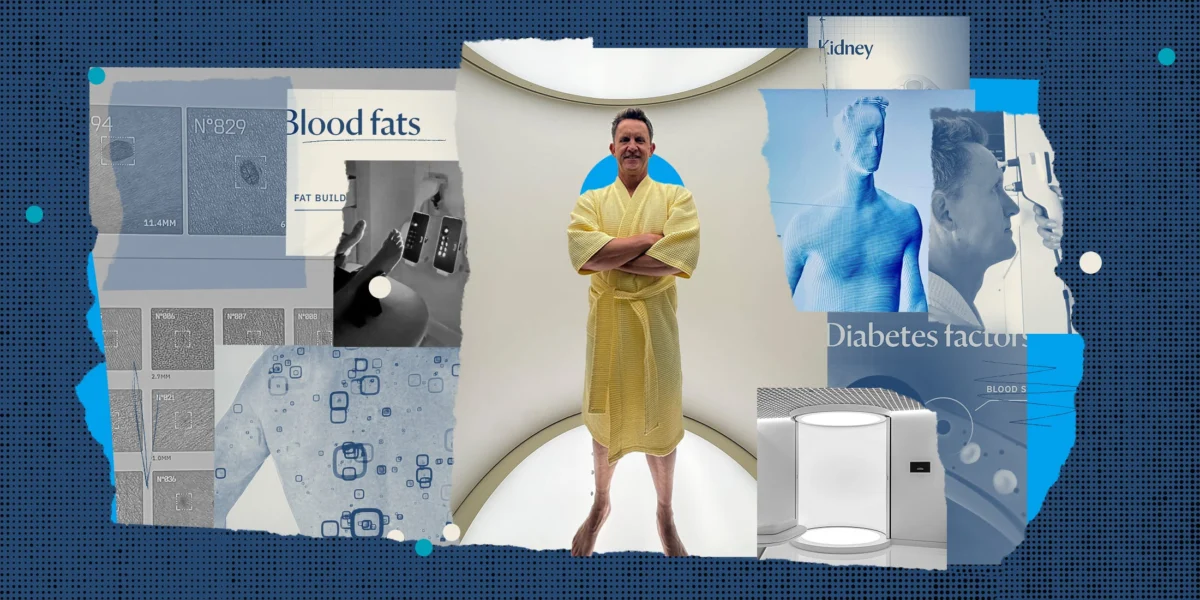
“By bridging the gap between clinical diagnostics and consumer convenience, Neko Health aims to transform the reactive nature of modern healthcare into a data-driven, proactive strategy for lifelong wellness.”
As the global healthcare landscape shifts from a "sick-care" model—where intervention occurs only after symptoms manifest—toward a "well-care" philosophy, a new wave of technology-first startups is emerging to fill the void. Neko Health, a Swedish venture co-founded by Spotify creator Daniel Ek and serial entrepreneur Hjalmar Nilsonne, represents the vanguard of this movement, offering a high-tech, comprehensive health screening designed to catch potential issues years before they become chronic conditions. By integrating advanced imaging, cardiovascular analysis, and deep biomarker testing into a streamlined 60-minute experience, Neko is attempting to productize preventive medicine for an era defined by an obsession with longevity and personalized data.
The Evolution of the Medical Exam
For decades, the standard annual physical has remained largely unchanged: a blood pressure cuff, a stethoscope, a basic metabolic panel, and perhaps a few minutes of conversation with a time-pressed primary care physician. In the United States, the primary care system is often described by medical professionals as "starved," with a reimbursement structure that favors high-cost specialty care over the slow, meticulous work of early detection. This systemic gap has created a vacuum now being filled by "longevity" clinics and high-tech diagnostic centers.

Neko Health’s entry into the American market, beginning with its flagship location in New York City’s Soho neighborhood, marks a significant escalation in this trend. Unlike previous iterations of executive physicals that could cost thousands of dollars and span several days, Neko offers a "Jetsons-like" experience for $499. The goal is to provide a high-resolution "baseline" of a person’s health, utilizing a suite of sensors and software that far exceeds the capabilities of a traditional doctor’s office.
The Neko Scan: A Multi-Sensory Diagnostic Journey
The Neko experience is designed to be as frictionless as a visit to a high-end spa, yet it is grounded in rigorous diagnostic technology. The process begins in a cylindrical chamber where a patient, dressed only in basic attire, is scanned by an array of 2-D, 3-D, and thermal cameras. This "Body and Skin" phase is perhaps the company’s most innovative contribution to preventive care. The system identifies and maps every mole and skin marking—often numbering over 1,500—creating a digital twin that can be used to track minute changes over time. In a field where melanoma detection often relies on a physician’s memory or grainy photographs, this level of computational dermatological tracking is a significant leap forward.
Following the imaging, the patient moves to a treatment room for a series of non-invasive tests. The "Blood Assessment" involves a draw of 50 biomarkers, ranging from standard cholesterol and glucose levels to more specific enzymes associated with liver stress and systemic inflammation. In a nod to modern efficiency, these samples are whisked away via pneumatic tubes to an on-site laboratory, allowing for rapid integration into the final report.
The cardiovascular suite is equally comprehensive. Beyond the standard 12-lead ECG, Neko utilizes laser-radar technology for "Arterial Analysis." This assesses macrovascular function by evaluating the efficiency of the heart’s primary pumping pathways and the stiffness of the large blood vessels—a key predictor of long-term heart health. Simultaneously, the "Tissue Imaging" phase uses lasers to measure microcirculatory function in the extremities, specifically the soles of the feet. Because the smallest blood vessels are often the first to show signs of aging or disease—such as the early stages of peripheral artery disease or diabetic complications—this "canary in the coal mine" approach provides data that traditional exams frequently overlook.

Data Visualization and the "Heart Age" Metric
The culmination of the scan is a consultation with a physician, but the delivery of information is what sets Neko apart. Rather than receiving a stack of confusing lab reports, patients view their results on large screens featuring a pointillist avatar of their own bodies. This visualization helps bridge the gap between abstract numbers and physical reality.
One of the more provocative aspects of the Neko algorithm is the calculation of a "heart age." By synthesizing blood pressure, arterial stiffness, and biomarker data, the system provides an estimated biological age for the cardiovascular system. For many patients, seeing a "heart age" that exceeds their chronological age serves as a more powerful motivator for lifestyle change than a high LDL reading ever could.
The physician then translates this data into a digital "action plan" delivered via a proprietary app. This plan might include specific dietary adjustments—such as swapping red meat for white fish—or targeted exercise prescriptions designed to nudge "monitor-range" markers back into the "normal" zone. The inclusion of "future-casting"—predicting where a patient’s health markers might be at age 80 without intervention—adds a layer of psychological urgency to the preventive advice.
The Broader Context: A Crowded Longevity Market
Neko Health joins a competitive landscape of companies vying for the attention of the "worried well" and longevity enthusiasts. Other players include Prenuvo, which offers full-body MRIs to detect tumors and aneurysms; Galleri, a multi-cancer early detection blood test; and Function Health, a service focused on deep-dive blood markers and biological age testing.

However, Neko’s value proposition lies in its hybrid nature. While Prenuvo focuses on imaging and Function focuses on blood, Neko combines both with cardiovascular and dermatological assessments in a physical retail environment. This "all-in-one" approach is designed to provide a more holistic picture of health in a single hour than a patient might receive in a year of disjointed specialist visits.
Expert Critique and Clinical Utility
Despite the technological sophistication, the medical community remains divided on the utility of such comprehensive screenings for asymptomatic individuals. Critics often point to the risk of "over-diagnosis" or "false positives," where the discovery of benign abnormalities leads to unnecessary, invasive, and expensive follow-up procedures.
Dr. Keith Roach, a New York-based internist, emphasizes the need for transparency regarding the accuracy of new diagnostic tools. He notes that while blood pressure and ECGs are established medical staples, the efficacy of laser-based microcirculatory imaging must be backed by robust clinical evidence to ensure it truly predicts health outcomes. Furthermore, medical professionals caution that a Neko scan is not a total replacement for traditional care. For instance, the scan does not currently include prostate-specific antigen (PSA) testing or colon cancer screenings—two of the most critical preventive measures for men over 45.
Dr. Jordan Shlain, a concierge physician, views Neko as "primary care adjacent." He argues that while the technology is exceptional at generating "raw lumber" (data), a patient still needs a long-term relationship with a physician to "build the house" (a comprehensive, life-long health strategy). The real power of Neko, Shlain suggests, is its ability to identify issues that can then be funneled into the traditional medical system for management.

The Future of the "Spotify of Health"
With over 100,000 members in Europe and a 75 percent retention rate for annual scans, Neko’s business model appears to have found a receptive audience. The company’s expansion into major U.S. hubs like Miami, Washington, D.C., and San Francisco suggests a belief that the American consumer is ready to bypass the traditional primary care bottleneck in favor of a data-rich, self-directed experience.
For the individual, the value of Neko may lie less in any single radical discovery and more in the creation of a high-resolution baseline. In a world where health is often treated as a series of emergencies to be managed, the ability to monitor the slow trajectory of one’s own biology offers a sense of agency. As the technology evolves and the database of "normal" versus "at-risk" scans grows, Neko and its peers may eventually provide the very evidence-based roadmap that the current healthcare system has struggled to deliver.
Ultimately, the success of Neko Health will depend on its ability to prove that more data leads to better outcomes, not just more anxiety. If the company can successfully integrate its high-tech snapshots with the long-term, human-centric care provided by traditional physicians, it may well set the new standard for what it means to "see the doctor" in the 21st century.
