
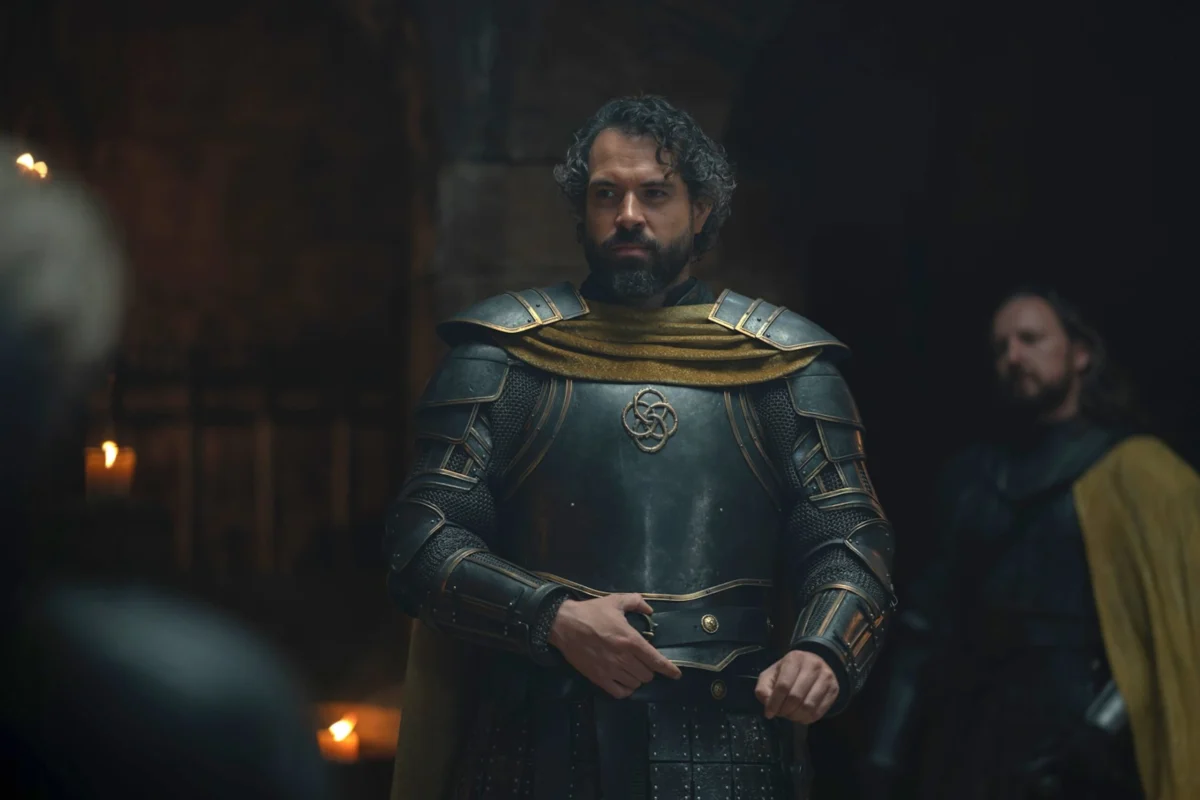
"The brutal execution of Ser Luthor Largent signals more than just a loss of military personnel; it marks the arrival of Ormund Hightower as a ruthless third-party disruptor in the war for the Iron Throne."
In the latest development of the Targaryen civil war, the tactical landscape of King’s Landing has been fundamentally altered by a series of targeted assassinations aimed at the heart of the City Watch. While the conflict has traditionally been defined by the binary struggle between Team Black and Team Green, the emergence of Ormund Hightower as a clandestine aggressor introduces a new level of psychological warfare, utilizing religious iconography and gruesome displays to destabilize Rhaenyra’s tenuous grip on the capital.
The Chessboard Reconfigured: The Arrival of Ormund Hightower
For two seasons, the political intrigue of House of the Dragon has functioned much like a high-stakes chessboard. On one side stood the Blacks, led by Rhaenyra Targaryen and the mercurial Daemon; on the other, the Greens, initially steered by Otto Hightower and Queen Alicent, and later by the volatile King Aegon II. This binary struggle provided a clear, if bloody, framework for the "Dance of the Dragons." However, Season 3, Episode 5, titled “Unbowed and Unbent,” shatters this stability by introducing Ormund Hightower as a formidable and sinister wild card.

Ormund Hightower, the Lord of Oldtown and the Beacon of the South, has long been a looming shadow in the background of the series. As the head of House Hightower, his resources are vast, and his loyalty to the Green cause was always assumed to be channeled through his cousin Alicent and her children. Yet, his actions in "Unbowed and Unbent" suggest an agenda that is as independent as it is violent. By moving his operations into the shadows of King’s Landing, Ormund is no longer just a distant benefactor; he is a direct participant in a guerrilla campaign designed to dismantle the city’s internal security from the inside out.
The Erosion of the Gold Cloaks
The City Watch, or the "Gold Cloaks," has historically been the primary instrument of power within the walls of King’s Landing. Their loyalty has always been a point of contention, primarily because of their deep-seated devotion to Daemon Targaryen, who served as their commander years prior during the reign of King Viserys. It was this very loyalty that allowed the Blacks to seize the city with relative ease, effectively turning the capital’s own defenders against the Green usurpers.
In "Unbowed and Unbent," we witness the systematic erosion of this power base. Daemon, portrayed with a simmering intensity by Matt Smith, finds himself in the unfamiliar position of the hunted. As members of the City Watch are picked off one by one, Daemon’s investigation reveals a terrifying truth: his influence over the men in gold is no longer a guarantee of safety. The psychological impact of these killings cannot be overstated. For Daemon, the City Watch was his personal army, a physical manifestation of his "Prince of the City" persona. Seeing them slaughtered with impunity signals a loss of control that threatens to unravel his authority.
The "Last Supper" and the Death of Ser Luthor Largent
The episode reaches its macabre climax when Daemon discovers an underground display that is as artistic as it is horrific. In a clear homage to "The Last Supper," several murdered City Watch members have been posed at a table, their corpses serving as a silent, grisly audience. At the center of this display is Ser Luthor Largent, played by Tom Cullen.

Largent’s death is a catastrophic blow to the Black faction. As one of Daemon’s most reliable lieutenants and a key architect of Rhaenyra’s ascent in the capital, Luthor represented the bridge between the crown’s commands and the men on the streets. His brutal end, punctuated by the message "A Feast for Traitors" written in blood on the wall behind him, serves as a formal declaration of war from Ormund Hightower.
The use of the word "Traitors" is particularly telling. From Ormund’s perspective, any man who turned his back on the anointed King Aegon II to support Rhaenyra has forfeited his right to a clean death. The "Last Supper" imagery suggests a "Judas" theme, implying that Ormund views the City Watch’s shift in loyalty as the ultimate betrayal of the realm. This isn’t just a series of murders; it is a ritualistic cleansing of King’s Landing.
The Mystery of Daeron Targaryen
Perhaps the most significant revelation extracted through Daemon’s interrogation of a captured killer is Ormund’s ultimate goal: the elevation of Daeron Targaryen. While the show has focused heavily on Aegon and Aemond, the third son of Alicent and Viserys—Daeron—has remained off-screen, reportedly serving as a ward in Oldtown.
By distributing currency featuring Daeron’s likeness and declaring him the rightful king, Ormund is effectively bypassing the presumed dead (or missing) Aegon and the current regent, Aemond. This move complicates the Green succession and suggests that Ormund may be seeking to establish a puppet monarchy that is more beholden to Oldtown than to the traditions of the Red Keep. For Daemon and Rhaenyra, they are no longer just fighting the "Greens"; they are fighting a decentralized insurgency that has already begun to crown its own king in the hearts and pockets of the populace.

Divergence from the Source Material: Fire & Blood
Fans of George R.R. Martin’s Fire & Blood will note a significant departure in the timing and nature of Ser Luthor Largent’s death. In the book, which is written as an in-universe history by Archmaester Gyldayn, Luthor’s demise occurs much later and under different circumstances. In the text, he is killed during the infamous Riots of King’s Landing—a chaotic uprising by the common folk who, driven by starvation and the perceived "tax tyranny" of Rhaenyra, storm the Dragonpit and the Red Keep. In that account, Luthor is pulled from his horse and beaten to death by a mob.
The decision to move his death forward and attribute it to an organized hit by Ormund Hightower serves several narrative purposes for the television adaptation. First, it establishes Ormund as a primary antagonist early in the season, giving the audience a face to associate with the growing unrest in the city. Second, it highlights the "unreliable narrator" aspect of Martin’s book. As the showrunners have often noted, Fire & Blood is a collection of rumors and historical records that may not capture the clandestine truths of the era. By portraying Luthor’s death as a targeted assassination rather than a random act of mob violence, the show suggests that the "history" recorded by the Maesters may have missed the intricate web of Hightower espionage that actually brought the city to its knees.
The Looming Threat of Civil Unrest
While Luthor’s death in the show is an assassination, the seeds of the book’s riots are clearly being sown. The episode alludes to the growing dissatisfaction of the smallfolk, who are suffering under the blockade and the general privation of war. Characters like Ulf White have already voiced the general sentiment that the city is a powderkeg.
Ormund’s campaign is designed to light the fuse. By removing the leadership of the City Watch, he ensures that when the riots eventually do break out, there will be no organized force capable of containing them. The "Feast for Traitors" is not just a message for Daemon; it is an invitation for the city to descend into anarchy.

As Season 3 progresses, the Blacks find themselves trapped between a dragon-led army in the field and a faceless insurgency at home. The loss of Ser Luthor Largent is the first domino to fall in what promises to be the total destabilization of Rhaenyra’s reign. Daemon Targaryen, once the undisputed master of the King’s Landing underworld, now finds himself a stranger in his own city, haunted by the ghost of a commander who died at a table of stone, and the bloody writing on the wall that foretells the fall of House Targaryen.
