
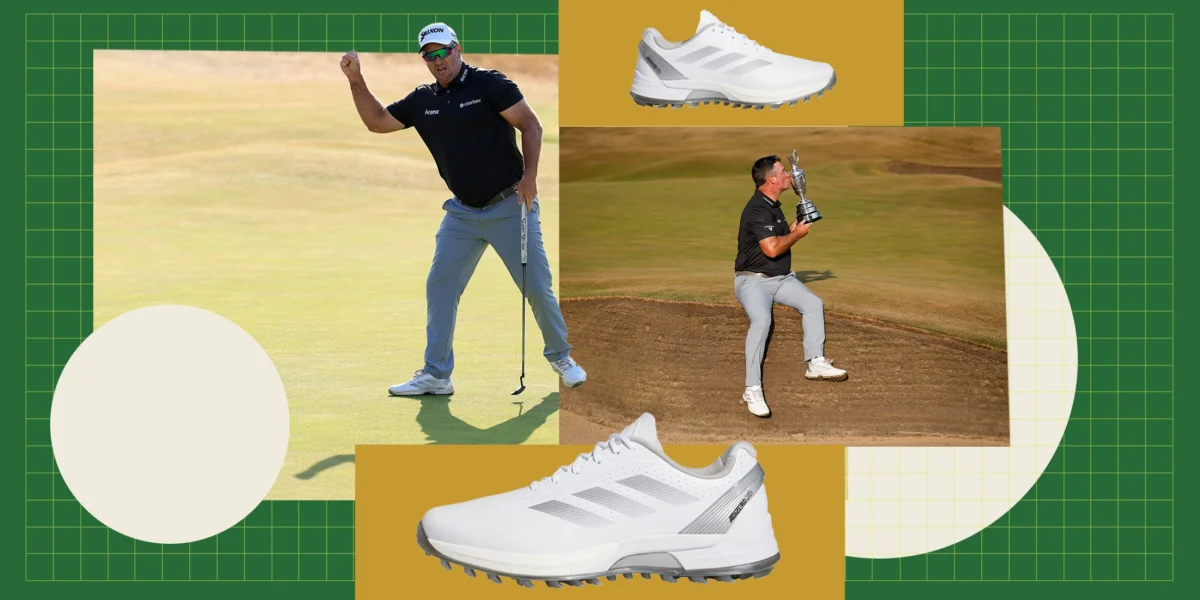
“Ryan Fox’s historic victory at the 2026 Open Championship proves that elite performance is no longer tethered to traditional spiked footwear, signaling a definitive shift toward athletic, spikeless technology on the world’s most demanding stages.”
The intersection of high-performance athletics and specialized equipment has always been a focal point of professional golf, where victory is often determined by the narrowest of margins. When 39-year-old Ryan Fox secured his dominant win at The Open Championship at Royal Birkdale, the conversation quickly pivoted from his clinical ball-striking to a surprising equipment choice: the Adidas Adizero ZG Spikeless golf shoe. In a sport where the majority of the field still relies on the mechanical grip of traditional spikes, Fox’s reliance on a molded, athletic-style outsole challenges long-standing conventions regarding stability and ground forces in the professional game.
The Significance of the Birkdale Breakthrough
Royal Birkdale is widely regarded as one of the most rigorous tests in the rotation of The Open Championship. Its towering dunes and exposed fairways demand a level of precision and stability that few other courses require. For a professional to navigate these links successfully, every piece of equipment—from the loft of their wedges to the traction on their soles—must perform flawlessly. Historically, the prevailing wisdom suggested that the firm, often slippery turf of a British links course necessitated metal or soft spikes to prevent "slipping" during high-velocity swings.
Ryan Fox’s performance over the four-day tournament shattered this narrative. By choosing a spikeless model, Fox did more than just win a trophy; he validated a category of footwear that many purists previously relegated to the casual weekend warrior or the driving range. His victory marks a rare instance in this decade where a major champion eschewed the traditional "cleated" look in favor of a design inspired by trail running and high-performance track athletics.
The Physics of the Swing: Spikes vs. Spikeless
To understand why Fox’s choice is noteworthy, one must examine the role of the shoe in the modern golf swing. Professional golfers generate immense torque, using their feet to push against the ground to create speed. This "ground force" is the engine of the long game. Traditionally, metal spikes provided the ultimate anchor, biting into the turf to ensure the feet remained stationary during the explosive transition from backswing to downswing.
While soft spikes (plastic cleats) eventually replaced metal for the general public due to course maintenance concerns, the professional ranks have been slower to move toward completely spikeless designs. The fear among elite players is that a spikeless shoe—which utilizes molded rubber lugs—might "give" during a high-speed swing, leading to a loss of power or a wayward shot.

However, Fox, a self-described "spikeless stan," has long defied this trend. "I’ve worn spikeless shoes for as long as I can remember," Fox noted. "I’ve never felt any need for spikes as I have plenty of grip and stability." His success suggests that modern outsole engineering has reached a point where the distinction in traction between spiked and spikeless is negligible, even for players with high swing speeds.
Technical Deep Dive: The Adidas Adizero ZG Spikeless
The specific footwear worn by Fox, the Adidas Adizero ZG Spikeless, represents the pinnacle of this technological evolution. The shoe is a hybrid of marathon-grade cushioning and golf-specific stability.
One of the primary features is the Lightstrike Pro foam. Originally developed for Adidas’ record-breaking distance running shoes, this foam provides high energy return and lightweight cushioning. For a golfer walking roughly five to seven miles a day over undulating terrain, the reduction in leg fatigue is a tangible competitive advantage. When a tournament reaches its climax on the 72nd hole, a player with "fresh legs" is less likely to suffer the mechanical breakdowns that lead to late-round bogeys.
Complementing the cushioning is the Spikemore outsole. Unlike the simple rubber nubs of early spikeless shoes, the Spikemore system uses strategically placed "undercut blades." These molded lugs are designed to mimic the directional grip of a spike, biting into the grass at the specific angles required during the golf swing. Furthermore, the inclusion of a 3D torsion plate provides the lateral rigidity necessary to prevent the foot from twisting or rolling, ensuring that the golfer remains "connected" to the ground.
Ergonomics and the "Fox Factor"
Beyond the raw performance metrics, Fox’s choice highlights a growing focus on ergonomics and individual physical needs in professional sports. Fox candidly discussed his personal requirements, noting that he has flat feet and utilizes custom orthotics.
"I prefer an athletic style of shoe rather than traditional golf shoes," Fox explained. "I’ve got flat feet and use orthotics and the Adizero ZG is perfect for me."
This admission points to a broader trend: the shift away from the "Oxford" style golf shoe, which often featured stiff leather and narrow lasts. For many players, these traditional designs are incompatible with modern orthotic inserts or the natural shape of the foot. By adopting a shoe built on an athletic last, Fox was able to prioritize comfort and foot health without sacrificing the stability required for a 120-mph swing.

Implications for the Amateur Golfer
The ripple effects of a major championship win often dictate consumer trends for years to follow. Fox’s victory provides a compelling case for the amateur golfer to reconsider their own footwear.
For the average player, spikeless shoes offer a level of versatility that spikes cannot match. The ability to transition from the parking lot to the first tee, and eventually to the clubhouse or a restaurant, without changing shoes is a significant convenience. Historically, the trade-off for this convenience was a loss of grip, particularly in wet conditions. However, as Fox proved at the 2026 Open—where moisture and wind are constant variables—the modern spikeless outsole is more than capable of handling adverse weather.
At a price point of approximately $132, the Adizero ZG Spikeless also sits in a competitive bracket, offering professional-grade technology at a cost accessible to most dedicated hobbyists. It challenges the notion that "tour-level" gear must be prohibitively expensive or overly specialized.
The Changing Aesthetic of the PGA Tour
Fox’s win also underscores a cultural shift within the PGA Tour. The "athleticization" of golf is no longer just about fitness and gym routines; it is reflected in the very uniforms the players wear. The sight of a Major winner in what essentially looks like a high-tech sneaker would have been unthinkable three decades ago. Today, it is a symbol of a sport that is increasingly leaning into its identity as a high-performance athletic endeavor rather than a sedentary pastime.
As manufacturers continue to blur the lines between categories—incorporating carbon plates, nitrogen-infused foams, and computational outsole designs—the traditional golf shoe may soon become a relic of the past. Ryan Fox didn’t just win a major at Royal Birkdale; he provided a glimpse into the future of the game’s equipment landscape.
Conclusion
The 2026 Open Championship will be remembered for Ryan Fox’s clinical composure and his breakthrough into the elite circle of major winners. However, for equipment junkies and performance analysts, the lasting legacy of the tournament will be the validation of spikeless technology. By proving that a molded rubber outsole can withstand the pressures of a major championship on a links course, Fox has opened the door for a new generation of players to prioritize comfort, ergonomics, and athletic versatility. As the "spikeless revolution" gains momentum, the boundary between the running track and the fairway continues to disappear, one major victory at a time.
