
"The ambition for an NHS-style social care system, free at the point of use, presents a profound fiscal challenge, igniting a high-stakes debate over the future of the pensions triple lock and the very fabric of Britain’s welfare state."
Prime Minister Andy Burnham’s impending address to the Labour conference is poised to unveil a transformative vision for social care, mirroring the universal principles of the National Health Service. However, this ambitious proposal, aimed at dismantling the current means-tested system, has immediately thrust the contentious issue of its funding into the spotlight. At the heart of this unfolding debate lies the fate of the state pensions triple lock, a long-standing commitment to pensioner security, now under intense scrutiny as a potential source of revenue, sparking strong warnings from trade unions about the moral implications of such a move.
The Imperative for Social Care Reform
Burnham’s declared intention to introduce an NHS-style social care system, free at the point of use, stems from a widely acknowledged crisis within the existing framework. For decades, social care in England has operated on a means-tested basis, a stark contrast to the NHS, which provides healthcare universally, free at the point of need. Under current regulations in England and Northern Ireland, individuals with savings exceeding £23,250 are typically ineligible for council funding assistance, forcing many to deplete their life savings, sell their homes, or bear exorbitant costs for essential care. This system has been widely criticised for its inherent unfairness, creating a postcode lottery of provision and leaving countless vulnerable individuals and their families facing devastating financial hardship.
Burnham himself has drawn a stark comparison, likening England’s social care system to "American healthcare, where the most vulnerable in society can lose everything, they can be wiped out." This powerful analogy underscores the perceived injustice and the existential threat it poses to personal dignity and financial security in later life. The demographic reality of an aging population further exacerbates these pressures, with demand for care services projected to rise significantly in the coming decades. An NHS-style system, therefore, seeks to address not only the immediate financial burden on individuals but also to establish a more equitable, universal, and sustainable model for future generations, ensuring that old age or disability does not automatically lead to impoverishment. While Wales and Scotland operate with different eligibility criteria, the underlying pressures on social care funding are a UK-wide challenge, making Burnham’s proposed reforms a potentially foundational shift in social policy. The introduction of a truly universal system would require a paradigm shift in how social care is perceived and funded, moving it from a last-resort, means-tested service to a fundamental right, akin to healthcare.
The Triple Lock: A Pillar of Pensioner Security Under Threat
Central to the funding debate is the pensions triple lock. In place for 16 years, this mechanism guarantees that the state pension increases annually every April by the highest of three measures: average earnings growth, inflation (as measured by the Consumer Price Index), or 2.5%. Its original intent was to safeguard the living standards of pensioners, ensuring their income kept pace with or outstripped rising costs and general wage growth. Historically, the state pension had often lagged behind earnings and inflation, leading to concerns about pensioner poverty. The triple lock was introduced to reverse this trend and provide a robust, predictable mechanism for uplift. Over its tenure, the triple lock has demonstrably delivered significant increases to the state pension, with Labour’s deputy leader, Lucy Powell, noting that it is "set to increase the value of the state pension by around about £2,000 a year" over the current parliament alone. This sustained increase has been vital for many, particularly given that current UK state pensions are among the lowest in the G7 nations, as highlighted by Unite the Union’s general secretary, Sharon Graham, who argues this context makes any reduction particularly egregious.
The triple lock has become a politically sacrosanct commitment, largely due to its tangible benefits for a significant and electorally powerful demographic. However, its increasing cost to the Exchequer has consistently fueled debates about its long-term affordability and intergenerational fairness. Critics argue that its unpredictable cost, often exceeding inflation and earnings growth, places an unsustainable burden on working taxpayers and limits fiscal flexibility for other crucial public services. Each percentage point increase can add hundreds of millions to the welfare budget, making long-term financial planning challenging for the Treasury. Proponents, however, contend that it is a fundamental pledge to those who have contributed throughout their working lives, protecting them from poverty and providing a baseline of financial security in retirement, a moral contract that should not be broken lightly.
The Moral and Fiscal Crossroads: Unite’s Warning
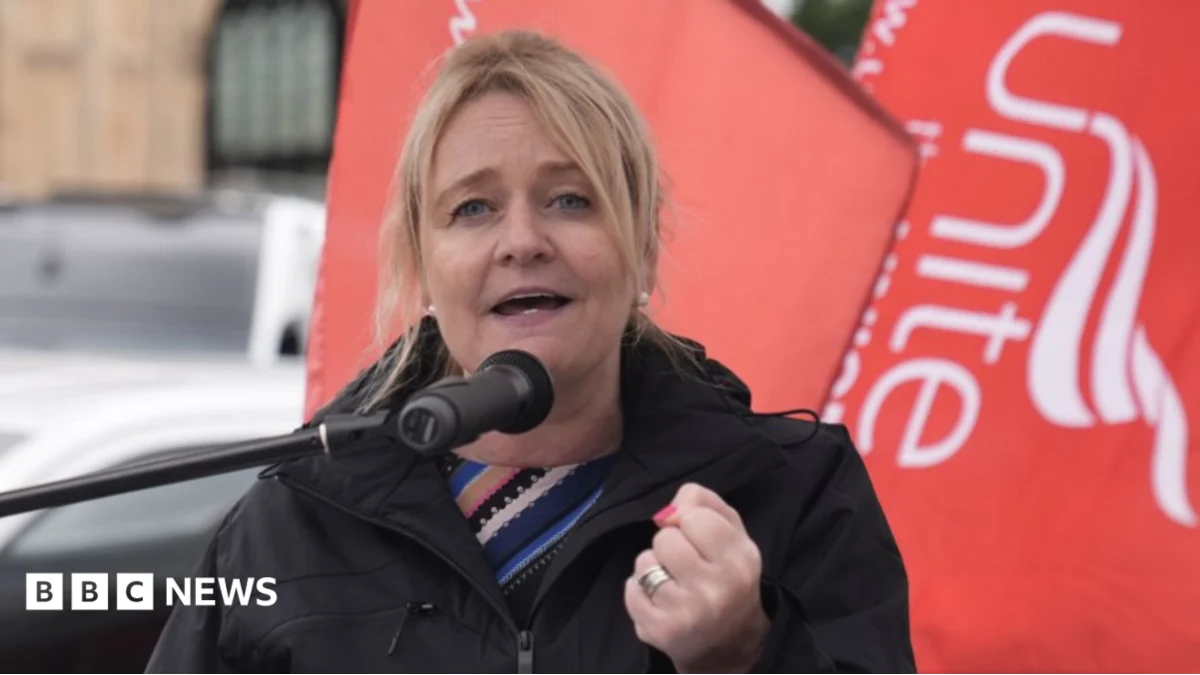
The prospect of funding social care by dismantling the triple lock has elicited a fierce reaction from Unite the Union. Sharon Graham unequivocally warned the Prime Minister that scrapping the triple lock would be "morally wrong." Speaking to BBC Radio 4’s Today programme, Graham articulated the union’s deep concerns, asserting that such a move would be akin to "picking the pocket of pensioners" and would risk repeating the "unpopular removal of the Winter Fuel Allowance" under a previous administration led by Sir Keir Starmer. The Winter Fuel Allowance cut, widely perceived as targeting a vulnerable group, serves as a potent political cautionary tale, underscoring the potential backlash any government faces when reducing benefits for pensioners, particularly those on fixed incomes.
Graham further argued that targeting a group whose average annual pension is around £12,500 – barely above the personal income tax threshold – to fund a major social reform is fundamentally unjust. This sum, she stressed, provides basic security, and its erosion would plunge many into financial precarity. Instead, she advocated for a shift in focus towards "wealth taxes," proposing that the wealthy should bear a greater share of the burden. The concept of wealth taxes encompasses a range of potential fiscal measures, including reforms to capital gains tax, inheritance tax, or even new levies on significant assets such as property or financial portfolios. While politically challenging to implement and often facing resistance from those affected, such taxes are championed by unions and progressive economists as a more equitable means of funding public services, shifting the responsibility from those with limited fixed incomes to those with substantial accumulated assets. This approach, Graham suggests, would address the funding gap without compromising the financial security of those already living on modest state pensions, thereby upholding a principle of collective responsibility rather than individual sacrifice among the less affluent.
Burnham’s "Big Decisions" and the Political Tightrope
Prime Minister Andy Burnham’s declaration that "nothing is off the table at this moment in time" regarding social care funding signals a willingness to confront difficult choices. This stance aligns with the assessment of Alan Milburn, a former Labour minister currently leading an independent review for the government into young people and work. Milburn, speaking on the BBC’s Political Thinking podcast, described Burnham as "exactly the sort of person who can take the big decisions," indicating that the Prime Minister is "prepared to make" tough calls, including potentially reforming the triple lock, to deliver on his social care ambition. Milburn’s insight suggests that Burnham views the current social care system as fundamentally "broken" and believes radical action is necessary, even if it entails political risk. This perception of Burnham as a decisive leader, unafraid to tackle long-standing intractable problems, could be a key narrative for his premiership.
For the Labour Party, this creates a delicate political tightrope. Deputy Leader Lucy Powell has emphatically reiterated the party’s commitment to the triple lock, highlighting its inclusion in their 2024 manifesto. She assured viewers on BBC Breakfast that the party is "absolutely" committed to it, emphasizing its role in delivering "significant uplifts" to the state pension. This firm public commitment aims to reassure pensioners and maintain electoral trust, particularly given the historical sensitivity surrounding pension policies. However, the juxtaposition of this commitment with Burnham’s "nothing is off the table" comment creates a subtle tension. While the party is bound by its manifesto pledge for the current electoral cycle, the long-term sustainability of the triple lock and the immense cost of an NHS-style social care system will undoubtedly remain subjects of intense internal debate and future policy consideration. The question of whether the commitment extends indefinitely beyond the next election, or if a future mandate might allow for reconsideration, remains a silent undercurrent in the discourse, leaving room for future policy evolution.
Broader Implications and Future Trajectories
The debate over social care funding and the triple lock extends beyond immediate policy choices; it touches upon fundamental questions about the role of the state, intergenerational equity, and the sustainability of the welfare state in a rapidly changing demographic landscape. An NHS-style social care system would represent a monumental expansion of state provision, requiring a stable and substantial funding stream that is resilient to economic fluctuations. The estimated costs of such a system run into billions annually, necessitating a comprehensive and politically viable funding solution that can withstand economic downturns and rising demand. The economic modelling behind such a transformative project would need to be robust, considering not only the direct costs but also the potential economic benefits of a healthier, more independent elderly population and reduced burdens on family carers.
Beyond the social care debate, Prime Minister Burnham is also expected to use his conference speech to announce "Great British Grid," a new government body designed to invest in Britain’s electricity grid. This initiative underscores a broader agenda of national infrastructure investment and energy security, likely aimed at bolstering the UK’s green energy transition, modernizing critical national infrastructure, and ensuring reliable energy supply. This simultaneous focus on both social and economic infrastructure highlights a government aiming for broad-based societal and economic transformation, though the funding for these ambitious projects will inevitably compete for finite resources.
Ultimately, the decisions made regarding social care funding will have profound and lasting implications for millions of Britons, shaping the quality of life for the elderly and vulnerable, and redefining the social contract between citizens and the state. The political courage to address these challenges, whether through innovative wealth taxes, a reimagined triple lock, or a combination of measures, will define the legacy of this administration and set the trajectory for Britain’s welfare landscape for decades to come. The coming months will reveal how the Prime Minister navigates these turbulent waters, balancing ambitious social reform with the imperative of financial prudence and the deeply ingrained expectations of an electorate fiercely protective of its pension security. The outcome will be a defining moment for the Labour government and for the future direction of British public services.
