
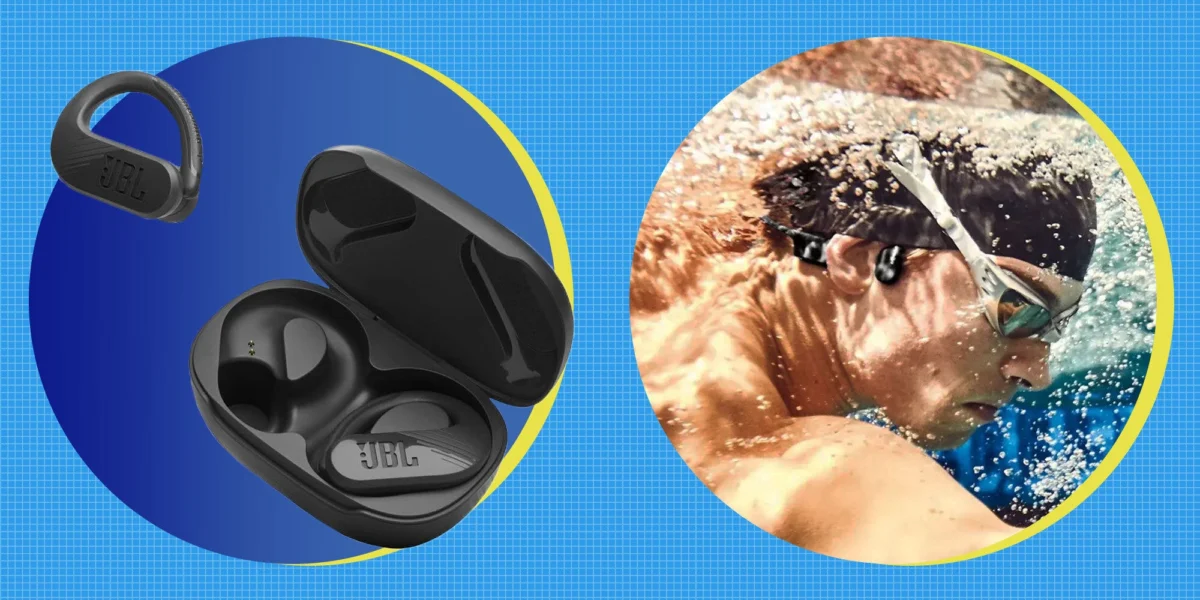
"Modern waterproof audio technology has bridged the gap between terrestrial training and aquatic performance, offering athletes the ability to maintain their rhythm without the traditional limitations of signal interference or water damage."
The evolution of fitness-focused audio has reached a pivotal moment where the distinction between "water-resistant" and "waterproof" defines the boundary of athletic possibility. For years, swimmers and triathletes were forced to choose between the silence of the pool or clunky, unreliable hardware that often failed after a few laps. Today, specialized engineering—ranging from IP68-rated Bluetooth buds to integrated MP3 systems—allows for high-fidelity sound in environments that would destroy standard electronics. This shift is not merely about convenience; it is about the psychological advantage of audio-stimulated performance, enabling high-intensity intervals and long-distance endurance sessions to be managed with the same acoustic motivation found in the weight room or on the trail.
The Physics of Underwater Audio
To understand the current market of waterproof headphones, one must first understand the technical hurdles manufacturers must overcome. The primary challenge is twofold: the physical ingress of water and the interruption of signal. Standard Bluetooth technology utilizes a 2.4GHz radio frequency, which is notoriously poor at traveling through water. Even a few inches of submersion can cause a total signal cutout. Consequently, the industry has branched into two distinct solutions: high-tier Bluetooth earbuds designed for "above-the-surface" water sports (like rowing or shallow swimming) and dedicated MP3-integrated units for lap swimmers who require consistent audio regardless of depth.

Furthermore, the International Protection (IP) rating system serves as the gold standard for consumer transparency. An IP68 rating, found in several leading models, indicates that a device is dust-tight and can be continuously submerged in water, typically up to 1.5 meters for 30 minutes. For those venturing deeper or staying under longer, IPX8 ratings offer even more specialized protection, often extending to 3 meters.
The JBL Endurance Peak 3: The High-Performance All-Rounder
JBL has long been a titan in the audio industry, and the Endurance Peak 3 represents their commitment to the ruggedized athlete. Priced at approximately $110, these earbuds are built for the individual who moves seamlessly between a rain-soaked trail run and a recovery session in the pool.
The standout feature of the Endurance Peak 3 is its signature earhook design. In the world of aquatic fitness, "security" is the most valuable currency. A standard earbud relies on friction and ear-canal fit, which can be compromised the moment water enters the ear. The Endurance Peak 3 uses a wrap-around hook that ensures the hardware remains locked to the ear even during high-impact movements or flip turns in the pool.
Technologically, the JBL app sets a high bar for customization. While many "sport" headphones offer a flat sound profile, JBL’s proprietary technology allows users to adjust EQ settings to prioritize bass—essential for maintaining tempo during grueling sets. The battery life is equally impressive, offering 10 hours of playback on a single charge with an additional 30 hours provided by the charging case. For the outdoor athlete, the inclusion of a transparency mode is a critical safety feature, allowing for environmental awareness when running near traffic or on shared paths.

Soundcore Sport X20: Ergonomic Versatility and Value
For athletes seeking a balance between price and performance, the Soundcore Sport X20 by Anker (retailing around $80) offers a compelling alternative. Anker has carved out a significant niche by providing high-end specs at a mid-tier price point, and the X20 is no exception.
The defining characteristic of the Sport X20 is its "extra-flexible" earhook system. Unlike rigid plastic hooks that can cause discomfort during long training sessions, these hooks are designed to conform to the specific geometry of the user’s ear. This low-profile design is particularly beneficial for athletes who wear glasses or specialized swim goggles, as it minimizes the "bulk" behind the ear.
While the JBL focuses on sheer durability, the Soundcore Sport X20 emphasizes versatility. These are marketed as hybrid devices, equally at home during a heavy lift as they are during a swim. With an IP68 rating, they provide the necessary peace of mind for water exposure. Furthermore, the battery life exceeds many competitors, boasting 12 hours of standalone play and a staggering 48 hours total with the case. While the sound profile may not reach the cinematic heights of more expensive audiophile units, its performance-to-price ratio makes it one of the most practical investments for a multi-sport athlete.
The SYRYN Flip Bundle: The Dedicated Swimmer’s Solution
When the mission is strictly lap swimming, the limitations of Bluetooth become an unavoidable obstacle. This is where the SYRYN Flip Bundle (approximately $80) excels. Rather than attempting to fight the physics of underwater signal transmission, the SYRYN utilizes a dedicated MP3 player that clips directly to the athlete’s goggles.

The bundle is a comprehensive kit designed to solve the specific annoyances of aquatic audio. It includes the SYRYN player, Swimbuds waterproof earbuds, and—crucially—a variety of ear tip sizes and "ear tip goo." This silicone-based sealant is a game-changer for swimmers, as it creates a vacuum-tight seal that prevents water from entering the ear canal, which is the leading cause of "muffled" sound during a swim.
The player itself features 8GB of internal memory, capable of storing roughly 2,000 songs. This local storage ensures that the music never skips, regardless of how deep the swimmer dives or how many turns they execute. The control interface is designed with tactile, oversized buttons, allowing for easy track skipping and volume adjustments even when the user is wearing goggles and their vision is partially obscured. With an IPX8 rating protecting the device up to 3 meters, it is the most "submersion-ready" option for those who spend the majority of their training time underwater.
The Importance of Fit and Hydrodynamics
In any fitness context, the fit of an earbud is important. In the water, it is existential. Water creates significantly more drag than air; a poorly fitted earbud acts like a tiny parachute, and the force of a powerful stroke or a dive can easily dislodge it.
This is why the earhook designs of the JBL and Soundcore, or the goggle-clip design of the SYRYN, are superior to the "stem" design popularized by lifestyle earbuds. For the competitive swimmer, hydrodynamics are key. Equipment must be as flush to the body as possible. The SYRYN Flip Bundle addresses this by placing the bulk of the hardware on the back of the head, tucked away from the leading edge of the swimmer’s profile.

Maintenance and Longevity in Harsh Environments
Waterproof does not mean "maintenance-free." Chlorine in pools and salt in the ocean are highly corrosive. To ensure the longevity of these devices, athletes should adopt a strict post-training regimen. This includes rinsing the headphones in fresh water after every use to remove chemical residue and ensuring the charging contacts are completely dry before placing them back in a powered case.
The JBL and Soundcore models utilize specialized coatings to protect their internal circuitry, but the external charging pins remain a vulnerability. The SYRYN’s simpler, more enclosed design offers a slight advantage in terms of raw longevity in harsh chemical environments, but it lacks the modern software updates and connectivity of its Bluetooth cousins.
Expert Perspective: Why Audio Matters
From a NASM-certified perspective, the integration of music into training is more than a luxury; it is a tool for heart-rate regulation and perceived exertion management. Studies have shown that synchronized music can reduce the perception of effort by up to 10% and increase endurance by 15%. In the isolation of the pool, where the only sound is the rush of water and the rhythm of breathing, the addition of a high-quality audio system can be the difference between a stagnant workout and a breakthrough performance.
Choosing between these three options depends entirely on the athlete’s primary environment. The JBL Endurance Peak 3 is the premier choice for those who want the best technology and app integration for a varied lifestyle. The Soundcore Sport X20 is the ergonomic king for long-duration comfort and value. Finally, the SYRYN Flip Bundle remains the undisputed champion for the dedicated lap swimmer who refuses to let the limitations of Bluetooth dictate their soundtrack. Regardless of the choice, the message is clear: the barrier between the athlete and their music has finally dissolved.
