
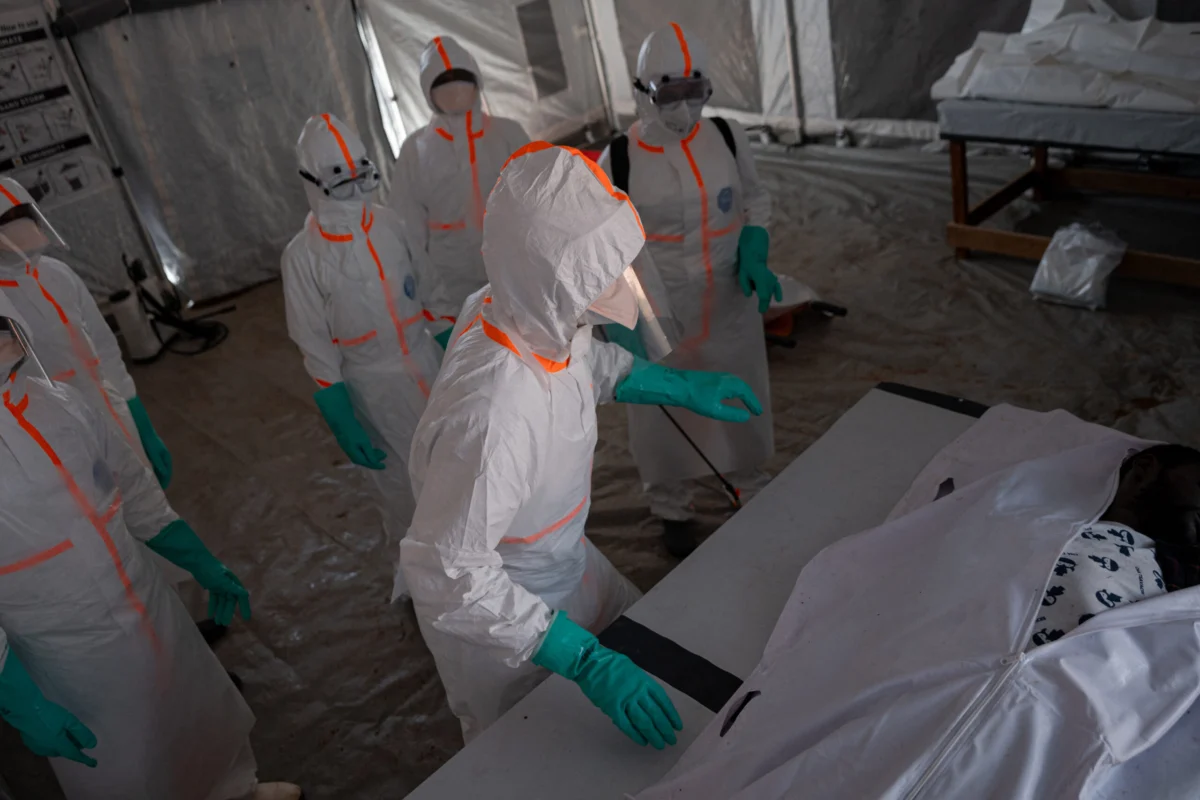
“The Ebola outbreak in the Democratic Republic of the Congo remains a public health emergency of international concern, with the World Health Organization emphasizing its unprecedented speed and the challenge of unmapped transmission chains.”
The World Health Organization (WHO) has maintained its highest emergency designation for the Ebola outbreak in the Democratic Republic of the Congo (DRC) following a critical second review by its expert committee. This decision underscores the persistent and escalating threat posed by the epidemic, which Director-General Tedros Adhanom Ghebreyesus described as spreading with "unprecedented speed." The committee’s reassessment, conducted under the stringent framework of the International Health Regulations, affirms that the outbreak continues to meet the criteria for a Public Health Emergency of International Concern (PHEIC), a designation first applied on May 17th. This prolonged emergency status highlights the complex and multifaceted nature of the crisis, demanding sustained global attention and resources.
The current Ebola outbreak, now the second-largest ever recorded, is distinguished by its rapid expansion, surpassing the speed of any previous epidemic. As of Wednesday, Africa CDC reported 5,021 confirmed cases and 2,378 deaths, figures that represent national totals as of Sunday and translate to a case fatality rate of approximately 47%. This grim toll makes it the deadliest outbreak in the DRC’s history, exceeding the 2,299 deaths recorded during the 2018-2020 epidemic which saw 3,381 confirmed cases. The persistent and aggressive nature of the current epidemic is a significant concern for public health officials worldwide, necessitating a robust and adaptive response.
The emergency committee’s decision to maintain the PHEIC designation is based on a thorough review of epidemiological data, response efforts, and the ongoing public health risks. The Director-General’s assertion that transmission chains are occurring in locations where people are dying, yet remain unidentified, points to a critical gap in surveillance and contact tracing. This lack of visibility into the epidemic’s spread significantly complicates containment efforts, as responders struggle to track and interrupt the virus’s onward transmission. The declaration of a PHEIC triggers a heightened level of international cooperation and resource mobilization, signaling the urgency required to combat the outbreak effectively.
The geographic reach of the outbreak has also expanded, now affecting a sixth province. The addition of Bas-Uele, specifically the Buta health zone, to the list of affected areas—joining Ituri, North Kivu, South Kivu, Haut-Uele, and Tshopo—demonstrates the virus’s capacity to spread across vast distances within the DRC. Ituri province remains the most heavily impacted region. The spread into Tshopo province, and particularly its capital Kisangani, is a cause for significant concern due to the city’s crucial transport links to Kinshasa via road, river, and air. Enhanced screening measures along river routes are being implemented to mitigate this risk, reflecting the strategic challenges posed by the DRC’s extensive and often porous transportation networks.
The economic and logistical dimensions of the Ebola response are as critical as the epidemiological data. While over $450 million has been mobilized for the response, according to Africa CDC, this figure falls short of the $518 million sought by a joint continental preparedness and response plan launched by Africa CDC and WHO in June. This financial shortfall has tangible consequences, impacting the availability of essential resources such as surveillance teams, burial teams, laboratory capacity, and treatment beds, all of which incur recurring costs. Congolese officials are actively pressing international partners to provide greater transparency regarding received funds and their allocation, underscoring the urgent need for sustained and predictable financial support.
Targeted contributions, such as the European Union’s recent announcement of diagnostic tests worth approximately $2.9 million to be donated to Africa CDC, are valuable but do not fully address the broader funding gap. The operational challenges are exacerbated by community resistance and refusals to be tested, which directly hinder surveillance and control activities. Supplying test kits alone does not overcome the fundamental obstacle of community engagement and trust, which are paramount for effective public health interventions.
Director-General Tedros highlighted the complex interplay of factors driving the epidemic, including population movement along extensive road, river, and mining routes, compounded by insecurity and widespread displacement. The WHO’s response page paints a picture of a remote, densely populated setting layered with an ongoing humanitarian crisis, creating a challenging environment for health interventions. The remoteness of many affected areas and the sheer density of the population mean that even small localized outbreaks can quickly escalate if not detected and contained early. The humanitarian dimension of the crisis further complicates response efforts, as displaced populations often lack access to basic services, including healthcare, and are more vulnerable to disease outbreaks.
A particularly novel and crucial element of the evolving response strategy involves the integration of motorbike taxi riders into surveillance and response efforts. In many parts of eastern Congo, these riders are the primary mode of transportation, playing a vital role in moving sick patients to healthcare facilities and transporting the bodies of those who have died. This places them at a critical nexus of viral transmission, bridging households and health facilities. Thierno Balde, WHO’s incident response manager for the outbreak, noted that the organization is now focusing on recruiting these riders as surveillance and response officers, rather than solely viewing them as a potential transmission risk. Providing them with handwashing stations and disinfectant, and educating them on safe practices, is a strategic shift aimed at leveraging their unique access and knowledge of local communities.
The central challenge, as identified by WHO, is the significant number of deaths occurring outside of established treatment centers and outside of known contact lists. Each such death represents an unknown transmission chain that has not been mapped, making it difficult to break. Motorbike riders often reach these households before formal health systems, presenting an opportunity for early detection and intervention. However, this is further complicated by attacks on health workers and ambulances, which have unfortunately become a recurring obstacle in the DRC’s complex security landscape, hindering the delivery of critical medical aid and the implementation of containment measures.
For individuals in the United States, the direct personal risk from this Ebola outbreak remains low. The Bundibugyo virus, though related to the Zaire species which causes the more widely known Ebola hemorrhagic fever, spreads through direct contact with the blood or bodily fluids of an infected or recently deceased person. It does not transmit through the air, unlike highly contagious airborne diseases. No cases have been reported in the United States during this particular outbreak.
However, a specific segment of the population faces a more tangible risk: humanitarian workers, medical missionaries, journalists, and individuals with close family or travel connections to the affected provinces. Americans working in the DRC have contracted the virus, with one US citizen employed by a humanitarian organization requiring medical evacuation to Germany. Federal entry orders have been implemented, requiring travelers arriving from the region to undergo screening at designated airports, a measure that has been repeatedly renewed to bolster public health security.
Individuals planning travel to the affected provinces are strongly advised to consult their organization’s medical advisory and the latest CDC travel health notices prior to departure. Upon return, they should anticipate screening procedures. It is crucial to understand that the global emergency designation does not necessitate changes to routine medical care within the United States.
The lack of an approved vaccine or specific treatment for the Bundibugyo virus remains a significant limitation. The currently licensed Ebola vaccines are designed to target the Zaire species, not this particular strain. While clinical trials for candidate vaccines and therapies are underway, their efficacy and availability for this outbreak are still under evaluation. WHO emphasizes that early supportive care remains critical in saving lives, and that the ultimate medical breakthroughs will stem from the results of these ongoing trials, not from the committee’s emergency status decisions.
It is widely acknowledged that reported case and death totals likely undercount the true extent of the epidemic, given the challenges in reaching remote areas and the ongoing insecurity that impedes reliable data collection. No date has been set for the next review of the PHEIC designation, indicating that the situation remains fluid and demands continued vigilance and international cooperation.
Key Questions Answered
What did WHO decide this week? The WHO’s Emergency Committee, during its second review, determined that the Ebola outbreak in the Democratic Republic of the Congo continues to be a Public Health Emergency of International Concern (PHEIC), the agency’s highest level of alert.
How many cases and deaths are confirmed? As of Wednesday, Africa CDC reported 5,021 confirmed cases and 2,378 deaths, based on national totals from Sunday. Officials caution that the actual figures are likely higher due to reporting limitations.
Why does the funding gap matter? The financial shortfall directly impacts the capacity to sustain critical response activities, including surveillance, safe burials, and the operation of treatment centers. The joint continental plan sought $518 million, with over $450 million mobilized to date, highlighting a pressing need for additional resources to bridge the remaining gap.
Is there a vaccine? Currently, there is no licensed vaccine specifically for the Bundibugyo virus strain causing this outbreak. The existing licensed Ebola vaccines target the Zaire species. Candidate vaccines and treatments are undergoing clinical trials.
Why are deaths in the community significant? Deaths occurring outside of treatment facilities often signify undetected transmission chains. These community deaths can further propagate the virus, particularly if traditional burial practices involve direct contact with the deceased, increasing the risk of transmission.
What is the risk to people in the United States? The risk to the general population in the United States is considered low. The virus requires direct contact with bodily fluids for transmission and does not spread through the air. No cases have been reported in the U.S. during this outbreak.
Who should take specific precautions? Individuals involved in humanitarian work, medical missions, journalism, and those with direct travel or family ties to the affected provinces should exercise heightened caution. Consulting CDC travel health notices and organizational medical advisories is crucial, and travelers should expect screening upon re-entry.
