
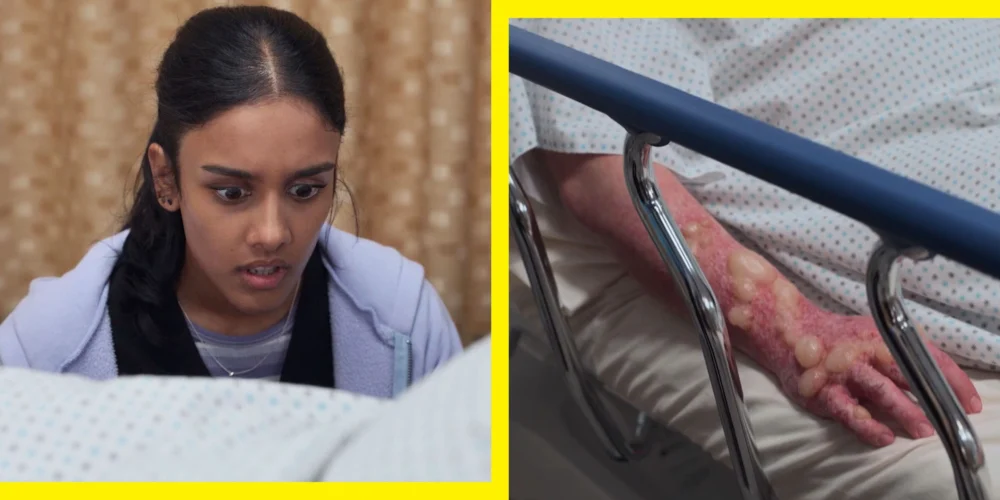
"While The Pitt accurately captures the visceral horror of phytophotodermatitis, real-world cases of ‘lime dermatitis’ typically demand a 24-to-48-hour window for symptoms to peak, transforming a festive afternoon into a painful clinical emergency."
In the high-stakes environment of The Pitt season 2, episode 8, titled "2:00 P.M.," the intersection of a holiday rush and a debilitating cyberattack creates a perfect storm for diagnostic error. As the staff of a major Pittsburgh emergency room navigates the chaos of the Fourth of July without the aid of digital records, they are confronted with a patient whose gruesome skin condition serves as a masterclass in both dermatological mystery and the importance of thorough patient history. The episode highlights "lime dermatitis"—clinically known as phytophotodermatitis—a condition that, while visually shocking on screen, carries significant real-world implications for summer safety and clinical diagnosis.
The Chaos of the Analog ER
As The Pitt continues its ambitious 15-week, real-time rollout—where each episode represents one hour in a single, grueling day—the narrative has reached a boiling point. The series, which stars Noah Wyle as Dr. Robby, attempts to ground the frantic pace of emergency medicine in a hyper-realistic framework. In "2:00 P.M.," the tension is compounded by an external threat: a cyberattack has crippled the hospital’s computer systems.

For modern medical professionals, an "analog" shift is a nightmare scenario. Without Electronic Health Records (EHRs), doctors cannot easily access patient histories, check for drug allergies, or track lab results with a click. They are forced back to pen and paper, relying entirely on their senses and the information they can glean directly from the patient. This setting provides the backdrop for the episode’s most memorable medical case: a man presenting with a terrifying array of "icky-looking" blisters and a spreading rash.
The Case of the "Margarita Burn"
The patient in question is initially seen by student doctors Javadi (Shabana Azeez) and Ogilvie (Lucas Iverson). In the absence of digital guidance, the two find themselves struggling with a learning curve that is both professional and interpersonal. Their confusion is palpable as they examine a patient whose skin appears to be reacting to an unknown toxin. The blisters are large, fluid-filled, and visually reminiscent of a chemical burn, yet the cause remains elusive until their peer, Joy (Irene Choi), intervenes.
Joy’s breakthrough comes not from a lab test, but from a fundamental pillar of medicine: the patient history. By asking the right questions, she discovers the patient spent his Fourth of July outdoors, preparing margaritas in the direct sun. This combination of citrus juice and ultraviolet (UV) radiation is the smoking gun for phytophotodermatitis, colloquially known as "margarita burn" or "lime dermatitis."
The Pathology of Phytophotodermatitis
To understand why this condition is so "visceral" on screen, one must look at the chemistry involved. Phytophotodermatitis is a phototoxic reaction. It occurs when certain plant compounds, specifically furocoumarins (such as psoralens), come into contact with the skin and are subsequently exposed to UVA light.

Limes are the most common culprit, but the reaction can also be triggered by lemons, celery, wild parsnip, parsley, and even certain types of figs. When the UV light hits the psoralens on the skin, it causes a chemical reaction that damages the DNA of the skin cells, leading to cell death and the formation of painful bullae (large blisters). Unlike an allergic reaction, which involves the immune system, this is a direct toxic effect; anyone who gets enough of the chemical on their skin and enough sun exposure will react.
Expert Analysis: Fact vs. Fiction
While The Pitt is praised for its grit, medical experts note that the show took some creative liberties with the timeline and symptomatology to fit the one-hour-per-episode format. Dr. Robert Glatter, an Assistant Professor of Emergency Medicine at Lenox Hill Hospital and a member of the Men’s Health Advisory Board, points out that the show’s "real-time" progression might be slightly faster than biology allows.
"The writers took a bit of liberty in the timeline," Dr. Glatter explains. In the episode, the patient seems to develop these severe blisters within the same afternoon of exposure. However, in clinical practice, phytophotodermatitis is a delayed reaction. Redness and swelling typically emerge 24 hours after exposure, with the peak of blister formation occurring between 48 and 72 hours.
Furthermore, Dr. Glatter notes a discrepancy in the patient’s description of the sensation. In the show, the patient describes the rash as "itchy." According to Dr. Glatter, "lime dermatitis" is rarely itchy in its acute phase. Instead, patients typically report a stinging, burning, or intensely painful sensation, akin to a second-degree thermal burn. The "itch" usually only arrives later, during the healing phase.

The Role of Mentorship and Clinical Judgment
Despite these minor chronological stretches, the episode accurately depicts the hierarchy and collaborative nature of a teaching hospital. Javadi and Ogilvie’s decision to consult Dr. Robby (Noah Wyle) reflects the appropriate protocol for medical students facing a confusing presentation. In the ER, ego can be a liability; recognizing when a case exceeds one’s current knowledge is a vital skill.
The character of Joy represents the "keen eye" often found in top-tier medical students who haven’t yet become jaded by the volume of cases. Her ability to link a mundane activity like "making margaritas" to a severe dermatological emergency is a testament to the diagnostic power of the social history. Dr. Robby’s eventual confirmation of her suspicion serves as the "teaching moment" that defines the series’ educational undertones.
Treatment and Long-Term Implications
The treatment for phytophotodermatitis, as suggested by Dr. Robby in the episode, focuses on wound care and the prevention of secondary infection. For severe cases with large blisters, doctors may need to drain the fluid, though they generally advise against "popping" them at home, as the overlying skin acts as a natural sterile dressing.
A crucial piece of advice given by Dr. Robby involves the use of high-SPF sunscreen. This isn’t just to prevent further burning; it is to mitigate post-inflammatory hyperpigmentation. Once the blisters heal, the affected area often turns a deep brown or purple. This discoloration is caused by the overproduction of melanin in response to the phototoxic injury and can last for months or even years. Constant sun protection is required to ensure these "scars" eventually fade.

Dr. Glatter reinforces this: "Sunscreen is vital to apply when the patient goes outside again to prevent further damage and activation of residual lime juice containing psoralen compounds."
Cinematic Realism and the "Ick" Factor
The special effects team on The Pitt received high marks from medical professionals for the depiction of the blisters. The goal of medical dramas has shifted from the soap-opera style of the 1990s to a more "visceral" realism that mirrors the actual experience of ER staff. By making the "lime dermatitis" look genuinely "nasty," the show communicates the severity of the condition to the audience, transforming a "margarita burn" from a funny anecdote into a serious medical warning.
Conclusion: Lessons from the Pitt
Episode 8 of The Pitt succeeds in blending high-concept drama—the cyberattack and the Fourth of July chaos—with a grounded medical mystery. It serves as a reminder that even in an age of high-tech diagnostics, the most powerful tools a physician possesses are their ears and their eyes.
For the viewers, the takeaway is clear: if you’re squeezing limes for a summer cocktail, wash your hands thoroughly before stepping back into the sun. For the characters in The Pitt, the "2:00 P.M." hour was a trial by fire—or rather, a trial by lime and sun—proving that even when the computers go dark, the intuition of a well-trained medical team remains the hospital’s most resilient system. As the season progresses, the "analog" challenges will likely continue to test the mettle of Dr. Robby and his students, reminding us that in the ER, every hour is a race against both the clock and the limits of human knowledge.
