
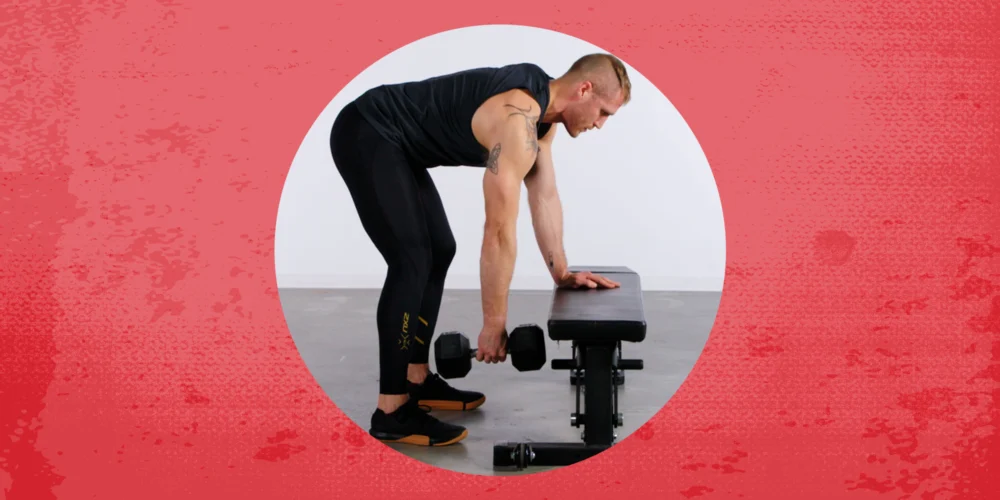
"The efficacy of the dumbbell row lies not in the weight lifted, but in the structural integrity of the stance, which protects the spine while maximizing recruitment of the lats and rhomboids."
The single-arm dumbbell row is a cornerstone of resistance training, yet its ubiquity in the gym often leads to a casual—and frequently incorrect—execution that compromises results and increases injury risk. By shifting from a traditional knee-on-bench position to a more stable, hinge-based stance, lifters can better isolate the musculature of the posterior chain while maintaining a neutral spine. Understanding the biomechanics of this movement is essential for anyone looking to counteract the postural stresses of modern life and build a truly powerful back.
The Biomechanical Necessity of the Row
In the modern era, the human body is frequently subjected to "anterior dominance." Between hours spent hunched over computer keyboards, driving vehicles, and scrolling on smartphones, the average person exists in a state of constant horizontal pushing and internal shoulder rotation. This lifestyle leads to a weakening of the posterior musculature, particularly the rhomboids, middle trapezius, and rear deltoids, which can result in "Upper Crossed Syndrome"—a postural misalignment characterized by rounded shoulders and a forward-leaning head.

According to Ebenezer Samuel, C.S.C.S., fitness director at Men’s Health, rowing movements are the primary antidote to this modern condition. Unlike pushing exercises, which emphasize the chest and anterior deltoids, the row targets the muscles responsible for scapular retraction and depression. By pulling weight toward the body, the lifter strengthens the lats, rhomboids, and rear delts, effectively pulling the shoulders back into a healthy, neutral alignment. However, the benefits of the row are only fully realized when the exercise is performed with technical precision.
The Fallacy of the Knee-on-Bench Position
The most common iteration of the dumbbell row involves the lifter placing one knee and one hand on a weight bench. While this has been a gym standard for decades, fitness experts are increasingly moving away from this recommendation. The primary issue with placing a knee on the bench is the instability it introduces to the hips and spine. When one knee is elevated, it becomes difficult to keep the hips square to the ground, often leading to a pelvic tilt or a rotational torque on the lumbar spine.
Samuel and Brett Williams, NASM-CPT, suggest a more robust alternative: the three-point hinge stance. In this variation, both feet remain firmly planted on the floor in a wide, stable base, while only one hand rests on the bench for support. This "hinge" position allows the lifter to maintain a flat back and square hips, providing a safer environment for the spine under load. By moving the knee off the bench, the lifter engages the core and back extensors more effectively, ensuring that the force is generated by the target muscles rather than through momentum or spinal twisting.
Structural Integrity: The Importance of Stance
To execute the row with maximum efficiency, one must prioritize the setup. In the hinge stance, the feet should be positioned wide enough to create a stable tripod with the supporting hand. The core must remain active to prevent the torso from rotating toward the weight. A crucial, often overlooked cue is the relationship between the hips and the shoulders.

For optimal spinal safety, the shoulders should remain slightly higher than the hips. This slight incline requires the activation of the spinal erectors and back extensors, which act as a protective shield for the lower back. When the hips are higher than the shoulders—a common mistake among beginners—the weight of the dumbbell pulls the upper body into a rounded position, placing excessive strain on the intervertebral discs. By maintaining a proud chest and a slight incline, the lifter ensures that the tension remains on the contractile tissue of the back rather than the passive structures of the spine.
The Scapular Lead: Protecting the Shoulder Joint
One of the most frequent errors in rowing is "arm-pulling," where the lifter initiates the move by flexing the bicep. Not only does this limit the amount of weight that can be moved, but it also neglects the primary target: the back. More importantly, pulling with the arm without first engaging the shoulder blade can lead to shoulder impingement.
Samuel emphasizes that every rep must begin with a deliberate squeeze of the shoulder blade toward the spine. This scapular retraction creates a stable platform for the humerus (upper arm bone) to move. Without this initial squeeze, the head of the humerus can drift forward and upward, potentially irritating the rotator cuff tendons or the labrum. By making the shoulder blade squeeze an intentional first step, the lifter ensures that the rhomboids and mid-traps are fully recruited, leading to better muscle growth and long-term joint health.
The "Hook" Technique and Lat Recruitment
Once the shoulder blade is set, the focus shifts to the pull itself. To maximize lat recruitment, it is helpful to visualize the hand and forearm not as a gripping tool, but as a "hook." If a lifter grips the dumbbell too tightly or focuses on pulling with the hand, the bicep becomes the dominant mover.

Instead, the lifter should think about driving the elbow toward the ceiling and back toward the hip. This "elbow-led" movement ensures that the latissimus dorsi—the largest muscle of the back—is doing the majority of the work. The forearm should remain relatively vertical throughout the movement, acting merely as a bridge between the weight and the elbow. This mental shift helps isolate the back and allows for the use of heavier loads as strength progresses.
The Unilateral Advantage
The dumbbell row is a unilateral exercise, meaning it works one side of the body at a time. This offers several advantages over bilateral movements like the barbell row. First, it allows for a greater range of motion; because the torso isn’t blocked by a long bar, the lifter can pull the weight further back, achieving a deeper contraction of the back muscles.
Second, unilateral training is essential for identifying and correcting muscular imbalances. Most individuals have a dominant side that performs more work during bilateral lifts. By training each arm independently, the lifter ensures that both sides of the back are developed equally, which is vital for both aesthetics and functional strength.
Programming for Strength and Hypertrophy
The dumbbell row is a versatile tool that can be programmed for various goals. For those new to the movement, a higher repetition range (3 sets of 8 to 12 reps) is ideal. This allows the lifter to focus on the mind-muscle connection and master the technical nuances of the scapular squeeze and the hinge stance.

As form becomes second nature, the weight can be increased and the reps decreased (6 to 8 reps per arm) to prioritize myofibrillar hypertrophy and raw strength. Because the row is a foundational movement, it should be a staple in any "pull" day or full-body routine, typically performed after major compound lifts like deadlifts or pull-ups, but before isolation work like bicep curls.
Equipment Essentials
While the technique is paramount, the quality of the equipment can also impact the training experience. For home gym enthusiasts, selecting the right dumbbells is a key consideration:
- For Beginners: The Amazon Basics Hex Dumbbells are a reliable, cost-effective option. The rubber-encased heads prevent rolling and protect flooring, while the knurled handles provide a secure grip for learning the "hook" technique.
- For Comprehensive Strength: A full set, such as the CAP Barbell Hex Dumbbell Set with Vertical Rack, allows for seamless progression. Having a range of weights (up to 150 lbs total) ensures that as the back grows stronger, the resistance can be increased accordingly.
- For Space-Saving Efficiency: The Bowflex Results Series 552 SelectTech adjustable dumbbells are a premium choice for those with limited space. These allow the lifter to switch between 5 and 52.5 pounds with the turn of a dial, making them perfect for drop sets or sharing a home gym with a partner of a different strength level.
Conclusion
The dumbbell row is far more than a simple "pick up and put down" exercise. It is a sophisticated movement that requires core stability, scapular control, and precise biomechanical alignment. By abandoning the unstable knee-on-bench posture in favor of a supported hinge, and by prioritizing the elbow-led pull over bicep dominance, lifters can unlock significant gains in back thickness and width. Ultimately, mastering the dumbbell row is not just about building a more muscular physique; it is about creating a resilient, balanced body that is better equipped for the demands of daily life.
