
"The UK Covid-19 Inquiry is meticulously dissecting the nation’s pandemic response, with its highly anticipated fourth report on vaccine development set to critically evaluate decisions that shaped the course of the crisis and its profound human cost."
This week marks a significant moment in the ongoing national reckoning with the Covid-19 pandemic as the UK Covid-19 Inquiry prepares to release its fourth substantive report. This latest publication will focus on the pivotal development and unprecedented rollout of vaccines, a process that offered a beacon of hope amidst widespread devastation. Following three previous reports that delivered scathing critiques of governmental preparedness and decision-making, this new assessment is expected to shed further light on the complexities and challenges faced by the UK in its response to an unforeseen global health emergency, against a backdrop of over 227,000 lives lost between March 2020 and May 2023, when the World Health Organization declared the "global health emergency" officially over.
Understanding the Mandate and Mechanism of the Inquiry
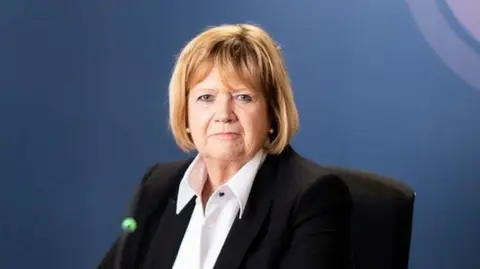
Established and funded by the government, the UK Covid-19 Inquiry operates as an independent, non-adversarial body led by a chair with judicial experience. Its core purpose is not to assign criminal guilt or innocence, but rather to conduct a comprehensive examination of the UK’s preparedness for, and response to, the pandemic. The aim is to create an authoritative historical record, identify lessons learned, and make recommendations to inform future public health emergencies. Chaired by Baroness Hallett, a former judge and crossbench peer who previously oversaw the inquests into the 7/7 London bombings, the inquiry holds significant powers, including the ability to compel witnesses to give evidence and to demand the disclosure of documents. This power is crucial for ensuring transparency and holding decision-makers to account, even if the government is not legally bound to implement its final recommendations. Baroness Hallett has consistently affirmed that "loss and suffering" remain at the absolute centre of the inquiry’s extensive work, acknowledging the profound impact of the pandemic on individuals and families across the nation.
The inquiry’s scope is expansive, covering decision-making by the central UK government alongside the distinct responses of the devolved administrations in Scotland, Wales, and Northern Ireland. Public hearings commenced in June 2023, initiating a rigorous process of evidence collection and scrutiny that has now seen the review of over 600,000 documents and testimonies from more than 350 witnesses. The sheer volume of material underscores the complexity and depth of the investigation.
The Financial Cost of Accountability
The undertaking of such a monumental inquiry inevitably incurs substantial costs. The inquiry itself has spent an estimated £192 million. This figure is augmented by additional expenditures from government departments defending their actions and providing evidence, pushing the total taxpayer cost to over 50% more than initial projections. A detailed breakdown reveals the magnitude of these expenses: the inquiry’s legal costs alone stand at £110.8 million, with running costs at £34 million, staffing at £28.6 million, and engagement and communication at £14.9 million. On the government side, legal costs have reached £56.4 million, and staffing costs £44.6 million, with an additional £3.7 million categorized under "other" expenses.
This considerable financial outlay has drawn scrutiny, particularly from groups like Covid-19 Bereaved Families for Justice, who at one point considered a judicial review over perceived "time-wasting." However, Baroness Hallett has robustly defended the cost and duration of the inquiry, emphasizing that the terms of reference set by then-Prime Minister Boris Johnson were the "broadest of any public inquiry to date." She highlighted that completing the public hearings within four years, given the unprecedented scale of the investigation, represents "an extraordinary achievement." This argument underscores the inherent tension between the public desire for swift answers and the rigorous, painstaking process required for a truly comprehensive and credible inquiry.
Previous Reports: A Litany of Critical Findings
Before the upcoming vaccine report, the inquiry has already delivered three highly critical assessments, laying bare significant systemic failures and missteps in the UK’s pandemic response.
The First Report: Preparedness and Resilience (July 2024)
This initial report, focusing on the UK’s pre-pandemic resilience and preparedness, concluded that both the UK government and the devolved nations "failed their citizens." It identified critical shortcomings in existing emergency planning, asserting that ministers did not sufficiently challenge scientific experts, potentially leading to a delayed and inadequate initial response. Baroness Hallett’s stark summary, "Never again can a disease be allowed to lead to so many deaths and so much suffering," served as a powerful indictment and a call to action for fundamental reforms in governmental approaches to emergency planning. The report highlighted a lack of clarity in command structures, insufficient stockpiling of essential resources, and an over-reliance on a flu-centric pandemic plan that proved ill-suited to the novel coronavirus.
The Second Report: Political Decision-Making (November 2025)
Published a year later, the second report delved into the political decisions made during the early stages of the pandemic. Its findings were particularly damning, revealing a "toxic and chaotic" culture at the very heart of the UK government. This internal dysfunction, characterized by a lack of clear leadership, infighting, and a breakdown in communication, was found to have severely hampered the quality of advice and decision-making during a critical period. A staggering conclusion was that a mere week-long delay in implementing lockdown measures during the first wave could be directly linked to an additional 23,000 deaths in England. The report drew heavily on an unprecedented release of over 7,000 documents, including revealing WhatsApp chats, emails, private diaries, and confidential files, offering an unfiltered glimpse into the high-pressure, often disorganized environment in which crucial decisions were made. These documents painted a picture of a government struggling with internal coherence even as the pandemic raged.
The Third Report: Impact on the NHS (Undated, but referenced after the second report in the original text)
This report focused on the devastating impact of Covid-19 on the National Health Service and wider healthcare provision. It concluded that the "collapse of the NHS was only ‘narrowly avoided’" thanks to the "extraordinary" and often heroic efforts of healthcare workers. However, it also highlighted the immense personal risk these staff faced due to a critical lack of suitable personal protective equipment (PPE). The report meticulously detailed how both Covid patients and those requiring care for other conditions were failed, with individuals deterred from accessing essential healthcare services to ease pressure on the overwhelmed system. The human tragedy of visiting restrictions meant many patients died without their loved ones present, and highly vulnerable individuals, including children in mental health units, women using maternity services, and people with dementia, were left without adequate support. Baroness Hallett succinctly captured the report’s essence: "We coped, but only just," underscoring the immense strain the pandemic placed on the UK’s healthcare infrastructure.
The Forthcoming Vaccine Report: Development and Roll-out
The highly anticipated fourth report, due to be published on Thursday, will scrutinize the monumental task of developing and rolling out the Covid-19 vaccine. This module is expected to examine the scientific collaboration, government procurement strategies, logistical challenges, and public health campaigns that underpinned one of the fastest and most extensive vaccination programmes in history. While the UK’s vaccine effort was widely lauded for its speed and scale, the report will likely delve into the intricacies of decision-making, potential bottlenecks, equity of access, and the scientific advice that guided the strategy. It will be crucial in understanding how effectively the government navigated the scientific uncertainties and immense pressures associated with bringing novel vaccines to market and deploying them across a diverse population.
The Witnesses: Key Testimonies and Contentious Exchanges
The final public hearings concluded in March 2026, featuring hundreds of witnesses from across the political spectrum, civil service, scientific community, and public health bodies, alongside representatives of bereaved families. Their testimonies provided often conflicting, sometimes emotional, and frequently highly critical accounts of the pandemic response.
Boris Johnson, Prime Minister throughout much of the pandemic, began his evidence session in December 2023 with an apology for the "pain and the loss and the suffering" caused. While admitting "unquestionably things we should have done differently," he maintained that ministers had done their "level best" under extraordinarily difficult circumstances. His testimony was characterized by a defence of his government’s actions while acknowledging the imperfections of a crisis response.
Former Chancellor Rishi Sunak also offered an apology to "all those who suffered… as a result of the actions that were taken." However, he firmly denied that his "Eat Out to Help Out" scheme, designed to stimulate the economy, had contributed to increased infections and deaths. This claim stood in contrast to evidence from the government’s chief medical officer, Prof Sir Chris Whitty, and former chief scientific adviser Sir Patrick Vallance, who testified they had not been consulted about the policy. Both Sir Patrick, Sir Chris, and his former deputy Prof Sir Jonathan Van-Tam also revealed the substantial public abuse they received while fulfilling their critical advisory roles.

Former Health Secretary Matt Hancock gave evidence multiple times, controversially stating that the UK’s initial pandemic strategy had been "completely wrong" and that the country should have locked down much sooner. He also criticized the "toxic culture" within government, placing blame squarely on Johnson’s former adviser, Dominic Cummings, while vehemently denying accusations of lying during his tenure.
Dominic Cummings himself delivered highly anticipated and often incendiary testimony, describing a "dysfunctional" government and offering scathing critiques of Johnson’s approach. His testimony included revelations of highly offensive text messages he had sent, characterizing ministers and officials in derogatory terms. While expressing regret for the handling of his infamous trip to Barnard Castle during the first lockdown, he denied that the incident had damaged public trust in the government.
Leaders from the devolved nations, including former First Minister of Scotland Nicola Sturgeon, former First Minister of Wales Mark Drakeford, and representatives from the Northern Ireland Executive, also gave evidence, highlighting the unique challenges and varied approaches taken across the four nations in managing the crisis.
Public Involvement and Future Outlook
The Covid-19 Bereaved Families for Justice campaign group has played a crucial role in advocating for the inquiry and ensuring that the human dimension of the pandemic remains central. Their relentless pursuit of answers and accountability has helped to shape the inquiry’s focus and maintain pressure for thoroughness.

While the public hearings have concluded, the inquiry’s work is far from over. Several additional reports are still pending, promising further insights into critical aspects of the pandemic response:
- The report into procurement is expected in summer 2026, likely examining the rapid acquisition of PPE, ventilators, and other essential supplies, and the controversies surrounding some contracts.
- Reports on the care sector and test-and-trace systems are due towards the end of 2026, which will likely delve into the devastating impact on care homes and the efficacy of the tracing program.
- The remaining three reports, covering other specific modules, are slated for publication in the first half of 2027, ensuring a comprehensive final analysis of the multifaceted crisis.
The UK Covid-19 Inquiry represents a monumental effort to understand a period of unprecedented national challenge. Its findings are not merely historical records; they are intended to be a vital blueprint for future governance, public health strategy, and crisis management. The ongoing release of these reports will continue to shape public understanding and political discourse, aiming to prevent a recurrence of the failures and suffering witnessed during the Covid-19 pandemic.
