
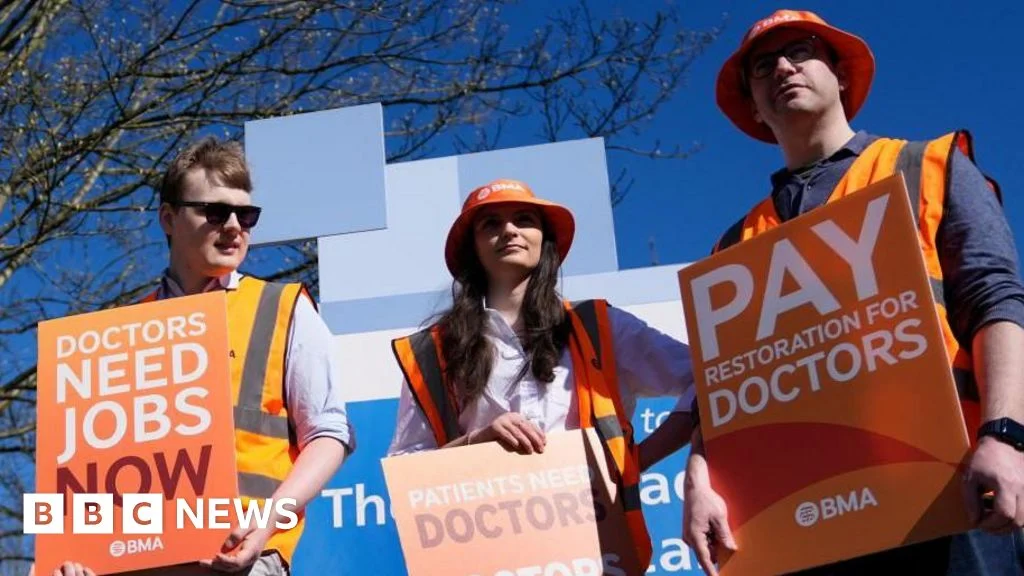
"The chasm between the government and resident doctors widens as both sides accuse the other of intransigence, jeopardizing a resolution to the protracted pay dispute and further straining the National Health Service."
The latest six-day walkout by resident doctors in England, nearing its conclusion, has intensified the bitter standoff between the British Medical Association (BMA) and the government. Health Secretary Wes Streeting has vehemently denied allegations that the government altered a proposed deal at the eleventh hour, asserting that the BMA’s resident doctors’ committee "point blank refused" further negotiations. Conversely, Dr. Jack Fletcher, chair of the BMA committee, maintains that the government unilaterally changed the terms, insisting on a less favourable three-year agreement, casting a shadow of distrust over future talks and prolonging a crisis that continues to impact patient care across the nation.
The current industrial action, set to conclude at 06:59 on Monday, marks one of the longest and most disruptive periods of strikes in the history of the National Health Service. It underscores a fundamental disagreement over pay, conditions, and the future of the medical profession within the UK’s publicly funded healthcare system. The protracted nature of this dispute has not only caused significant operational challenges for hospitals, leading to thousands of cancelled appointments and procedures, but has also eroded public confidence in the ability of both parties to find common ground.
Health Secretary Wes Streeting, speaking on the BBC’s Sunday with Laura Kuenssberg programme, articulated a firm stance, categorically denying any last-minute alteration to the proposed deal. He emphasized the government’s commitment, highlighting that resident doctors had already received a "28.9% pay rise within the first weeks of this Labour government." Furthermore, he detailed an offer still on the table that would provide "an average 4.9% more for this year, 7.1% for some of the lowest-paid doctors." From the government’s perspective, this represents a substantial and responsible offer, particularly given the broader economic context and the immense financial pressures on public services.
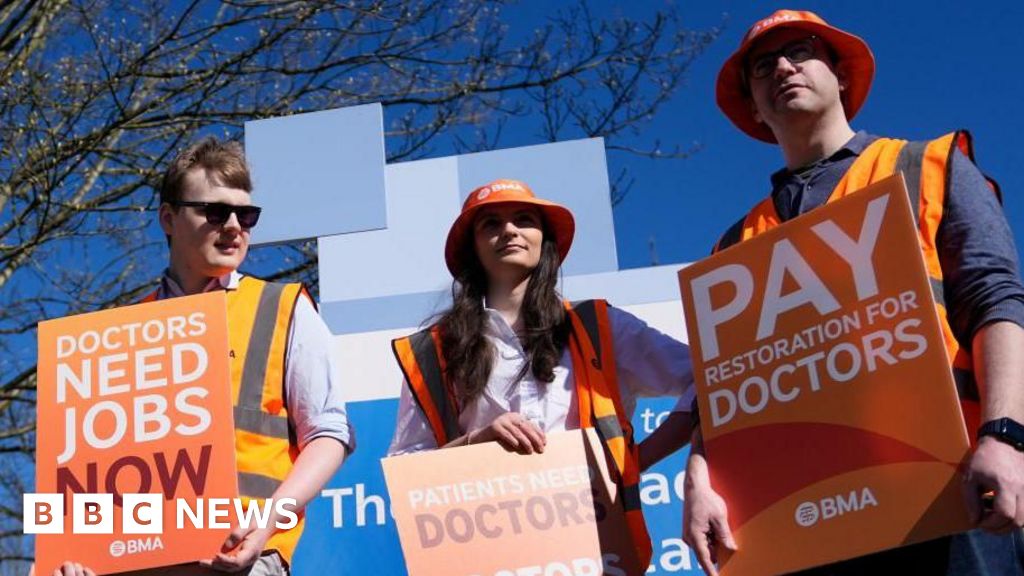
Streeting’s frustration was palpable as he recounted attempts to engage with the BMA leadership, whom he controversially referred to as the "organ grinders" – a term often used to imply that leaders are pulling the strings of their members. He claimed that the committee had "point blank refused" to meet, a sentiment that speaks to a profound breakdown in communication and trust. The Health Secretary suggested that the BMA either "didn’t read the detail" of the proposed agreement thoroughly or found it "more convenient to blame the government" when faced with the task of presenting the deal to their "enormous committee." This narrative paints a picture of a government willing to negotiate but facing an unyielding union leadership.
Adding another layer to the government’s position, Streeting later published a letter on X, expressing his "disappointment and frustration" regarding the latest walkout. In this correspondence, he outlined a direct consequence of the industrial action: the "financial and operational impact of [the BMA’s] latest strikes has made it impossible for us to bring forward 1,000 of the 4,500 extra training places to this year." This revelation not only highlights the immediate cost of strikes but also points to potential long-term repercussions for workforce planning and the pipeline of future doctors in the NHS, a system already grappling with severe staffing shortages. The offer of increased training places was a significant component of the broader package aimed at addressing concerns about career progression and working conditions. Its delay due to strike action represents a tangible loss for both aspiring doctors and the health service.
On the other side of the dispute, Dr. Jack Fletcher, chair of the BMA resident doctors’ committee, presented a starkly different account of the negotiation process. He stated that discussions had initially focused on "one or two-year settlements" but that "at the very last minute" the government had insisted "a three-year deal was the only option, with reduced investment." This alleged change in terms, coming at a critical juncture, is viewed by the BMA as a breach of good faith and a deliberate attempt to impose less favourable conditions. The BMA maintains that this shift undermined the progress made and left them with no option but to continue their industrial action.
Despite the Health Secretary’s claims of refusal to meet, Dr. Fletcher firmly reiterated in a statement to the BBC that the BMA resident doctors’ committee remained "open and willing to meet with the health secretary." He emphasized that throughout the dispute, the BMA has "negotiated in good faith with a genuine desire to reach a resolution." This counter-narrative suggests a union that feels misrepresented and genuinely seeks a constructive path forward, but one that is also committed to its members’ demands.
The core of the BMA’s argument revolves around the concept of "pay erosion." While acknowledging the "33% pay rises over the past four years" cited by the government, the BMA contends that these increases do not adequately address the significant real-terms pay cuts experienced by doctors since 2008. They argue that once inflation is factored in, doctors are still being paid "a fifth less than they were in 2008." This substantial reduction in purchasing power over more than a decade is the driving force behind their demand for "full pay restoration" – a term that signifies not just annual increases but a reversal of historical losses. The BMA believes that inadequate pay not only impacts the livelihoods of current doctors but also contributes to burnout, a decline in morale, and a growing exodus of medical professionals to countries with better remuneration and working conditions, further exacerbating the NHS staffing crisis.
The current six-day walkout is part of a series of industrial actions that have plagued the NHS for over a year, causing unprecedented disruption. Each strike period leads to thousands of elective procedures and outpatient appointments being postponed, creating further backlogs in an already overstretched system. While emergency care is typically maintained, the cumulative impact on patient waiting lists and the emotional toll on both patients and remaining staff is immense. The financial cost of these strikes, including covering locum staff and managing rescheduled appointments, also runs into millions of pounds, further straining the NHS budget.
The broader context of this dispute is the immense pressure facing the NHS. Decades of underfunding, an aging population with increasing healthcare needs, and the lingering effects of the COVID-19 pandemic have left the service in a precarious state. Staffing shortages are pervasive across various professions, and the retention of skilled medical professionals is paramount. Resident doctors, often the backbone of hospital wards, are crucial to the day-to-day functioning of the NHS. Their dissatisfaction, therefore, poses a significant threat to the service’s long-term sustainability.
The political implications of this dispute are also considerable, particularly for a relatively new Labour government that has inherited this industrial action. The government is caught between the imperative to demonstrate fiscal responsibility and the public expectation to resolve a crisis in a cherished national institution. Finding a resolution that is perceived as fair by both medical professionals and the wider public, while also being financially sustainable, is a tightrope walk.
As the current walkout concludes, the immediate challenge remains the re-establishment of a credible negotiation channel. The conflicting narratives surrounding the "last-minute change" in the deal have severely damaged trust, making future dialogue even more arduous. For any meaningful progress to occur, both sides will need to move beyond accusations and engage in genuine, transparent discussions. This may involve revisiting the structure of the proposed deal, perhaps exploring independent mediation, or identifying new areas of compromise beyond just headline pay figures, such as improvements to working conditions, career progression, and addressing the impact of long hours.
Ultimately, the resolution of this dispute is critical not only for the resident doctors and the government but, most importantly, for the millions of patients who rely on the National Health Service. The ongoing impasse risks further destabilizing an already fragile healthcare system, prolonging suffering, and undermining the very foundation of public health in the UK. A sustainable solution requires not just financial agreement but a rebuilding of trust and a shared vision for the future of the medical workforce.
