
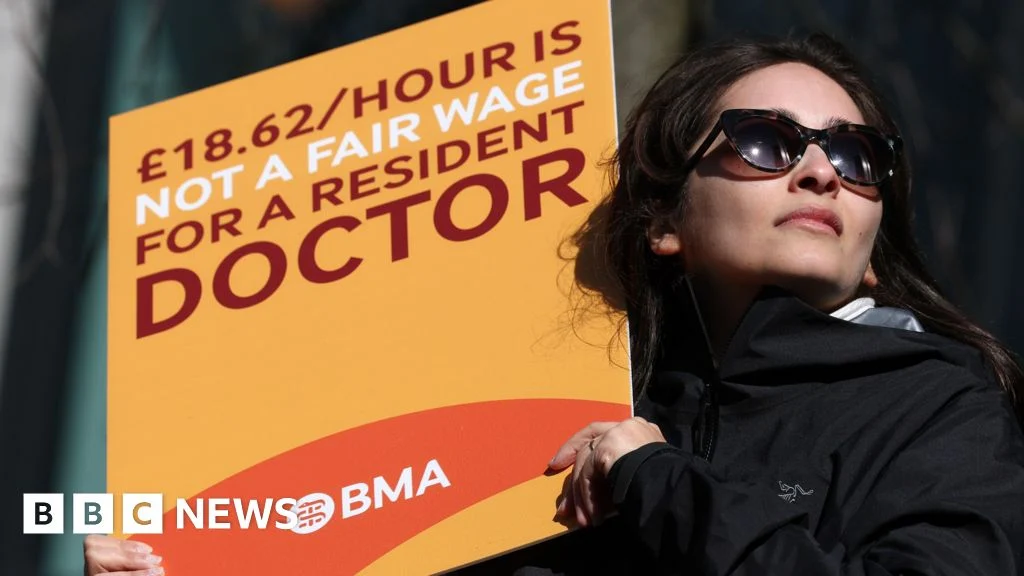
"Doctors’ strikes, despite their disruptive intent, have paradoxically revealed instances of heightened efficiency and quicker patient flow within some NHS trusts, acting as ‘firebreaks’ that force a re-evaluation of routine operations. However, this temporary stability comes at a significant financial and systemic cost, raising critical questions about the long-term sustainability of crisis-mode healthcare."
This intriguing phenomenon, observed during numerous walkouts by resident doctors in England, suggests that under the extreme pressures of industrial action, the National Health Service can sometimes streamline its processes, leading to faster patient assessments and discharges. While seemingly counterintuitive, this efficiency is largely attributed to the redeployment of highly experienced senior medical staff to frontline roles. Yet, this fragile equilibrium is maintained through costly temporary measures and the postponement of essential care, casting a shadow over the true health of the system and the ongoing dispute over pay and working conditions.
The declaration of a strike by resident doctors in England, typically met with public apprehension and ministerial condemnation, has begun to elicit a surprising reaction within some corners of the National Health Service: a "sigh of relief." As one hospital boss candidly admitted, these periods of industrial action can function as a "firebreak," offering an unexpected respite from the relentless, often chaotic, pace of daily operations. With the latest doctors’ strike having recently concluded, NHS trust leaders are once again reflecting on how the system, under specific conditions, appeared to run more efficiently, sometimes even smoother than on non-strike days.
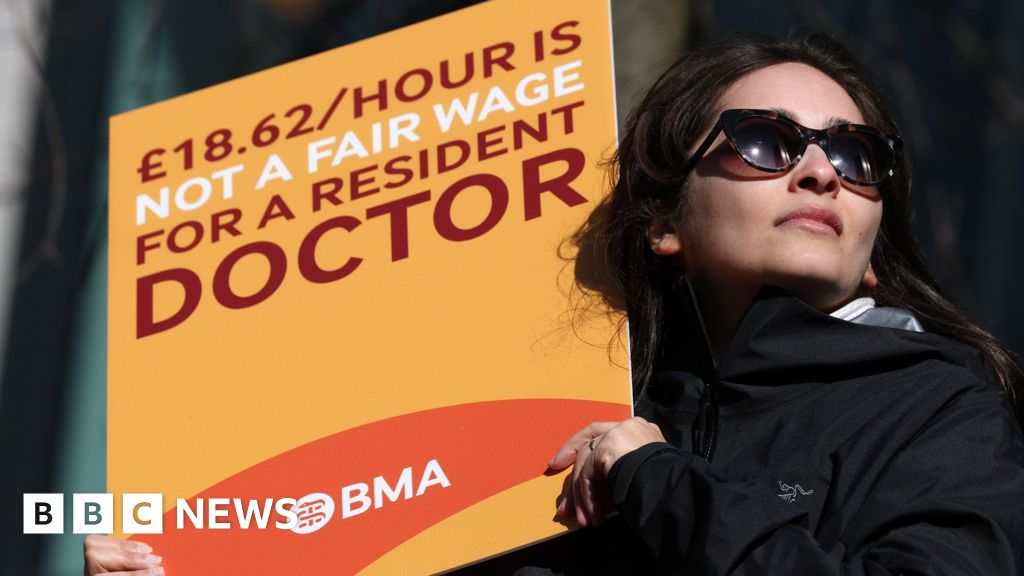
Far from the predicted chaos, anecdotal evidence from previous walkouts points to shorter patient waiting times, accelerated decision-making processes, and notably calmer hospital corridors. This counterintuitive outcome, however, is invariably underpinned by patched-up, costly, and ultimately unsustainable solutions. The recent five-day walkout in December, the fifteenth in a protracted dispute over pay and working conditions, saw approximately 25,000 resident doctors – members of the British Medical Association (BMA) – absent from their posts daily, according to NHS England figures. This action, strategically timed to precede the Christmas season, was publicly denounced by ministers as "irresponsible and dangerous." Yet, internally, at least one trust chief executive, whose hospital saw a reprieve from seasonal flu pressures, observed a starkly different mood. They noted that the presence of consultants at the "front door" of emergency departments led to swift decisions and a subsequent fall in admissions, describing lower bed occupancy before Christmas as "a gift."
The Dynamics of Direct Decision-Making
The key to this observed efficiency lies in the strategic redeployment of highly experienced consultants and other senior doctors. When these senior clinicians take charge in Accident & Emergency (A&E) departments, they are able to quickly assess patients, make definitive diagnoses, and determine whether urgent treatment is required or if safe redirection to community health services is appropriate. This contrasts sharply with routine operations, where A&E departments are predominantly staffed by early-career resident doctors who are still in training for specialist roles. These doctors, by necessity, often order more diagnostic tests, consult multiple layers of senior opinion, and follow more cautious, multi-step pathways – each adding time to the patient journey.
A study conducted at King’s College Hospital following the initial resident doctor strikes in 2023 provided empirical support for this phenomenon. Researchers found that patients were seen, treated, and discharged faster on strike days, despite a reduced overall staff presence. Crucially, the study reported no discernible rise in patient deaths or re-admissions, suggesting that the accelerated care did not compromise safety. Similar patterns emerged in performance figures elsewhere; for instance, at the Royal Berkshire Hospital, the critical four-hour A&E target was met in 82% of cases during December’s walkout, a significant improvement over the 73% achieved the preceding week. While other variables might have played a minor role, the improvement coincided directly with the period of industrial action.
Dr. Layla McCay, director of policy at the NHS Alliance, representing trusts, acknowledged these observations. "We have heard, anecdotally, that the enhanced presence of consultant colleagues in A&E, with their additional experience, can mean quicker, less risk-averse decision-making, which is good for patients," she stated. However, she was quick to caution that "this is a temporary, unsustainable solution with knock-on effects." Dr. Damian Roland of the University of Leicester further elucidated this, noting that when consultants assume frontline roles, decision-making becomes inherently more direct. "The more doctors involved in a patient pathway, the longer everything takes," he explained, highlighting a potential systemic inefficiency in standard care delivery.
Patients themselves have, in some instances, noted the difference. One woman described her strike-day visit as "a blessing," while a mother recounted her son, frequently admitted with asthma, receiving the quickest treatment he’d ever had because "an experienced consultant just got him sorted." NHS England also reported that the service successfully discharged thousands of patients safely home to their families before Christmas, despite the ongoing industrial action. Learning from these enforced periods of operational change, some hospitals are even attempting to integrate "strike-day" strategies into their routine. At one trust, cardiology consultants are now routinely placed at the front door every Friday, a direct result of lessons learned from deployments during industrial action. Nick Hulme, former chief executive at East Suffolk and North Essex NHS Foundation Trust, explained the rationale: "Cardiologists rarely admit someone with chest pain. Junior doctors are more cautious. After seeing the impact of the strikes, we realised this was a smart way to reduce admissions ahead of the weekend."
The Complex and Costly Reality
Despite these surprising operational efficiencies, the strike-day model is far from a sustainable blueprint for healthcare. The apparent gains are achieved by stripping out significant portions of normal work. Planned operations and non-urgent appointments are routinely postponed, contributing to an already burgeoning backlog of elective care. While NHS England suggests 95% of routine treatment continues, the cancelled appointments represent a substantial disruption to patient care and contribute to increased waiting lists, causing anxiety and potentially worsening conditions for those awaiting procedures.
Moreover, the financial burden of maintaining emergency services during strikes is immense. Senior doctors redeployed to the frontline must cancel their own scheduled commitments, and the cost of securing additional consultant cover is exorbitant. Premium rates for a single night shift can exceed £3,000. A BBC Freedom of Information request in 2023 revealed that the cost of consultant cover incurred by trusts was, on average, three times higher than the savings made from withheld resident doctor pay.
The overall financial picture remains complex and, according to experts, largely opaque. The Nuffield Trust estimates that the combined costs of industrial action in the NHS, encompassing premium rates for cover and the extensive administrative work required to reschedule thousands of appointments, hover around £30 million per strike day. The government’s own estimate is even higher, at approximately £50 million. While hospitals may recover some income when postponed procedures are eventually carried out, the immediate cash flow impact and the administrative overhead are substantial. Sally Gainsbury of the Nuffield Trust points out the lack of transparency: "The financial costs of industrial action in the NHS are fairly opaque," noting that neither the government nor NHS England has provided a detailed breakdown of these figures.
The Unravelling Future: Sustainability and Systemic Strain
Beyond the immediate financial and operational costs, the long-term sustainability of the NHS is critically undermined by prolonged industrial action. Consultants, though vital during strikes, are a finite resource. Many report feeling exposed when returning to frontline roles they haven’t occupied for years, while others experience significant fatigue and frustration due grappling with an increased workload. The reliance on "emergency mode" for extended periods is simply not a stable or healthy way to run a national health service. As Professor Carol Propper of Imperial College succinctly puts it, "It simply isn’t a stable way to run hospitals."
Perhaps the most damaging long-term consequence is the disruption to resident doctor training. Resident doctors, formerly known as junior doctors, constitute nearly half of the medical workforce in the NHS and are the future consultants and specialists. Interrupting their training not only impacts their immediate development but also threatens the pipeline of senior medical staff for decades to come. Dr. Jack Fletcher of the BMA articulates this existential threat: "When the consultants of today retire, we have no one to replace them as [trainee doctors] have left due to a combination of inadequate pay and conditions, and a lack of jobs."
Furthermore, the "benefits" observed during strike days are ultimately limited by the pervasive pressures on the wider healthcare ecosystem. As one senior hospital manager noted, "An NHS getting by over a strike period is completely different to managing without resident doctors all of the time," adding, "There are benefits to a strike day, but they are ultimately limited before you hit the ceiling of other pressures from outside the trust." Community health services, already stretched on a daily basis, absorb additional strain when hospital operations are in crisis mode, creating a cascade effect throughout the system.
The paradox of doctors’ strikes revealing unexpected efficiencies forces a critical examination of routine NHS operations. Does the system, in its normal state, operate with unnecessary layers of bureaucracy, excessive caution, or inefficient patient pathways? While consultant-led care on the frontline has clear benefits, the financial and human resource constraints make its widespread, routine implementation challenging.
Fifteen walkouts have now transpired without a resolution to the underlying dispute over pay and working conditions. This raises fundamental questions that demand answers: If these strikes are having such a nuanced and, in some respects, limited impact on the force for a deal, why do they persist? And was the government’s rhetoric, consistently claiming that strikes inflict significant disruption and harm on patients, fully accurate in light of these observed, albeit costly, operational efficiencies? The ongoing standoff highlights an urgent need for a sustainable, long-term solution that addresses both the immediate challenges of patient care and the foundational issues of workforce morale, training, and retention, ensuring the future viability of the National Health Service.
