
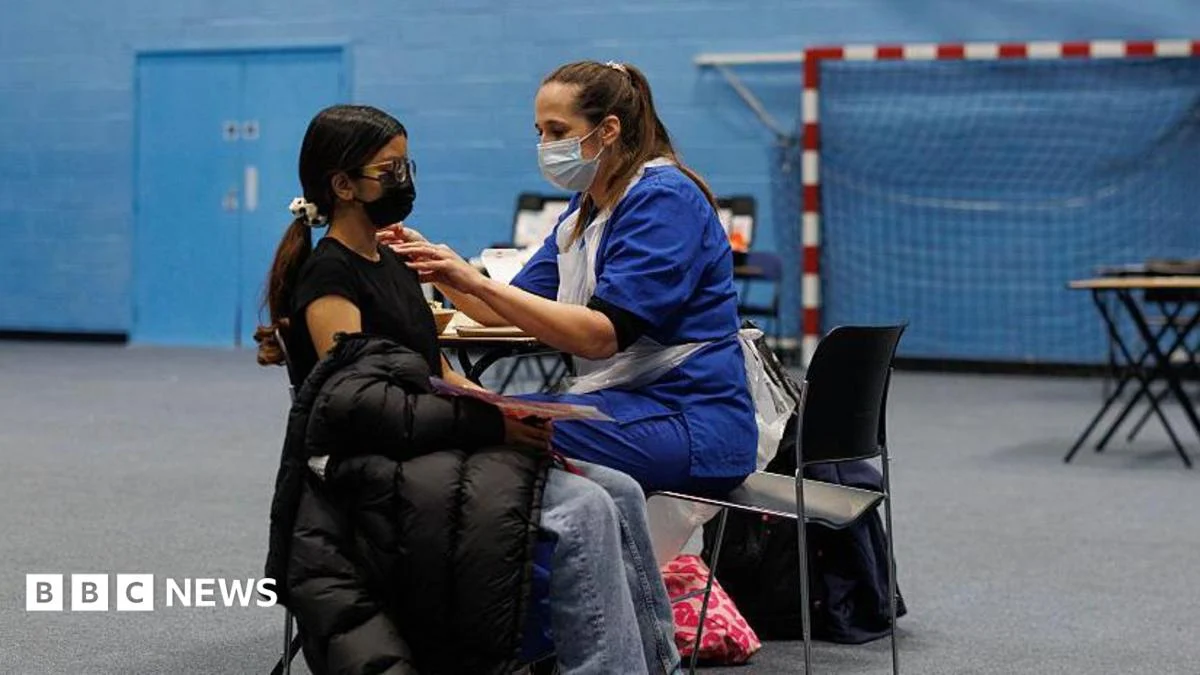
"A pivotal shift in public health strategy sees UK experts now advocating for routine MenB vaccination for all 15-year-olds, a crucial step to safeguard adolescents against a devastating disease following recent outbreaks."
This landmark recommendation from the Joint Committee on Vaccination and Immunisation (JCVI) marks a significant re-evaluation of the threat posed by Meningitis B (MenB) to adolescents. Driven by the emergence of the UK’s largest and most rapidly expanding outbreak in Kent, which tragically claimed two lives, the new guidance prioritizes the protection of secondary school-aged individuals who are increasingly recognized as a vulnerable group due to their social behaviors and immunological susceptibility. The move signals a proactive approach to public health, moving beyond reactive measures to establish a long-term preventive framework against a potentially fatal infection.
The Joint Committee on Vaccination and Immunisation (JCVI), the independent expert advisory body to the UK government on immunization, has officially recommended that all teenagers in the UK should be offered a free vaccine against Meningitis B (MenB) at approximately 15 years of age. This represents a significant departure from previous guidance, which did not support a routine adolescent MenB vaccination programme. The catalyst for this revised stance stems directly from heightened concerns following a substantial and rapidly expanding MenB outbreak in Kent earlier this year, which resulted in 29 confirmed or suspected cases and tragically led to two fatalities.
Meningitis B is caused by the bacterium Neisseria meningitidis serogroup B, which can lead to invasive meningococcal disease (IMD). IMD is a severe, life-threatening infection characterized by inflammation of the membranes surrounding the brain and spinal cord (meningitis) and/or a serious blood infection (sepsis). The onset of symptoms can be sudden and rapidly progressive, often mimicking less serious illnesses such as the flu, making early diagnosis challenging. Initial symptoms may include fever, headache, vomiting, muscle pain, and cold hands and feet. As the disease progresses, more specific signs of meningitis such as a stiff neck, sensitivity to light (photophobia), and confusion can appear. Sepsis, or blood poisoning, can manifest with a distinctive rash of small red or purple spots that do not fade under pressure (the ‘tumbler test’), although not all cases present with a rash. The rapid deterioration of a patient’s condition underscores the critical importance of swift medical intervention.
The long-term consequences for survivors of MenB disease can be profound and life-altering. These may include permanent neurological damage such as learning difficulties, memory problems, and behavioral changes, as well as physical disabilities like hearing loss, vision impairment, and epilepsy. In cases of severe sepsis, damage to blood vessels can necessitate amputations of limbs or digits. The psychological impact on individuals and their families coping with these severe outcomes can be immense, highlighting the devastating reach of this preventable disease. Vaccination, therefore, is not merely about preventing death but also about averting a lifetime of disability and suffering.
The JCVI’s shift in recommendation is particularly significant given its previous assessment that a universal adolescent MenB vaccination program was not deemed cost-effective for the UK. The "recent new evidence" cited by the committee likely encompasses an updated epidemiological understanding of MenB prevalence and transmission dynamics among adolescents, coupled with refined analyses of vaccine efficacy, duration of protection, and the broader public health benefits, including potential herd immunity effects. The Kent outbreak undeniably played a critical role in bringing these factors into sharper focus, demonstrating the acute vulnerability of this age group and the potential for rapid, devastating spread.
Adolescents, particularly those around the age of 15, are identified as a high-risk group due to their evolving social behaviours. Activities involving close contact, such as kissing, sharing drinks, or even sharing vaping devices, facilitate the transmission of meningococcal bacteria, which often colonize the back of the throat without causing illness in carriers. However, these asymptomatic carriers can readily spread the bacteria to others, some of whom may develop invasive disease. The transition to secondary school, engagement in larger social circles, and eventual progression to university environments further amplify these transmission risks, creating a fertile ground for outbreaks.
In recognition of the immediate threat posed to young people entering higher education, a targeted, one-off vaccination campaign is already being rolled out across the UK this summer. This initiative specifically offers free MenB jabs to young people heading off to university for the first time. University settings are notorious for close living quarters and intense social interaction, making them ideal environments for the spread of infectious diseases, including meningitis. This preemptive campaign serves as a crucial precautionary measure to protect a particularly vulnerable cohort and mitigate the risk of similar outbreaks to the one observed in Kent.
The JCVI’s recommendation now passes to ministers in each of the UK’s four nations – England, Scotland, Wales, and Northern Ireland. These governmental bodies will be tasked with evaluating the financial implications of introducing a routine MenB vaccination program for secondary school-aged individuals into the National Health Service (NHS). While the vaccine itself would be free for individuals, the logistical and financial costs of procurement, distribution, and administration across a large adolescent population would be substantial. Decisions will hinge on a careful balance of public health benefit against economic viability, a standard consideration for all national immunization programmes.
This new advice stands in stark contrast to the initial government and JCVI position immediately following the Kent outbreak, when parents rushed to private pharmacies to purchase the vaccine for their teenage children. At that time, the official stance was that wider vaccination of teenagers was not necessary. The reversal underscores the dynamic nature of public health policy, which must continuously adapt to new evidence and evolving epidemiological landscapes. The JCVI’s current position acknowledges the heightened likelihood of teenagers contracting and falling severely ill from MenB, necessitating a more proactive, universal protective measure. For optimal protection, a two-dose regimen is typically required for individuals who have not previously been vaccinated against MenB. However, for those who received the MenB vaccine as infants – a program introduced for babies born on or after 1 July 2015 – a single booster dose during adolescence would likely suffice to enhance and extend their protection.
The existing MenB vaccination program for infants was established because babies are disproportionately affected by invasive meningococcal infections and possess less developed immune systems to combat them. However, this means that the current cohort of teenagers and young adults, specifically those over the age of 11, did not receive this vaccine as part of their routine childhood immunizations, leaving a significant gap in population immunity that the new recommendation seeks to address.
The healthcare infrastructure, particularly community pharmacies, is poised to play a vital role in the potential rollout of a national adolescent MenB vaccination program. Olivier Picard, chair of the National Pharmacy Association, described the recommendation as "good news," emphasizing the existing "gap in our national vaccination strategy" that recent outbreaks have exposed. He affirmed pharmacies’ readiness to deliver these crucial vaccines, highlighting their accessibility and established track record in administering various immunizations, including flu jabs and, more recently, COVID-19 vaccines. Utilizing pharmacies could offer a flexible and widespread delivery mechanism, complementing school-based programs or general practitioner services, to ensure high uptake rates across the adolescent population.
Prof Wei Shen Lim, who chairs the Joint Committee on Vaccination and Immunisation (JCVI) advisory group, articulated the gravity of the situation: "Invasive meningococcal disease is a rare but very serious illness, which can have a devastating impact on lives." He acknowledged the collaborative efforts with meningitis charities and expressed gratitude to all who responded to consultations, particularly those who shared the "lived experiences" of loved ones who tragically died or suffered life-changing complications. This emphasizes the ethical and humanistic dimensions that underpin the JCVI’s scientific deliberations.
Dr Tom Nutt, head of the prominent campaign group Meningitis Now, hailed the recommendation as a "significant moment" in the ongoing battle against the disease. Speaking to the BBC, he stated, "Today’s recommendation is an important step towards ensuring that far more young people are protected from this devastating disease." The unwavering advocacy from patient groups and charities has been instrumental in raising awareness and pushing for policy changes that prioritize public health and safeguard vulnerable populations.
The potential introduction of a routine MenB vaccination for adolescents represents a proactive and comprehensive public health measure. It aims to not only directly protect individuals during a period of increased risk but also to contribute to broader community protection through reduced transmission. By addressing the specific vulnerabilities of teenagers and learning from the lessons of recent outbreaks, the UK has the opportunity to significantly reduce the incidence of a disease that, though rare, carries an exceptionally high burden of severe illness, disability, and mortality. The decision now rests with the UK nations to transform this expert recommendation into a tangible, life-saving programme.
