
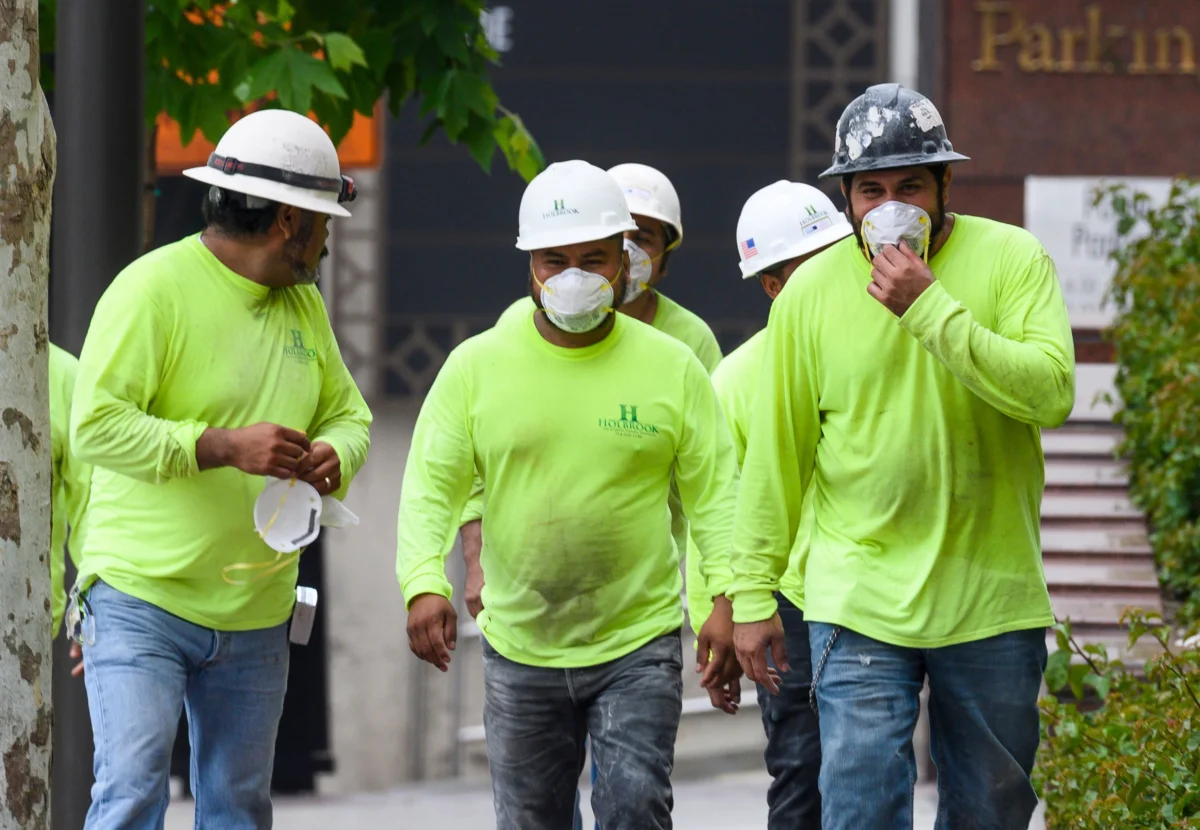
"Outdoor workers can inhale many times more fine particulate matter than sedentary adults in the same area, making them exceptionally vulnerable to wildfire smoke. Washington’s unique wildfire smoke standard aims to address this disparity, but its effectiveness hinges on proper implementation and understanding of nuanced requirements, especially regarding respirator use."
Wildfire smoke, a growing concern across the nation, poses a significantly elevated risk to outdoor workers compared to the general population. While residents may be advised to stay indoors and utilize air filtration systems, those laboring outside face prolonged and intense exposure to fine particulate matter (PM2.5). This exposure is amplified by two critical factors: the sheer duration of time spent outdoors and the increased breathing rate associated with physical exertion. An orchard crew or a framing crew working an eight to ten-hour shift will inevitably inhale a far greater dose of harmful particles than an individual making brief excursions outside. This disparity underscores the urgent need for robust occupational safety measures, a need that Washington state has attempted to address with its pioneering wildfire smoke standard.
Washington stands as one of a select few states with an enforceable wildfire smoke standard, a crucial distinction in the absence of a federal OSHA standard for such events. This means that the level of protection afforded to outdoor workers can vary dramatically depending on the state line they are working on. The Washington rule, codified under chapter 296-820 WAC, operates as a tiered system, with employer obligations escalating as PM2.5 concentrations rise, rather than a simple on-off switch. This progressive approach aims to provide increasing levels of protection as air quality deteriorates.
The rule meticulously tracks hourly average PM2.5 levels, correlating them with Air Quality Index (AQI) values to define escalating employer responsibilities. At PM2.5 concentrations ranging from 20.5 to 35.4 micrograms per cubic meter (roughly AQI 72-100), employers are mandated to notify workers of the hazardous conditions, ensure only trained employees work outdoors, and consider exposure control measures. During this phase, employers are also encouraged to provide N95 respirators at no cost upon request.
As air quality worsens, reaching 35.5 to 250.4 micrograms per cubic meter (roughly AQI 101-350), the employer’s obligations intensify. In this band, which encompasses the majority of wildfire smoke days, employers are required to implement exposure controls and make N95 respirators available at no cost for voluntary use. This is a critical step in mitigating inhalation risks, though it hinges on worker adoption and proper usage.
Further escalation occurs when PM2.5 levels climb to 250.5 to 500.3 micrograms per cubic meter (roughly AQI 351-848). At this point, employers must directly distribute N95 respirators to each exposed employee, moving beyond mere availability. Encouraging their use and ensuring access to clean air become paramount.
The most stringent protections are triggered at PM2.5 concentrations of 500.4 micrograms per cubic meter and above. In these severe conditions, employers must implement a comprehensive, mandatory respiratory protection program. This program includes essential elements like fit testing, medical evaluations, and requirements for workers to be clean-shaven to ensure an effective seal. The exception to the clean-shaven rule is for loose-fitting powered air-purifying respirators (PAPRs), which do not rely on a facial seal and are thus suitable for individuals who cannot or choose not to shave. Furthermore, at 555 micrograms and above, the required respirator must possess an assigned protection factor of 25 or more, indicating a need for protection beyond a standard filtering facepiece respirator.
It is crucial to recognize that neighboring states may have different trigger points and regulations. Oregon, for instance, operates under its own distinct rule with different thresholds. This divergence can create significant challenges for contractors whose crews frequently cross state lines, necessitating a careful understanding and application of multiple regulatory frameworks.
A particularly misunderstood aspect of the wildfire smoke standard pertains to the distinction between voluntary and required respirator use, and its implications for fit testing. An N95 respirator’s efficacy is heavily dependent on its ability to create a tight seal against the face, preventing air from bypassing the filter. A fit test is a formal process to verify that a specific respirator model and size achieves this seal on an individual user. Under Washington’s rule, a full respiratory protection program, including fit testing and medical evaluations, is only mandated when PM2.5 levels reach 500.4 micrograms per cubic meter or when an employer explicitly requires respirator use. Below these thresholds, when respirator use is voluntary, fit testing is not required.
This means that on a significant number of smoke-impacted days, workers may be wearing N95 respirators that have never been officially tested to ensure a proper seal. While the rule acknowledges this reality and offers guidance on how workers can improve the seal of their respirators, the inherent variability in fit without formal testing remains a concern. Practical steps recommended include ensuring both straps are properly positioned around the head, molding the nose clip securely to the bridge of the nose, and performing a seal check by exhaling gently and feeling for air leaks.
Facial hair presents a significant obstacle to achieving an effective seal with most tight-fitting respirators. Stubble and beards can create gaps along the jawline and cheeks, compromising protection. When respirator use is mandated, workers are typically required to be clean-shaven. This is where loose-fitting PAPRs offer a valuable alternative, providing effective respiratory protection without the need for a facial seal.
Another critical consideration is the increased breathing resistance imposed by respirators. Individuals with pre-existing heart or lung conditions should consult with a healthcare professional to determine the appropriateness of wearing a respirator during physically demanding work, as the added effort can strain the cardiovascular system.
The distinction between effective respiratory protection and less protective alternatives is frequently a point of confusion. Washington’s Department of Labor and Industries (L&I) guidance is notably direct on this matter. Items such as bandanas, scarves, standard facemasks, and even t-shirts worn over the nose and mouth are explicitly stated as providing "no protection against wildfire smoke." Similarly, facemasks and dust masks that are not certified by the National Institute for Occupational Safety and Health (NIOSH) are deemed inadequate for protecting workers.
The case of KN95 masks is particularly nuanced. While they may visually resemble N95 respirators, L&I clarifies that KN95s are not NIOSH-certified and therefore "do not provide protection from wildfire smoke." Genuine N95 respirators will bear NIOSH approval markings printed directly on the mask. The agency’s unequivocal stance is that a NIOSH-approved N95 respirator is the minimum standard for protection against wildfire smoke.
With the Spokane Regional Clean Air Agency issuing an air quality alert due to widespread smoke from local and regional fires, and forecasts predicting worsening air quality, understanding these protections is immediately relevant for workers in affected areas. The current conditions place many worksites in the AQI bands where N95s must be made available, and potentially in those requiring direct distribution.
Workers facing such conditions can and should ask their employers pertinent questions to ensure compliance and their own safety. Key inquiries include: "What PM2.5 or AQI figure is the site using, and where is that data coming from?" Employers can utilize direct-reading particulate sensors calibrated according to the rule’s specifications or rely on published government data. Knowing the data source helps ascertain whether real-time monitoring or estimations are being employed.
Another vital question is: "Are N95s available on site right now, at no cost, and in more than one size?" The availability of multiple sizes is crucial for achieving a proper fit, which is paramount for effective protection.
Finally, workers should inquire: "Has anyone received wildfire smoke training this season?" Wildfire smoke training is a prerequisite for outdoor work at the lowest threshold of the rule, and employers are obligated to notify workers each time air quality conditions cross a defined threshold.
Beyond employer responsibilities, workers should be vigilant about their own health. Symptoms such as coughing, chest tightness, wheezing, headache, dizziness, and unusual fatigue should be reported, and work should be paused rather than pushed through. More severe symptoms like difficulty breathing, chest pain, or confusion necessitate immediate medical attention. Individuals with asthma or COPD should ensure their rescue medication is readily accessible.
Concerns regarding employer non-compliance can be raised with Washington L&I, and the rule explicitly prohibits retaliation against workers who voice safety concerns or report symptoms. Agricultural workers, who often face significant exposure risks, are covered by a parallel rule and can request safety materials in their preferred language.
The evolving nature of occupational safety standards in the face of climate-driven threats like wildfire smoke necessitates ongoing vigilance and reporting. As state regulations continue to adapt and the possibility of federal rulemaking on wildfire smoke exposure emerges, staying informed is critical for protecting the health and well-being of outdoor workers.
