
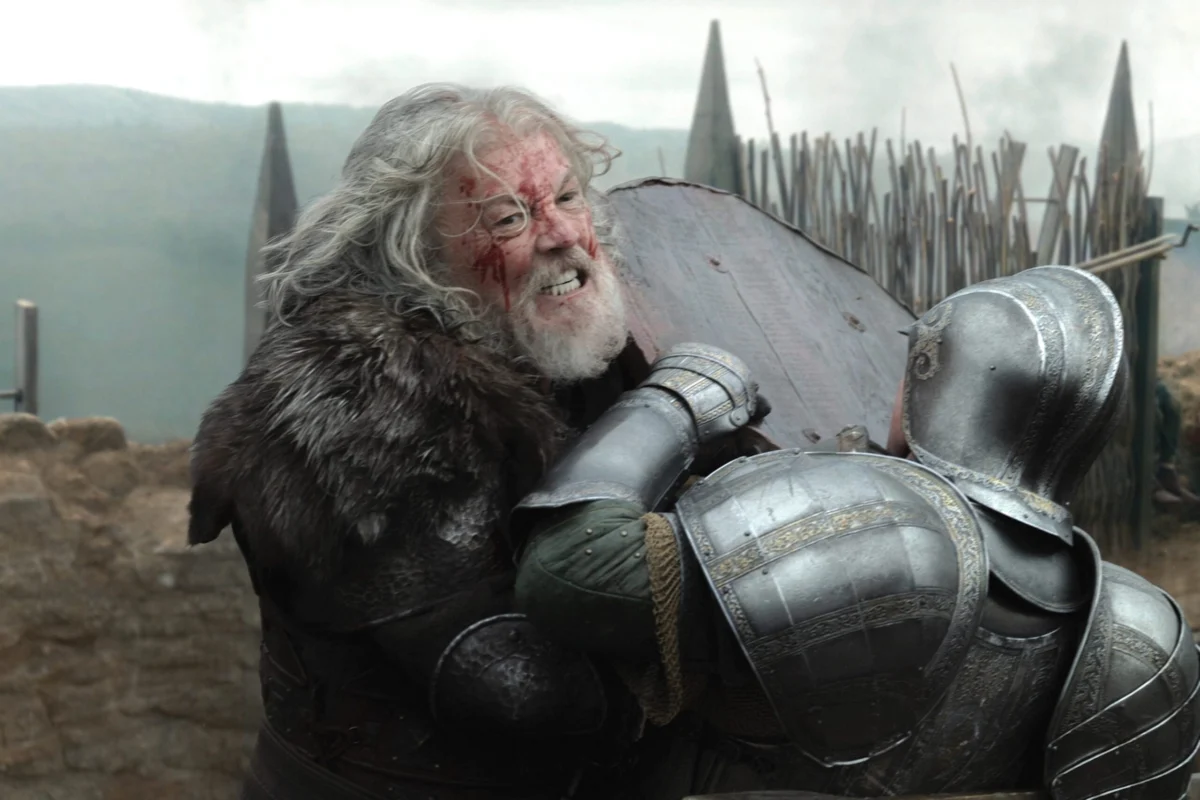
"The death of Ormund Hightower serves as a visceral reminder that in the Dance of the Dragons, neither noble lineage nor dragonrider status offers protection against the chaotic intersection of primal vengeance and drunken vanity."
The third season finale of House of the Dragon, titled “The Treasons at Tumbleton,” represents a pivotal shift in the HBO series’ narrative trajectory, blending the tactical grandiosity of George R.R. Martin’s lore with the intimate, often grotesque violence that has become a hallmark of the franchise. By centering the episode’s climax on the mutual destruction of Ser Roderick Dustin and Lord Ormund Hightower, the showrunners have not only deviated from the established historical accounts in Fire & Blood but have also crafted a sequence that encapsulates the nihilistic core of the Targaryen civil war. This analysis explores the thematic weight of these character departures, the technical execution of the episode’s most shocking moments, and the broader implications for the series moving forward.

The Strategic and Emotional Landscape of Tumbleton
The Battle of Tumbleton is one of the most significant engagements in the Dance of the Dragons, marking a point where the war of succession transcends traditional chivalry and enters a phase of total devastation. In the season 3 finale, this chaos is personified through three distinct threads: the calculated descent of Queen Rhaenyra Targaryen (Emma D’Arcy) into political paranoia, the surprising resilience of the scarred King Aegon (Tom Glynn-Carney), and the explosive confrontation between the Hightower host and the Northern vanguard known as the Winter Wolves.
Rhaenyra’s arc in this finale is particularly chilling. Throughout the season, she has wrestled with the burden of prophecy and the necessity of violence. However, in “The Treasons at Tumbleton,” her transition toward cruelty becomes manifest. Her willingness to turn against her own allies suggests a queen who is beginning to resemble the very tyrants she sought to replace. This internal decay provides a somber backdrop to the external carnage at Tumbleton, where the ideals of loyalty are incinerated by the unpredictability of the "Dragonseeds"—commoners granted the power of gods.
Roddy the Ruin and the Northern Fury
Ser Roderick Dustin, portrayed with gravel-voiced intensity by veteran actor Tommy Flanagan, has been a looming presence throughout the third season. As the leader of the Winter Wolves—the aged but lethal warriors sent by Lord Cregan Stark—Roderick represents the North’s "last hurrah." These men did not come south to survive; they came to die for a cause, ensuring that their families back home would have fewer mouths to feed during the coming winter.

Roderick, known in the lore as "Roddy the Ruin," has spent the season vocalizing his disdain for the Hightowers and his unwavering commitment to Rhaenyra’s claim. In the finale, his relentless pursuit of Ormund Hightower (James Norton) serves as the episode’s emotional anchor. When the Winter Wolves breach the walls of Tumbleton, the sequence shifts from a wide-scale military engagement to a personal vendetta. The ensuing skirmish is brutal and unglamorous. Roderick loses an arm—a moment of staggering gore—but his momentum remains unchecked. This "berserker" energy is a testament to the Northern characterization in the Game of Thrones universe: a stubborn refusal to fall until the enemy is also broken.
The Demise of Ormund Hightower: A Departure from Lore
The death of Ormund Hightower is the sequence that has sparked the most conversation among viewers and scholars of the source material. In George R.R. Martin’s Fire & Blood, the events at Tumbleton are recorded by historians and maesters with varying degrees of reliability. The book depicts Roderick Dustin slaying both Ormund and his cousin, Ser Bryndon Hightower, before finally succumbing to his wounds.
The television adaptation, however, chooses a more audacious path. The show introduces a moment of shocking physical violation—colloquially referred to by the production team as the "iron enema." After a grueling melee that leaves Ormund battered and Roderick missing a limb, the Northern knight delivers a final, humiliating blow with his dagger. This choice, credited to stunt coordinator Rowley Irlam, was designed to emphasize the "messiness" of medieval combat. As James Norton noted in recent interviews, the scene evolved during rehearsals from a standard execution into something far more transgressive. By having Roderick whisper, “That’s a proper fucking… from the North,” the show highlights the cultural animosity between the austere North and the wealthy, refined Reach.

The Wild Card: Ulf White and Silverwing
While the duel between Roderick and Ormund provides the emotional payoff, it is the intervention of Ulf White (Tom Bennett) that provides the spectacle. Ulf, a "Dragonseed" who claimed the dragon Silverwing, has been a character defined by his base instincts: gluttony, cowardice, and a desperate need for respect. His refusal to join the battle initially—opting instead to hide in a latrine—establishes him as the ultimate unreliable ally.
When Ormund Hightower discovers Ulf’s cowardice and humiliates him, he inadvertently seals his own fate. The show effectively portrays the danger of granting absolute power to those with fragile egos. Ulf’s eventual arrival on dragonback is not a heroic rescue but a "revenge tour." His decision to burn both the Hightower leader and the Northern ally who was already dying is a masterstroke of narrative cynicism. It underscores a recurring theme in the franchise: dragons do not distinguish between "good" and "bad" men; they only respond to the whims of their riders. Ulf’s dismissive “Fuck you, too,” as he incinerates the battlefield, marks the end of Ormund Hightower’s reign as the season’s primary antagonist and elevates Ulf to a position of terrifying unpredictability.
The Technical Execution of Maximalism
The finale’s success relies heavily on its "maximalist" approach to filmmaking. Directorially, the episode balances the claustrophobic tension of the Tumbleton streets with the sweeping aerial shots of Silverwing’s devastation. The makeup and prosthetic work required for the scene—specifically the rendering of Ormund’s shattered face and Roderick’s severed arm—adhere to the series’ commitment to hyper-realism.

Behind the scenes, the chemistry between Tommy Flanagan and James Norton added a layer of authenticity to the conflict. Flanagan, a staple of tough-guy cinema for three decades (with iconic roles in Braveheart, Gladiator, and Sons of Anarchy), brought a seasoned, "badass" aura to the set. Norton’s portrayal of Ormund as a man of high birth who is fundamentally unprepared for the raw savagery of a Northern warrior provided the necessary contrast. Their collaboration turned a standard death scene into a landmark moment for the series.
Implications for Season 4 and Beyond
The fallout from “The Treasons at Tumbleton” leaves the Green faction in a state of disarray. With Ormund Hightower dead, the leadership of the Reach’s massive army is in question, potentially creating a power vacuum that could lead to further internal strife. For the Blacks, the "victory" at Tumbleton is pyrrhic at best. They have lost the Winter Wolves and their most fierce commander, and they are now forced to contend with the fact that their dragonriders are becoming increasingly autonomous and dangerous.
Furthermore, the episode’s smaller reveals—such as Alys Rivers (Gayle Rankin) hinting at her own immortality—suggest that the war is shifting from a purely political struggle into something more mystical and ancient. As the series moves toward its fourth season, the precedent set by Ormund’s death suggests that no character is safe and that the "Dance" will only become more gruesome.

In conclusion, the House of the Dragon season 3 finale succeeds because it refuses to play it safe. By taking the foundations of Martin’s history and injecting them with modern cinematic audacity, the show has created a death scene that rivals the Red Wedding or the Mountain and the Viper in terms of sheer impact. It is a reminder that in Westeros, the most memorable ends are rarely noble; they are usually loud, bloody, and entirely unexpected.
