
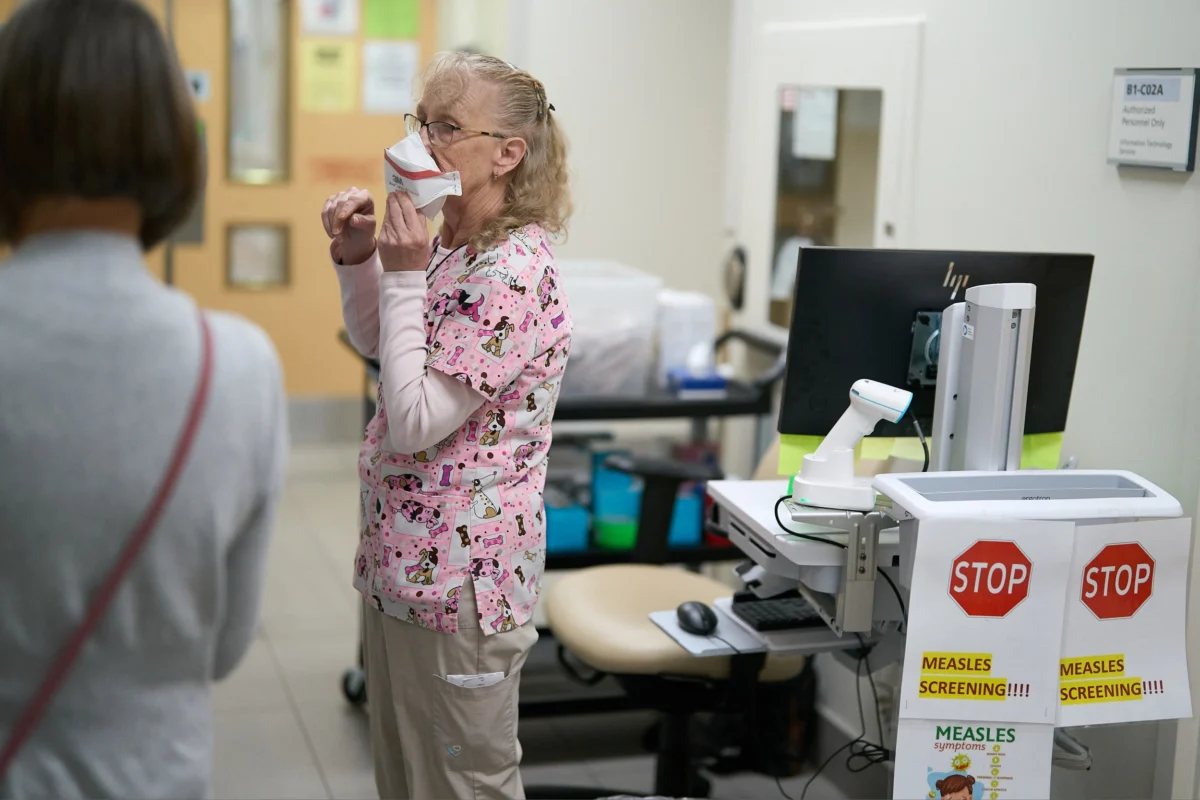
"As the measles outbreak intensifies across Pennsylvania, impacting 31 counties and straining healthcare resources, the core message for families remains starkly clear: vaccination is the most effective defense, regardless of ongoing disputes over fatality classifications."
Pennsylvania is grappling with an escalating measles outbreak, with the state health department reporting a significant surge of 86 new cases in a single week, bringing the total to 460. These infections have now spread to 31 counties, resulting in 83 hospitalizations. The virus’s reach has expanded into western Pennsylvania for the first time, with Butler and Westmoreland counties each registering their initial cases. This geographical expansion occurs as parents in affected areas are navigating conflicting public statements regarding the classification of two measles-associated deaths in Lancaster County, the state’s epicenter of the outbreak. The Pennsylvania Department of Health has classified both as measles-associated, a designation that has drawn scrutiny from the Lancaster County coroner. He contends that a newborn, who died shortly after birth, succumbed to a ruptured spleen and massive blood loss, and he does not consider measles the direct cause of death, despite postmortem findings of measles infection in lung tissue. This divergence in classification, while concerning for families, does not alter the immediate public health imperative: ensuring vaccination status, understanding exposure risks, and protecting vulnerable individuals.
The geographical spread of the measles outbreak is a critical concern for public health officials. While Lancaster County has consistently been the hardest-hit region, accounting for nearly half of the state’s total cases with 210 infections, the virus is now demonstrating a wider reach. Mifflin and Chester counties also report significant numbers, with 43 cases each. The recent confirmation of cases in Butler and Westmoreland counties marks a notable shift, as these areas are situated in the Pittsburgh region, far from the initial outbreak corridor that began in Lancaster and Lebanon counties. This expansion underscores the highly contagious nature of measles and the potential for rapid dissemination across diverse communities.
A cornerstone of the state’s public health messaging is the consistent finding that no confirmed case of measles in Pennsylvania this year has occurred in a fully vaccinated individual. This data point is considered paramount by health authorities, reinforcing the efficacy of the Measles, Mumps, and Rubella (MMR) vaccine. Two doses of the MMR vaccine are recognized as approximately 97% effective in preventing measles infection, a statistic that highlights the protective power of widespread immunization.
Nationally, the Centers for Disease Control and Prevention (CDC) has been tracking a significant increase in measles cases. As of August 20, the CDC reported 2,777 confirmed cases across 47 jurisdictions, marking the highest annual total in decades. The agency also noted that 94% of these confirmed cases are outbreak-associated, further emphasizing the public health challenge posed by the virus. It is important to note that the CDC’s August 28 update was delayed, meaning the federal figures may not yet fully reflect the most current state-level data.
The ongoing debate surrounding the classification of the two deaths in Lancaster County has brought expert opinions to the forefront. Dr. Paul Offit, director of the Vaccine Education Center at Children’s Hospital of Philadelphia, has publicly expressed concerns that the reported case count, when weighed against the reported deaths, suggests a fatality rate significantly higher than the typical one to three deaths per 1,000 measles cases. Dr. Offit has inferred that the true number of infections may be considerably higher, potentially closer to 2,000, suggesting a degree of undercounting in official figures. While this is an inference based on epidemiological modeling, it highlights the potential for the outbreak’s true scope to be underestimated.
The controversy surrounding the two measles-associated deaths in Pennsylvania began with an announcement on August 25. The state Department of Health initially provided limited details due to patient privacy concerns. Both individuals were unvaccinated residents of Lancaster County, and their deaths were reported as the state’s first from measles in 35 years and the first in the United States this year. The Pennsylvania Department of Health defines a death as "measles-associated" when there is laboratory or epidemiological evidence of measles infection, even if a medical certifier or coroner does not list measles as the immediate cause of death.
Lancaster County Coroner Stephen Diamantoni, who is also a physician, has presented a different perspective. His office examined a newborn who died shortly after birth due to a lacerated spleen and massive blood loss. While postmortem testing revealed evidence of measles infection in the infant’s lung tissue, acquired before birth, Coroner Diamantoni has ruled measles out as a contributing factor. He cited the absence of spleen swelling or enlargement as a key reason for his determination, noting that measles infection can, in some instances, enlarge the spleen and increase rupture risk. However, establishing this link definitively on autopsy after a rupture has occurred can be challenging, according to accounts of the autopsy findings. The coroner’s investigation into the precise cause of the laceration is ongoing.
Health Secretary Debra Bogen has stated that she has reviewed the case investigation and stands by the department’s classification of the deaths as measles-associated. To date, no agency has published a final, definitive determination of the cause of death for the infant. Furthermore, the coroner has indicated that he has no information regarding the second death. This dispute has also attracted political attention, with some public figures questioning the accuracy of the reported deaths. Governor Josh Shapiro has defended the health department’s actions, stating they have shared all permissible information under state law and has declined to engage with what he termed "online conspiracy theories."
In the face of an escalating outbreak and ongoing debates, practical guidance for families remains the most critical aspect of public health response. The MMR vaccine, administered in two doses, stands as the most robust intervention against measles. The routine vaccination schedule recommends the first dose between 12 and 15 months of age, and the second dose between 4 and 6 years of age.
For families residing in or traveling to outbreak areas, consulting with a pediatrician is advised to determine if an infant between 6 and 11 months of age may qualify for an early MMR dose. It is crucial to understand that this early dose does not replace the standard two-dose series and is a decision made in consultation with a healthcare provider who has intimate knowledge of the child’s health.
Following a known exposure to measles, time-sensitive interventions are available. An MMR dose administered within 72 hours of exposure may help reduce the severity of the illness. Additionally, immune globulin, administered within six days of exposure, is an option for individuals who cannot be vaccinated, including infants under 12 months, pregnant individuals, and those with compromised immune systems. Given the narrow windows for these interventions, prompt communication with a healthcare provider on the same day of a suspected exposure is strongly recommended, rather than waiting for symptoms to develop.
Individuals who develop symptoms such as fever, rash, cough, runny nose, or red eyes should contact their healthcare provider by phone before arriving at a waiting room. This allows the clinic to prepare an isolation space, minimizing the risk of further transmission. Measles symptoms typically appear 7 to 14 days after exposure, with the characteristic rash emerging several days later. Severe symptoms, including difficulty breathing, severe dehydration, confusion, or seizure activity, warrant immediate medical evaluation.
Recognizing that cost can be a barrier to healthcare access, Pennsylvania has made efforts to ensure that vaccination is readily available and free of charge. State health centers, located in nearly every county, offer free MMR vaccinations. The Department of Health has also conducted numerous pop-up clinics in affected counties since the spring, administering thousands of MMR doses, with a notable increase in vaccinations during August. For those seeking information or assistance, a state measles information line is available at 877-PA-HEALTH. Allegheny County, with its own health department, actively posts exposure notices, which are particularly relevant for residents in the newly affected western counties.
The Pennsylvania Department of Health updates its state measles dashboard on Monday, Wednesday, and Friday afternoons, providing the most current and reliable county-level case counts. The CDC’s national update is anticipated once the delayed release is posted. Key unresolved aspects of the current situation include the final determination of the cause of death in the infant case, the potential for further county-level case reports, and whether the state will disclose additional information regarding the second death. Despite the complexities and ongoing discussions, the fundamental public health message remains consistent: the outbreak is expanding, the vaccine is accessible and free, and individual preventive actions, particularly vaccination, are paramount.
