
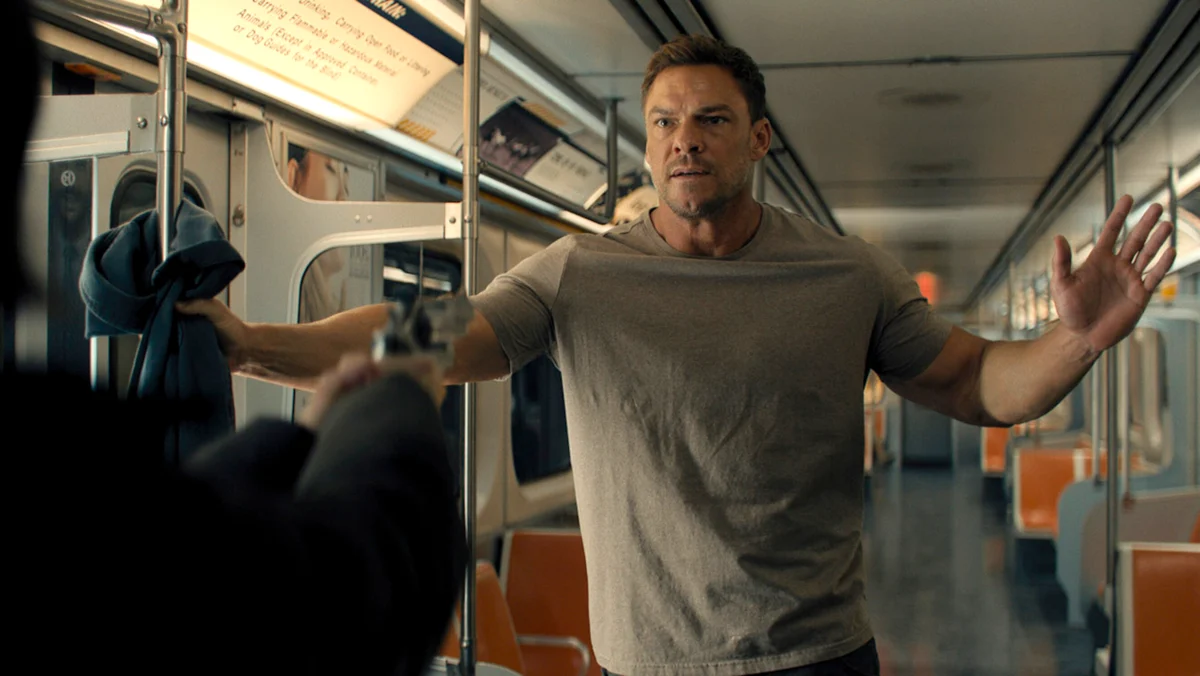
"Reacher’s enduring success lies in its commitment to a lean, high-impact narrative structure that balances brutal action with complex, small-town-turned-urban mysteries."
Season 4 of the Prime Video hit series adapts Lee Child’s Gone Tomorrow, shifting the titular wanderer into the high-stakes world of Philadelphia politics and cyber espionage. As Alan Ritchson continues to define the role through physical prowess and dry wit, the latest season explores the intersection of government secrets and street-level justice, proving that the series’ "simple" formula remains its greatest strength in a crowded streaming landscape.
The Phenomenon of the Wandering Hero
Prime Video’s Reacher has carved out a unique space in the modern television landscape by adhering to a philosophy that many contemporary dramas have abandoned: simplicity. While many prestige series opt for sprawling, multi-perspective narratives and ambiguous moralities, Reacher leans into the clarity of its protagonist. Jack Reacher, the former military policeman turned drifting vigilante, is a character built on a foundation of competence, physical dominance, and an unshakeable moral compass.
Played by Alan Ritchson, whose casting has been widely praised as a definitive realization of Lee Child’s literary descriptions, Reacher represents a specific type of American folk hero. He is the man who arrives, fixes what is broken, and leaves. This episodic, transient nature allows the show to reinvent itself with every season, introducing new locales, new supporting casts, and new mysteries while the central pillar remains unchanged. Season 4 continues this tradition, moving the action from the rural and industrial settings of previous installments to the dense, politically charged streets of Philadelphia.

Adapting "Gone Tomorrow": A New Kind of Thriller
The fourth season draws its inspiration from Lee Child’s 2009 novel, Gone Tomorrow. For fans of the book series, this choice marks a significant shift in tone. While previous seasons have focused on corporate conspiracies or military vendettas, Gone Tomorrow is fundamentally a high-stakes political cyber thriller.
The story begins with a classic Reacher setup: the observation of human behavior. On a late-night New York subway car—relocated to Philadelphia for the television adaptation—Reacher spots a passenger who fits the "profile" of a suicide bomber, a set of behavioral markers he learned during his time in the Army. His intervention leads to a shocking tragedy that spirals into a massive conspiracy involving stolen data, government agencies, and a mysterious disk drive that everyone is willing to kill for.
By shifting the setting to Philadelphia, the showrunners have leaned into the "City of Brotherly Love" irony. The urban environment provides a different tactical playground for Reacher. Instead of the open fields or industrial warehouses of the South, he must navigate narrow alleys, subway tunnels, and the corridors of power. This change in scenery prevents the formula from becoming stale, forcing Reacher to use his intellect as much as his fists to navigate a world where the enemy is often hidden behind computer screens or political appointments.
A Fresh Ensemble and Familiar Faces
One of the logistical challenges of the Reacher format is the constant turnover of the supporting cast. Because Reacher is a drifter, he rarely keeps the same company for long. However, this allows the series to bring in high-caliber character actors to populate each "mini-movie" season.
Season 4 introduces several notable additions to the franchise. Christopher Marquette, a veteran of both film (Just Friends, Fanboys) and prestige television (Barry), joins the cast in a role that tests Reacher’s patience and tactical planning. Additionally, the season features Kevin Corrigan, an actor renowned for his work in gritty crime dramas like Goodfellas and The Departed. Corrigan’s presence adds a layer of authenticity to the Philadelphia underworld, providing a seasoned foil to Ritchson’s stoic lead.

While Season 3 featured the physical spectacle of Reacher facing off against the massive Paulie (played by Olivier Richters), Season 4 focuses on a different kind of threat. The antagonists here are more cerebral and entrenched in systems of power, making the eventual physical confrontations all the more satisfying when Reacher finally corners them.
The "Dad-TV" Appeal and Moral Clarity
Critics and audiences often categorize Reacher as "Dad-TV," a term that has evolved from a mild critique to a badge of honor for high-quality procedural thrillers. The appeal lies in the "unwinding" factor. In an era of complex anti-heroes, there is a profound satisfaction in watching a character who is objectively the smartest and strongest person in the room use those gifts to protect the innocent.
The show understands its core audience’s desire for justice. Reacher never picks a fight that isn’t deserved, but once a fight begins, his efficiency is absolute. This seasonal arc—the mystery, the escalation, and the eventual "cleansing" of the corruption—provides a cathartic viewing experience. The dry humor and Ritchson’s charismatic delivery ensure that the show never feels overly grim, despite its often-violent subject matter.
Strategic Distribution: The Prime Video Release Model
The release strategy for Reacher Season 4 reflects a growing trend in the streaming industry: the return to the weekly release model. While the "binge" model popularized by Netflix remains common, Prime Video has found success in stretching out the conversation around its flagship shows.
By releasing episodes on a weekly basis, the streamer allows the mystery to breathe. Viewers have time to theorize about the contents of the disk drive or the true motives of the secondary characters. Furthermore, Prime Video has utilized a "soft" release window. While episodes are officially slated for Wednesdays, they frequently appear on the platform on Tuesday evenings in the United States. This "early drop" creates a sense of event television, rewarding the most dedicated fans who check the app as soon as the clock strikes midnight GMT.

Detailed Season 4 Release Schedule
Season 4 consists of eight episodes, a structure that has become the standard for the series. This length is sufficient to develop a complex mystery without the "middle-season sag" that often plagues ten- or thirteen-episode orders. As of late August, the season is past its midpoint, with the tension reaching a fever pitch.
The schedule for the remainder of the season is as follows:
- Episode 1, "City of Brotherly Love": Released August 12. This premiere established the Philadelphia setting and the harrowing subway encounter that serves as the season’s catalyst.
- Episode 2, "Cage Fight": Released August 12. Reacher begins to uncover the various factions interested in the woman from the subway.
- Episode 3, "One Small Step": Released August 12. A deep dive into the "cyber" aspect of the thriller, as the importance of the disk drive becomes clear.
- Episode 4, "Karambits and Pieces": Released August 19. An action-heavy episode that showcases Reacher’s proficiency with various combat styles against professional mercenaries.
- Episode 5, "Bridge": Released August 26. A pivotal episode that connects the local Philadelphia mystery to broader government interests.
- Episode 6, "Plum Out of Luck": Scheduled for September 2.
- Episode 7, "Vote for Sampson": Scheduled for September 9. Expected to focus on the political machinations and the upcoming election cycle within the show’s narrative.
- Episode 8, "Cut": Scheduled for September 16. The season finale, where Reacher typically settles all debts and prepares to move on to the next town.
The Future of the Franchise
With the success of Season 4, the future of the Reacher franchise looks more secure than ever. Lee Child has written nearly 30 novels featuring the character, providing a near-endless supply of source material for future seasons. The show’s ability to swap out settings and casts means it is not beholden to the availability of a large ensemble, only the presence of Alan Ritchson.
As the season concludes in mid-September, the conversation will inevitably turn to which book will be adapted next. Whether Reacher returns to a rural setting or stays in the urban sprawl, the core tenets of the show—simple titles, big hits, and the pursuit of justice—will undoubtedly remain. For now, viewers have three more weeks of "ass-kicking, mystery-solving magic" to look forward to as the Philadelphia conspiracy finally comes to light.
