
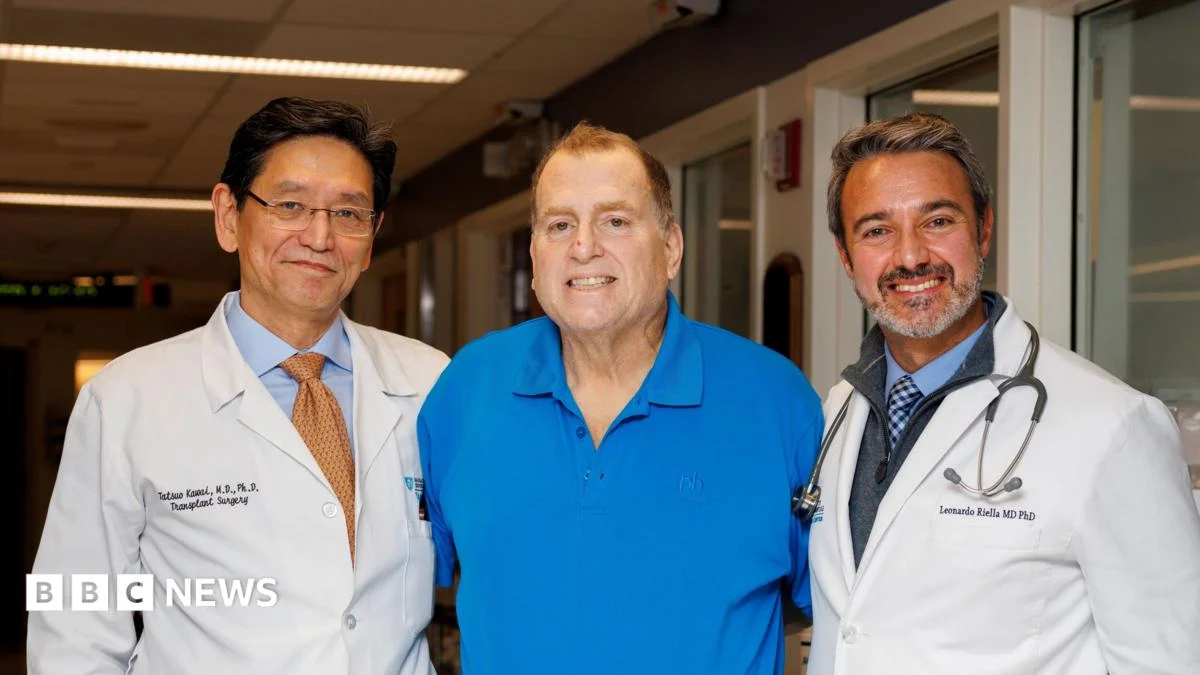
A genetically modified pig kidney has functioned inside a living human patient for an unprecedented 271 days, marking a monumental step forward in xenotransplantation. This groundbreaking achievement demonstrates the potential for animal organs to serve as a vital "bridge" therapy, offering life-saving time to patients awaiting human donor organs.
This remarkable medical feat, announced by doctors at Mass General Brigham in the United States, represents the longest duration a pig kidney has ever functioned within a human body. The recipient, Tim Andrews, experienced a profound improvement in his quality of life, temporarily freed from the arduous routine of dialysis. This success underscores the accelerating progress in xenotransplantation, a field dedicated to addressing the critical global shortage of transplantable human organs by utilizing organs from other species, most notably pigs. While the pig organ eventually ceased function and was removed, necessitating a brief return to dialysis before a human donor was found, its extended viability has provided invaluable data and renewed optimism for the future of transplant medicine.
The journey of Tim Andrews began with a stark reality faced by hundreds of thousands worldwide: a desperate wait for a life-saving organ. Diagnosed with end-stage kidney disease, Andrews was confronted with the grim statistics of the organ transplant system. In the United States alone, approximately 100,000 individuals are currently on the waiting list for a kidney, yet only around 25,000 kidney transplants are performed annually. The situation is similarly challenging in the United Kingdom, where over 7,000 people are awaiting a kidney transplant. For Andrews, the prognosis was particularly dire; he was informed that it could take up to seven years to reach the top of the transplant list, a timeframe that tragically often exceeds the average five-year survival rate for patients relying on dialysis.
Dialysis, a life-sustaining treatment, involves a machine filtering waste products and excess fluid from the blood when the kidneys fail. While indispensable, it is an incredibly demanding and often debilitating regimen, typically requiring multiple sessions per week, each lasting several hours. This imposes significant physical and emotional burdens, severely restricting a patient’s independence, travel, and overall quality of life. Andrews himself described the prospect of such a prolonged wait and the constant reliance on a machine as "very depressing."
It was against this backdrop of despair that the concept of a pig kidney transplant emerged as a beacon of "hope" and "the light at the end of the tunnel." For Andrews, the experimental procedure offered more than just a medical intervention; it presented "the chance to be free from the [dialysis] machine and live your life." His courage in undergoing such an innovative, untested procedure paved the way for this monumental record, demonstrating the profound impact such advancements can have on individual lives.
The field of xenotransplantation, the transplantation of organs or tissues between different species, has a long and often challenging history. Early attempts in the 20th century were largely unsuccessful due to immediate and severe immune rejection. However, recent advancements in genetic engineering have revolutionized the possibility of using animal organs, particularly from pigs. Pigs are considered ideal donor animals for several reasons: their organs are anatomically similar in size and function to human organs, they reproduce quickly and in large litters, and they can be bred in controlled, pathogen-free environments.
The primary hurdle in xenotransplantation has always been the formidable human immune response. The human body naturally recognizes pig cells as foreign, leading to a rapid and aggressive rejection of the transplanted organ. This hyperacute rejection is primarily triggered by specific sugar molecules (glycans), particularly alpha-gal, present on pig cell surfaces that are absent in humans. Modern genetic engineering, leveraging technologies like CRISPR-Cas9, has enabled scientists to modify pig genomes with unprecedented precision.
The pig whose kidney was transplanted into Tim Andrews was the product of such sophisticated genetic modification. Scientists engineered the donor pig to have several key genetic alterations. Firstly, genes responsible for producing the alpha-gal sugar molecule were "knocked out," effectively removing the primary trigger for hyperacute rejection. Secondly, human genes that regulate immune responses and prevent blood clotting were "inserted" into the pig’s genome. These "humanized" genes help the pig organ evade detection and attack by the human immune system, promoting better compatibility and reducing the risk of rejection. This complex genetic engineering is the cornerstone of making xenotransplantation a viable clinical reality.
This latest achievement builds upon a series of significant milestones in xenotransplantation. In 2022, a genetically modified pig heart was transplanted into David Bennett, who lived for two months post-surgery, marking the first time a pig heart was transplanted into a living human. More recently, pig kidneys have been successfully transplanted into brain-dead human recipients, demonstrating their ability to produce urine and filter waste in a human physiological environment for several weeks. The 271-day survival of Tim Andrews’ pig kidney in a conscious, living patient represents a critical leap forward, moving beyond short-term observations to demonstrate prolonged functionality and a tangible impact on a patient’s life.
The concept of using animal organs as a "bridge" is particularly compelling. For patients like Tim Andrews, who face a dire prognosis while awaiting a human donor, a xenograft can provide precious time. It can stabilize their condition, improve their overall health, and allow them to remain in a better state to receive a human organ when one becomes available. This temporary solution alleviates the immediate pressure of dialysis and the race against time, offering a window of opportunity that was previously unavailable. While the pig kidney ultimately failed, its extended function allowed Andrews to receive a human donor kidney in a healthier state, a testament to its value as a bridge.
Despite these remarkable strides, the path to widespread clinical application of xenotransplantation is not without its challenges. One of the ongoing concerns is chronic rejection, where the immune system slowly but persistently attacks the transplanted organ over time, even with immunosuppressive drugs. The exact mechanisms of chronic xenograft rejection are still being studied, and researchers are continually refining genetic modifications and immunosuppressive protocols to combat this.
Another critical consideration is the potential for zoonotic disease transmission—the transfer of viruses from animals to humans. While donor pigs are raised in highly controlled, pathogen-free environments, the theoretical risk remains. Scientists are diligently screening donor animals for known pathogens and researching methods to mitigate this risk, ensuring the safety of both the recipient and the wider public.
Ethical considerations also play a significant role. The use of animals for organ harvesting raises questions about animal welfare, and societal acceptance of xenotransplantation is an ongoing dialogue. Researchers and ethicists are working to establish clear guidelines and engage in transparent communication with the public regarding the necessity, benefits, and ethical implications of these procedures.
The success of Tim Andrews’ pig kidney transplant offers immense hope, not just for individuals currently on transplant waiting lists, but for the future of medicine itself. It demonstrates the tangible progress being made in a field once considered science fiction. As genetic engineering techniques continue to advance, and our understanding of immune responses deepens, xenotransplantation holds the promise of transforming transplant medicine, potentially offering a sustainable and widely available solution to the global organ shortage. The journey is far from over, but this 271-day record is a powerful indicator that the "light at the end of the tunnel" is growing brighter for millions awaiting a second chance at life.
