
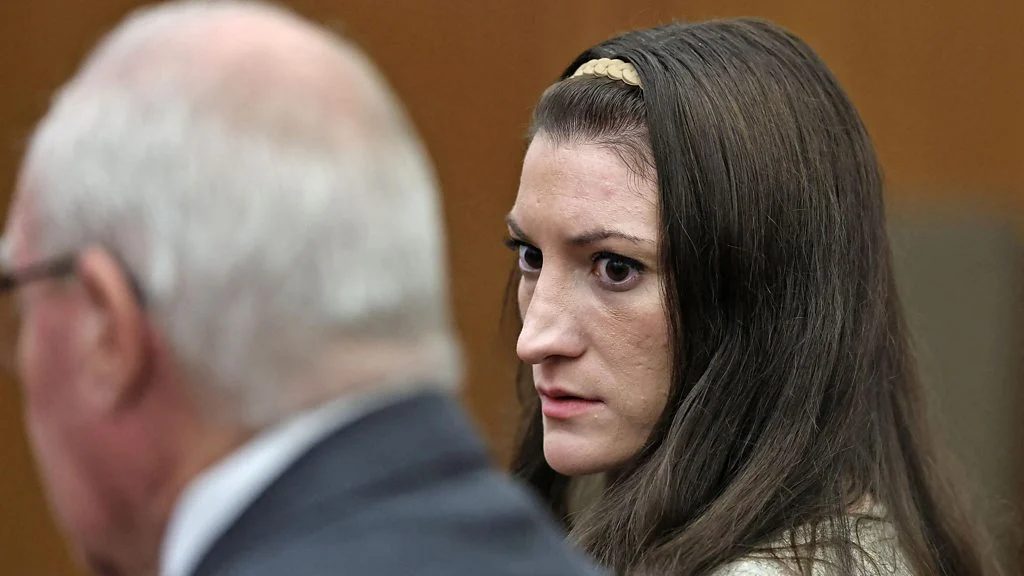
"The Lindsay Clancy trial has laid bare a profound international disparity in how legal systems confront cases of mothers who kill their children. While many nations acknowledge severe maternal mental illness through specific infanticide statutes, the US often forces a starker choice, sparking critical debate on justice, culpability, and the evolving understanding of motherhood."
The ongoing trial of Lindsay Clancy in Massachusetts, facing first-degree murder charges following the deaths of her three young children, has ignited a fierce global discussion. This highly publicized case not only divides public opinion but also spotlights a fundamental divergence in legal approaches worldwide, particularly concerning how different countries prosecute mothers accused of killing their offspring. The BBC World Service’s "The Global Story" has delved into this complex issue, with Asma Khalid speaking to Dr. Karen Brennan, a senior lecturer in law at the University of Essex, to dissect what the Clancy case reveals about American law’s understanding of motherhood, mental illness, and criminal responsibility.
In the United States, and specifically in Massachusetts where Clancy’s trial is unfolding, the legal framework typically offers no specific statute for "infanticide." This means that cases involving mothers who cause the deaths of their children are generally prosecuted under existing homicide laws, ranging from manslaughter to first-degree murder, depending on the perceived intent and circumstances. The absence of a distinct infanticide charge often compels prosecutors to seek the most severe penalties, even when profound mental health issues are suspected or evident. For defendants like Clancy, whose legal team may argue for diminished capacity or an insanity defense due to severe postpartum mental illness, the stakes are exceptionally high, with potential outcomes ranging from life imprisonment to institutionalization, should an insanity plea succeed. The public discourse surrounding such trials often becomes a battleground between calls for justice for the child victims and empathy for the mother struggling with severe mental health challenges.
This contrasts sharply with legal systems in several other developed nations, including the United Kingdom, Canada, and Australia. These countries have specific infanticide statutes designed to address the unique circumstances surrounding a mother’s mental state following childbirth. Historically, these laws emerged from a growing recognition of the severe psychological and physiological stresses mothers can experience in the postpartum period, which can profoundly impair their judgment and actions.
In the UK, for instance, the Infanticide Act of 1938 (and subsequent amendments) allows a mother to be charged with infanticide rather than murder or manslaughter if, at the time of causing the death of her child under the age of 12 months, her mind was disturbed by reason of not having fully recovered from the effect of giving birth to the child or by reason of the effect of lactation. This distinction is crucial: a conviction for infanticide acknowledges the act but carries a more lenient sentence than murder, often prioritizing mental health treatment and rehabilitation over punitive incarceration. The legal framework recognizes that while the act is tragic and requires accountability, the mother’s culpability is mitigated by a specific, identifiable mental state linked to childbirth.
Similarly, Canada’s Criminal Code defines infanticide as a mother causing the death of her newborn child (under 12 months) while suffering from mental disturbance caused by not having fully recovered from the effects of childbirth or by lactation. This allows for a conviction that is less severe than murder, with a maximum penalty of five years imprisonment. Australia’s various state and territory laws also incorporate similar provisions, reflecting a shared understanding that the unique biological and psychological pressures of childbirth can profoundly affect a mother’s mental state, leading to actions that might otherwise be deemed cold and premeditated.

Dr. Karen Brennan’s insights highlight that the divergence in legal frameworks between the US and these other nations is not merely procedural but reflects differing societal and legal understandings of motherhood, mental illness, and criminal responsibility. The American legal system, largely rooted in a model of individual culpability and a high bar for proving diminished capacity or insanity, struggles to accommodate the nuances of postpartum mental health without a specific legislative carve-out. Without an infanticide statute, a mother’s defense often hinges on proving legal insanity—a notoriously difficult standard requiring the defense to demonstrate that the defendant was so mentally ill they did not know the nature or quality of their act, or that it was wrong. This leaves a vast grey area where mothers suffering from severe, but not legally insane, postpartum conditions might still face murder charges.
The mental health conditions relevant to these discussions include severe postpartum depression, postpartum anxiety, and, most critically, postpartum psychosis. Postpartum psychosis is a rare but severe mental illness that can develop rapidly after childbirth, often within the first few weeks. Symptoms can include hallucinations, delusions, rapid mood swings, paranoia, and impaired judgment, making it a medical emergency. While distinct from the more common "baby blues" or even postpartum depression, its onset can be sudden and devastating, potentially leading a mother to harm herself or her children under the influence of psychotic delusions. The legal systems that recognize infanticide are, in essence, acknowledging the profound and often uncontrollable impact such conditions can have on a mother’s capacity for rational thought and action during a uniquely vulnerable period.
The absence of an infanticide law in the US forces courts to grapple with these complexities within a framework designed for general criminal intent. This can lead to highly emotional and polarizing trials, where the public is often torn between profound sympathy for a mother battling severe mental illness and an equally strong desire for justice for the deceased children. The debate extends beyond the courtroom, touching on broader societal questions about the support systems available for new mothers, the stigma associated with maternal mental health issues, and the adequacy of healthcare access.
The argument for introducing infanticide statutes in the US often centers on principles of proportionality and compassion. Proponents argue that such laws would allow the legal system to more accurately reflect the culpability of mothers suffering from severe postpartum mental health disturbances, distinguishing their actions from those of individuals committing premeditated murder. They contend that a focus on treatment and rehabilitation, rather than solely punishment, could prevent future tragedies and offer a more humane path for mothers who are profoundly unwell.
However, opponents raise concerns that such laws could be perceived as lenient, potentially undermining the gravity of the crime and failing to deliver adequate justice for the child victims. There is also the challenge of defining the scope of such a law, ensuring it applies only to genuinely severe, postpartum-related mental disturbances and is not exploited. The political will to enact such legislation, given the sensitive nature of child deaths, remains a significant hurdle in many US states.
The Lindsay Clancy case, therefore, serves as more than just a tragic individual story; it is a critical juncture for examining the intersection of law, medicine, and societal values. It challenges legal systems to evolve in their understanding of maternal mental health, prompting a necessary conversation about whether current laws adequately serve justice for all parties involved—the victims, the accused mothers, and society at large. As the trial progresses, the international spotlight remains fixed, not just on the verdict, but on the profound legal and ethical questions it continues to raise about how the world, and particularly the US, understands and responds to the most heartbreaking of circumstances involving motherhood and mental illness. The work of experts like Dr. Karen Brennan, highlighted by "The Global Story" team including producers Xandra Ellin, Cat Farnsworth, Aron Keller, digital producer Charlie Firth, sound engineer Travis Evans, editor Martine Powers, and senior news editor China Collins, is vital in shedding light on these critical global disparities and fostering a deeper understanding of the path toward a more just and compassionate legal future.
